Social & External
Starting with a long and lyrical overture, evoking the origins of the Olympic Games in ancient Greece, Riefenstahl covers twenty-one athletic events in the first half of this two-part love letter to the human body and spirit, culminating with the marathon, where Jesse Owens became the first track and field athlete to win four gold medals in a single Olympics.
A harrowing account of Europe's migrant crisis. A family of Syrian refugees separated by the borders of Europe, fight to be reunited as they migrant from Syria to Germany.
A very personal and dynamic meditation on the current global refugee crisis through the eyes and voices of campaigners, specially children, where past and present establish a dialogue. A reflection on the importance of human rights.
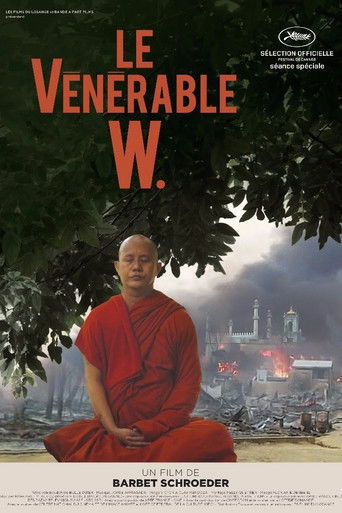
A view of the religious tensions between Muslims and Buddhist through the portrait of the Buddhist monk Ashin Wirathu, leader of anti-Muslim movement in Myanmar.
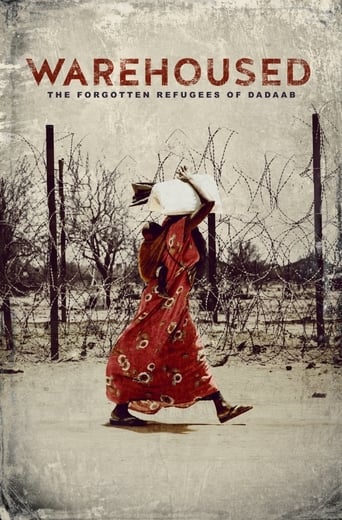
An estimated 12 million people live in refugee camps worldwide and only 0.1% are resettled, repatriated, or integrated into normal society each year. The feature-length documentary.
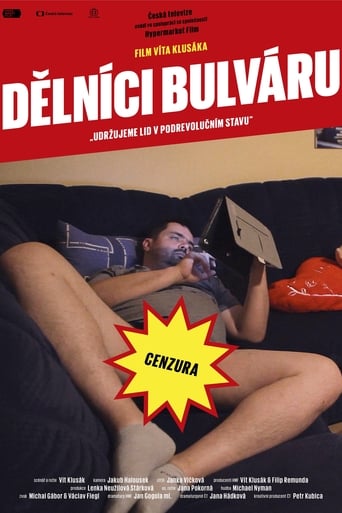
A stark documentary about young male prostitutes in Prague, aged 15 to 18, who work the streets, train stations, and clubs. Through candid interviews and behind-the-scenes footage of gay porn shoots, the film explores their lives, struggles, and dreams, touching on themes of exploitation, identity, AIDS, and survival.
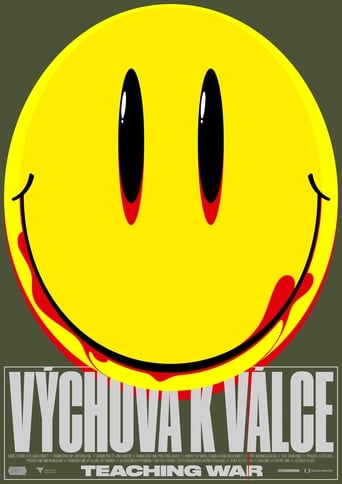
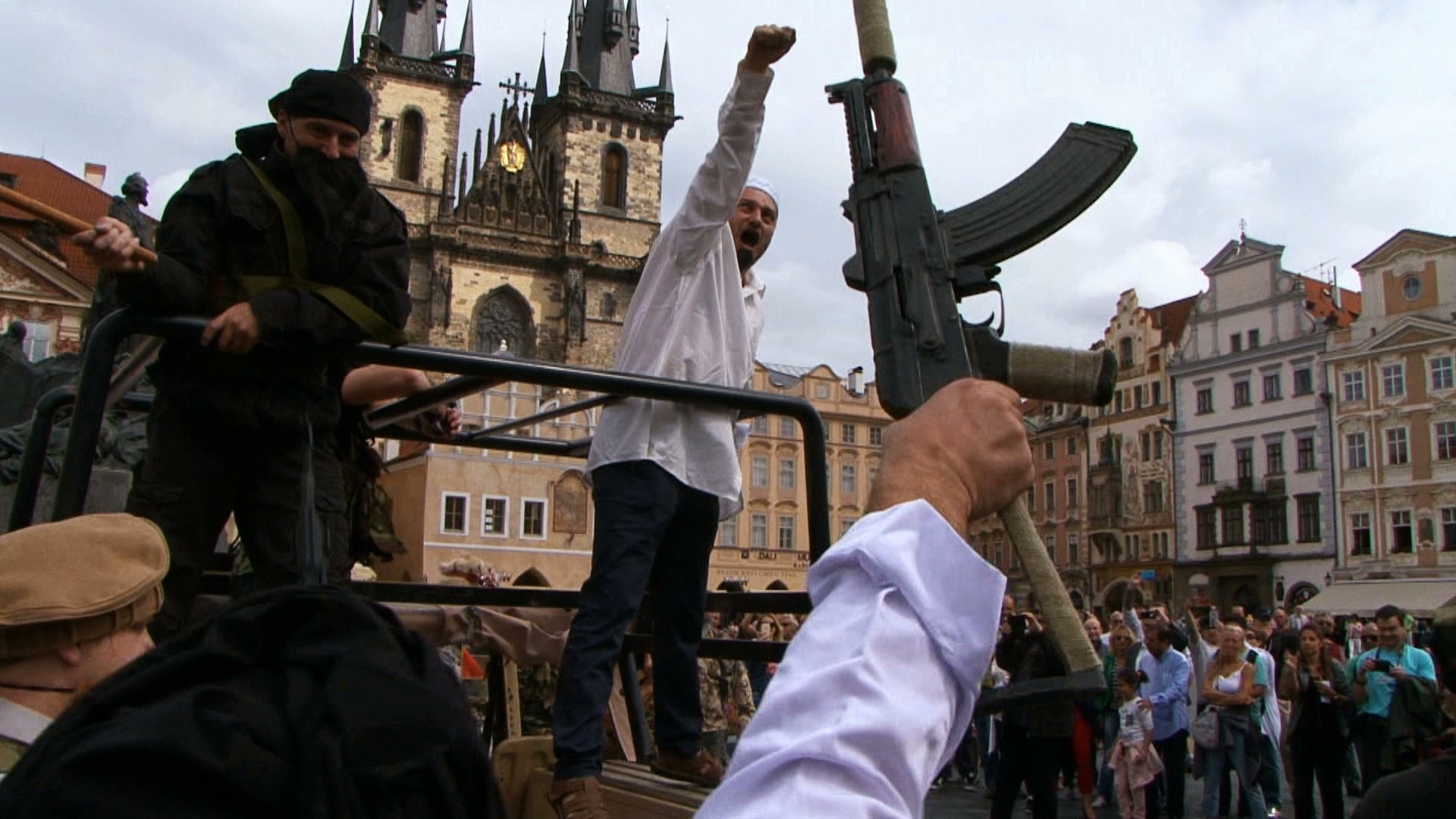
This episode from the Czech Journal series examines how a military spirit is slowly returning to our society. Attempts to renew military training or compulsory military service and in general to prepare the nation for the next big war go hand in hand with society’s fear of the Russians, the Muslims, or whatever other “enemies”. This observational flight over the machine gun nest of Czech militarism becomes a grotesque, unsettling military parade. It can be considered not only to be a message about how easily people allow themselves to be manipulated into a state of paranoia by the media, but also a warning against the possibility that extremism will become a part of the regular school curriculum.
Six refugee stories experienced over several years in the Czech Republic. As a former member of the Soviet socialist bloc and now part of the European Union, the Czech Republic shows almost the greatest resistance to refugees from a pan-European perspective, without having any itself.
Images of Argentinian companies and factories in the first light of day, seen from the inside of a car, while the director reads out documents in voiceover that reveals the collusion of the same concerns in the military dictatorship’s terror.
Interviews with a procurer and with nineteen boys and young men who are prostitutes in Prague. The youths range in age from 14 to 19. They hustle at the central train station and at clubs. Most of their clients are foreign tourists, many are German. The youths talk about why they hustle, their first trick, prices, dangers, what they know about AIDS, their fears (disease and loneliness), and how they imagine their futures. The film's title, its liturgical score, much of it elegiac, and shots of the city's statues of angels underline the vulnerability and callow lack of sophistication of the young men.
‘The Great Wall has been completed at its most southerly point.’ So begins Kafka’s short story ‘At the Building of the Great Wall of China’, and so, at Europe’s heavily militarised south-eastern frontier, begins this film. In the shadow of its own narratives of freedom, Europe has been quietly building its own great wall. Like its famous Chinese precursor, this wall has been piecemeal in construction, diverse in form and dubious in utility. Gradually cohering across the continent, this system of enclosure and exclusion is urged upon a populace seemingly willing to accept its necessity and to contribute to its building.
Five Rings Films presents the inspiring story of how Czech Republic won gold at the first Olympics to feature professionals from the NHL.
A personal and political biography of the Octopus, or the Prague National Library project, but also a biography of the last years of the life of the author of this design, Jan Kaplický, who wrote in his diary in 1998: to win the competition and have one love. With this entry, read by Eliška Kaplicky at the beginning of the film, it is as if the world-class Czech architect wrote not only the "script" for the final decade of his life, but also for a film that follows the dramatic social story of creative imagination and the intimate relationship between a man and a woman.
This short film follows Flavio Caseros, a TV host with xenophobic beliefs who seeks to create a documentary that highlights that the Asian community should be deported from Argentina. However, he encounters other characters who challenge his distorted and hate-filled discourse.
October 2003, Alma and Lila Levy are excluded from the Lycée Henri Wallon in Aubervilliers solely because they were wearing a headscarf. What follows is a deafening political and media debate, justifying in most cases the exclusion of girls wearing head-scarves to school. February 2004, a law was eventually passed by the National Assembly. "A thinly veiled racism" is about this controversy since the affair of Creil in 1989 (where two schoolgirls were excluded for the same reasons) and attempts to "reveal" that maybe what hides behind is the desire to exclude these girls. This film gives them a voice as well as others - teachers, community activists, feminists, researchers - gathered around the group "A School for You-All" fighting for the repeal of this law they consider sexist and racist ... This movie was censured in Septembre 2004 in France.
A U.S. Marine plots a terrorist attack on a small-town American mosque, but his plan takes an unexpected turn when he comes face to face with the people he sets out to kill.
This documentary study of the mechanisms that turn the gears of the tabloids is conducted by the unique figure Pavel Novotný. This editor-in-chief of one of the most widely read Czech media outlets of the time, providing news from the world of show business and human misfortune, gets straight to the point. Readership is a fetish, an absolute alibi for all invasions of privacy and every transgression of good ethics. Seen up close, the whole cluster of disreputable reports looks like a staged tableau. Before the eager eyes of an anxious public, celebrities willingly or unwillingly perform acts that the scrutiny of the all-powerful tabloid workers attributes racy significance to.
Quite a few years have passed since November 1989. Czechoslovakia has been divided up and, in the Czech Republic, Václav Klaus’s right-wing government is in power. Karel Vachek follows on from his film New Hyperion, thus continuing his series of comprehensive film documentaries in which he maps out Czech society and its real and imagined elites in his own unique way.
As politicians debate and argue, the men, women and children at the heart of the European immigration wave have found themselves caught in the midst of a humanitarian crisis. On the frontline is the Greek island of Lesvos – the first point of entry into Europe for over half of the refugees. One week at the end of August 2015 marked a tipping point in the crisis. More refugees arrived than ever before, volunteers were inundated and local infrastructure just couldn’t cope; trains were overflowing, refugees were dying in the back of lorries and on beaches, and politicians responded by closing borders and arguing about how to stem the tide of people. Filmed over just five days, this first-hand account of that dramatic week on Lesvos is seen through the eyes of the refugees and volunteers caught in the crisis.
A documentary on the expletive's origin, why it offends some people so deeply, and what can be gained from its use.
Hundreds of refugee children in Sweden, who have fled with their families from extreme trauma, have become afflicted with 'uppgivenhetssyndrom,' or Resignation Syndrome. Facing deportation, they withdraw from the world into a coma-like state, as if frozen, for months, or even years.
49 Up is the seventh film in a series of landmark documentaries that began 42 years ago when UK-based Granada's World in Action team, inspired by the Jesuit maxim "Give me the child until he is seven and I will give you the man," interviewed a diverse group of seven-year-old children from all over England, asking them about their lives and their dreams for the future. Michael Apted, a researcher for the original film, has returned to interview the "children" every seven years since, at ages 14, 21, 28, 35, 42 and now again at age 49.In this latest chapter, more life-changing decisions are revealed, more shocking announcements made and more of the original group take part than ever before, speaking out on a variety of subjects including love, marriage, career, class and prejudice.
Follow the evolution of the 'Halloween' movies over the past twenty-five years. It examines why the films are so popular and revisits many of the original locations used in the films - seeing the effects on the local community. For the first time, cast, crew, critics and fans join together in the ultimate 'Halloween' retrospective.
Offbeat documentarian Chris Smith provides a behind-the-scenes look at how Jim Carrey adopted the persona of idiosyncratic comedian Andy Kaufman on the set of Man on the Moon.
A purely observational non-fiction film that takes viewers into the ethically murky world of end-of-life decision making in a public hospital.
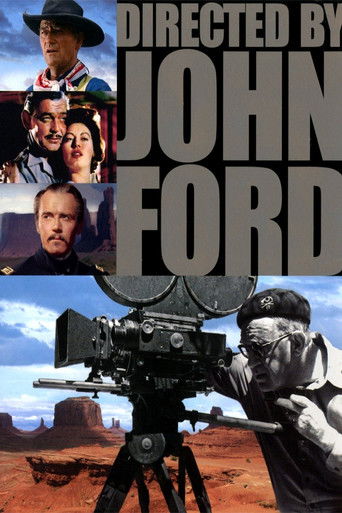
A documentary about the life and films of director John Ford.
More than 65 million people around the world have been forced from their homes to escape famine, climate change and war, the greatest displacement since World War II. Filmmaker Ai Weiwei examines the staggering scale of the refugee crisis and its profoundly personal human impact. Over the course of one year in 23 countries, Weiwei follows a chain of urgent human stories that stretch across the globe, including Afghanistan, France, Greece, Germany and Iraq.
A behind the scenes look into George Romero's groundbreaking horror classic Night of the Living Dead.
A documentary on the life of John Lennon, with a focus on the time in his life when he transformed from a musician into an antiwar activist.
Alex Gibney explores the charged issue of pedophilia in the Catholic Church, following a trail from the first known protest against clerical sexual abuse in the United States and all way to the Vatican.
A portrait of the day-to-day operations of the National Gallery of London, that reveals the role of the employees and the experiences of the Gallery's visitors. The film portrays the role of the curators and conservators; the education, scientific, and conservation departments; and the audience of all kinds of people who come to experience it.
Al Pacino's deeply-felt rumination on Shakespeare's significance and relevance to the modern world through interviews and an in-depth analysis of "Richard III."
A filmmaker who grew up alongside Chucky the killer doll seeks out the other families surrounding the Child's Play films as they recount their experiences working on the ongoing franchise and what it means to be a part of the, "Chucky" family.
After the high-profile killing of Damilola Taylor, Cornelius' family move out of London. But when they discover their new town is run by racists, Cornelius takes a drastic step to survive.
In this documentary, recovering addict and amputee John Wood finds himself in a stranger-than-fiction battle to reclaim his mummified leg from Southern entrepreneur Shannon Whisnant, who found it in a grill he bought at an auction and believes it therefore to be his rightful property.
A documentary about the making of David Fincher's 2008 film THE CURIOUS CASE OF BENJAMIN BUTTON. Virtually every element in the evolution of the Fincher's film is documented here, from the project's attachment to numerous other directors during the 1990s, to its shoot in 2006 and 2007 in New Orleans, to its complex, CGI-intensive postproduction process.
When Allied forces liberated the Nazi concentration camps in 1944-45, their terrible discoveries were recorded by army and newsreel cameramen, revealing for the first time the full horror of what had happened. Making use of British, Soviet and American footage, the Ministry of Information’s Sidney Bernstein (later founder of Granada Television) aimed to create a documentary that would provide lasting, undeniable evidence of the Nazis’ unspeakable crimes. He commissioned a wealth of British talent, including editor Stewart McAllister, writer and future cabinet minister Richard Crossman – and, as treatment advisor, his friend Alfred Hitchcock. Yet, despite initial support from the British and US Governments, the film was shelved, and only now, 70 years on, has it been restored and completed by Imperial War Museums under its original title "German Concentration Camps Factual Survey".
Director Michael Apted revisits the same group of British-born adults after a 7 year wait. The subjects are interviewed as to the changes that have occurred in their lives during the last seven years.
Photographer Estevan Oriol and artist Mister Cartoon turned their Chicano roots into gritty art, impacting street culture, hip hop and beyond.