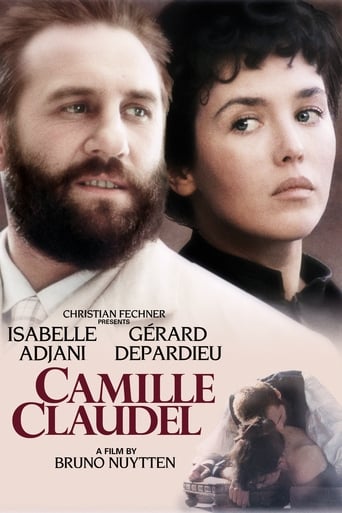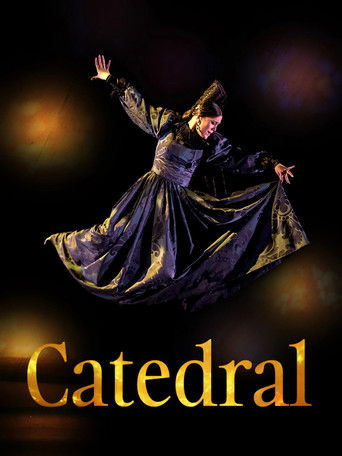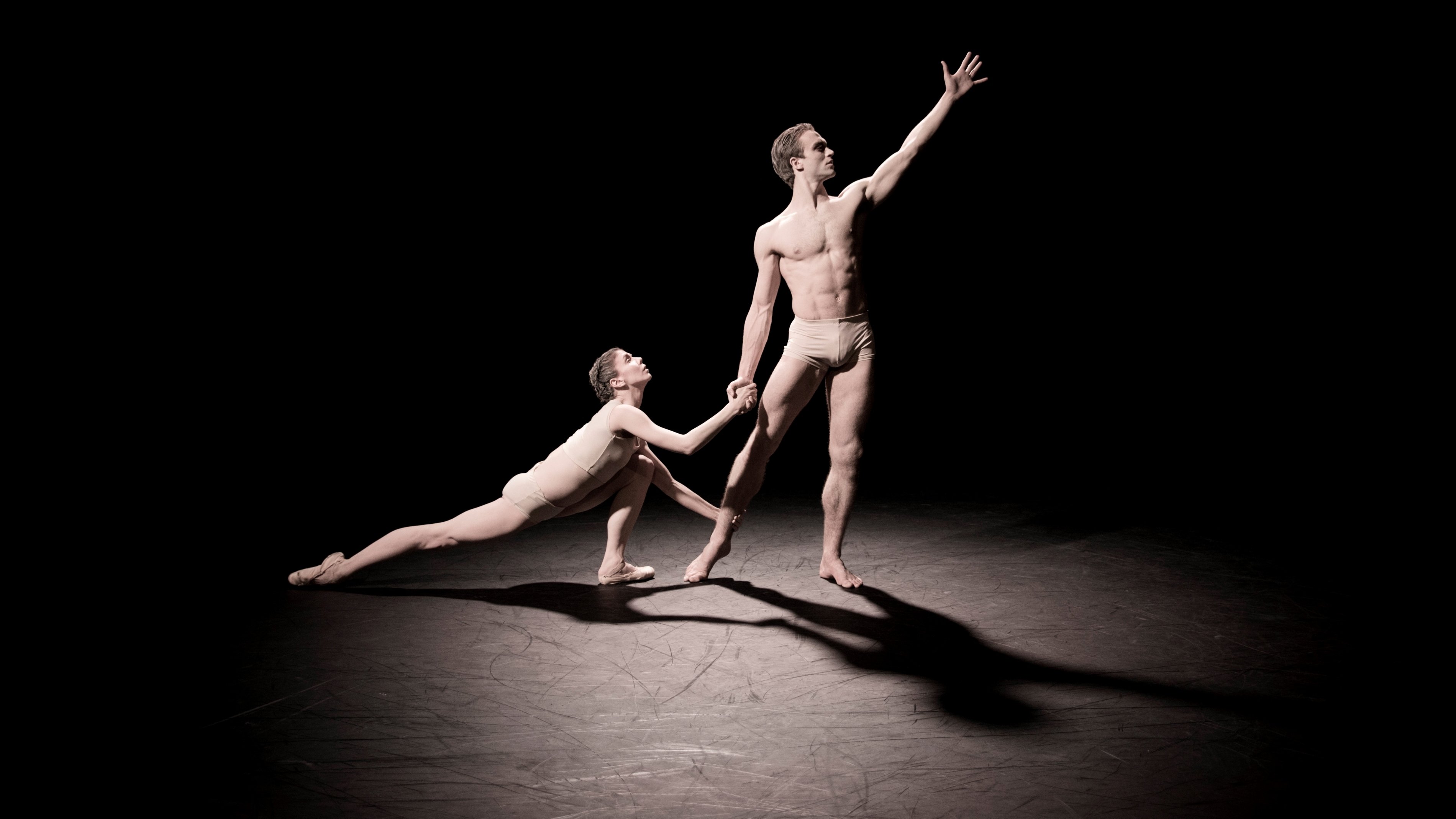
Dance film inspired by the life and work of the artists Camille Claudel and Auguste Rodin.
Social & External
Camille Claudel
Sculpture
Auguste Rodin (voice)
Jessie Lipscomb
Camille Claudel (voice)
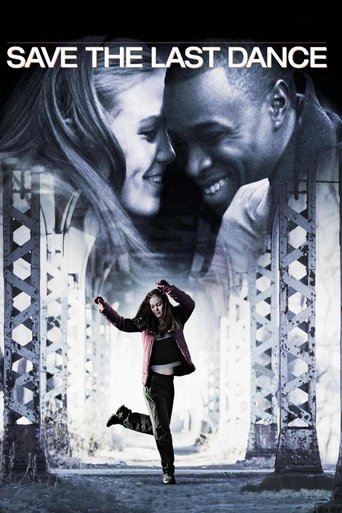
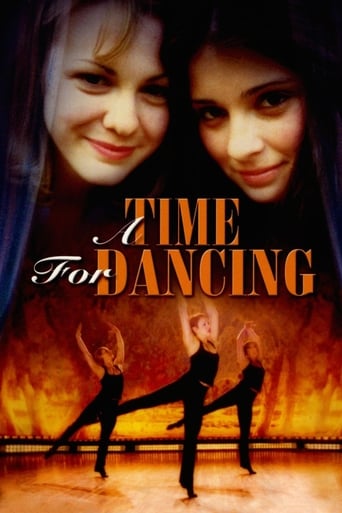
After the death of her mother, Sara moves to the South Side of Chicago to live with her father and gets transferred to a majority-black school. Her life takes a turn for the better when befriends Chenille and her brother Derek, who helps her with her dancing skills.
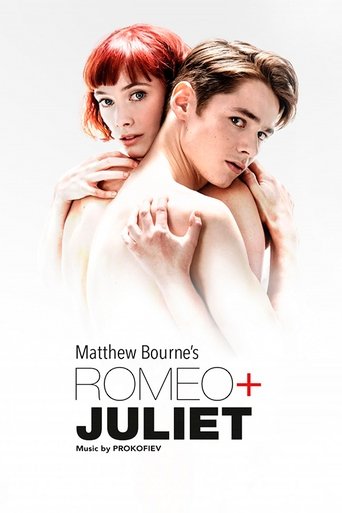
As members of the feuding Capulet and Montague families, Romeo and Juliet should be sworn enemies, but they fall deeply in love and marry in secret. That very day, disastrous circumstances lead Romeo to fight and kill Juliet’s cousin Tybalt, setting off a chain of events that culminate in tragedy.
George Balanchine's jewel-themed triptych, strikingly choreographed to the music of Faure, Stravinsky and Tchaikovsky. This three act masterpiece is renowned as the world's first full-length abstract ballet. The Russian-born co-founder of the New York City Ballet, Balanchine was inspired by the artistry of jewellery designer Claude Arpels to create a trio of distinct movements revealing the essence of each precious stone. Each part also evokes three different cities: Paris, New York and St. Petersburg. 'Emeralds' was conceived as a tribute to the French romantic school, with music by Gabriel Faure. The fiery and energetic 'Rubies' taps into the rich tradition of Broadway musicals, with music by Stravinsky. 'Diamonds' honours the grandeur of Imperial Russia and the Maryinsky Theater, choreographed to the music of Tchaikovsky. With its jewel-like costumes, this is a celebration of the influences on the choreographer who was described as the father of American ballet.
When rebellious street dancer Andie West lands at the elite Maryland School of the Arts, she finds herself fighting to fit in while also trying to hold onto her old life. When she joins forces with the school's hottest dancer, Chase Collins, to form a crew of fellow outcasts to compete in Baltimore s underground dance battle The Streets.
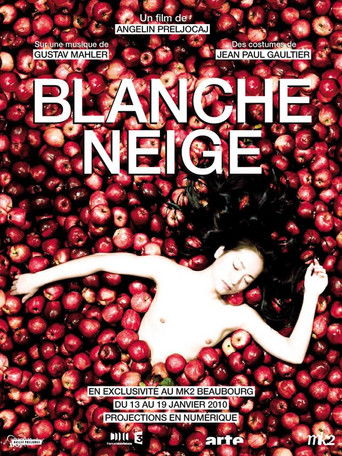
To speak of that ballet is very difficult because the theme is so popular as a fairy tale, adapted by Perrault from German folklore and then recuperated from the same folklore by the Grimm brothers, and what's more turned into an unforgettable film by Walt Disney. Angelin Preljocaj was thus trying to break a mould in which that character and her story had been cast seemingly for ever. And it is a success. Because first the setting, the stage direction are very interesting and rich. Rich are the costumes. Rich are the main ideas of the setting like the enormous magic mirror coming down from the sky, or like the deep underground mine turned into a vertical surface on which the seven dwarfs are dancing like dragon-flies on their strings.
Manon’s brother Lescaut is offering her to the highest bidder when she meets Des Grieux and falls in love. They elope to Paris, but when Monsieur G.M. offers Manon a life of luxury as his mistress she can’t resist.
A small-town shoemaker with a knack for spinning yarns, Hans encounters happiness and heartbreak on his road to becoming a full-fledged writer.
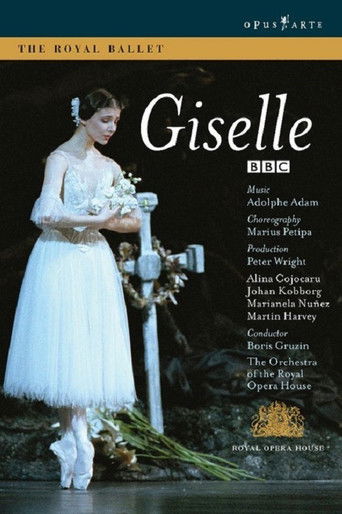
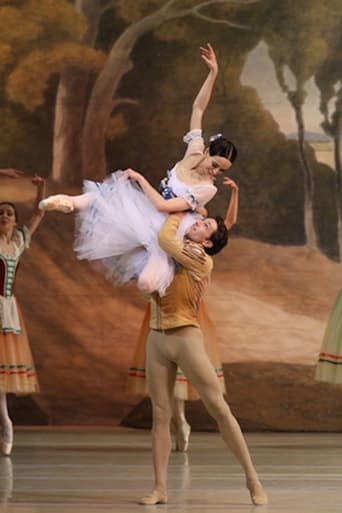
The peasant girl Giselle discovers the true identity of her lover Albrecht – and that he is promised to another. Giselle kills herself. Her soul enters the ranks of the Wilis – shades of young women who died before their wedding day. All men that come across their path are compelled to dance themselves to death, and Albrecht falls into their trap. Giselle’s intercession saves Albrecht and releases her soul from the Wilis’ power.
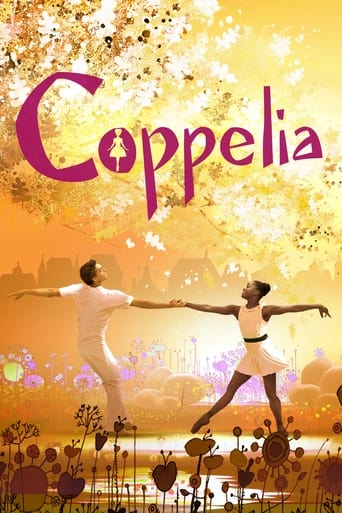
This delightful ballet tells the story of Dr Coppelius, an eccentric toymaker, who attempts to bring life to his beautiful doll Coppélia. He is foiled by the mischevious Swanilda, who masquerades as Coppélia and saves her love, Franz, from the Doctor's magic. Recorded live at the Sydney Opera House, this acclaimed production by Dame Peggy van Praagh, the founding Artistic Director of the Australian Ballet, is a triumph.
The Royal Ballet performs Tchaikovsky's classic ballet, choreographed by Liam Scarlett and starring Marianela Nunez as Odette/Odile and Vadim Muntagirov as Prince Siegfried.
Ten short pieces directed by ten different directors, including Ken Russell, Jean-Luc Godard, Robert Altman, Bruce Beresford, and Nicolas Roeg. Each short uses an aria as soundtrack/sound, and is an interpretation of the particular aria.
La Esmeralda is a ballet in three acts and five scenes, inspired by the novel Notre-Dame de Paris by Victor Hugo, originally choreographed by Jules Perrot to music by Cesare Pugni, with sets by William Grieve and costumes by Mme. Copère.
The story of Don Quixote tells of the old knight who dreams of chivalry and his comic squire, Sancho Panza. This performance by the Kirov has been hailed as one of the greatest large cast ballet productions ever recorded on film. The tremendous resources of the Kirov Ballet flash and dash through the four acts of joyous Petipa and Gorsky choreography making Don Quixote a thrilling visual treat. This delightful spectacle features the great Soviet dancers Tatyana Terekhova and Farouk Ruzimatov as the lovers Kitri and Basilio. Don Quixote is performed by Kirov star Vladimir Ponomaryov. Filmed live at the Kirov Theatre in Leningrad.
Matthew Bourne choreographs this performance of Tchaikovsky's ballet, filmed live in London. The show, the longest running ballet on both Broadway and the West End, follows the story of Prince Siegfried, who promises his love to swan maiden Odette, only to be tricked by magician Von Rothbart. The stars include Richard Winsor, Dominic North, Nina Goldman, Madelaine Brennan, Steve Kirkham and Joseph Vaughan.
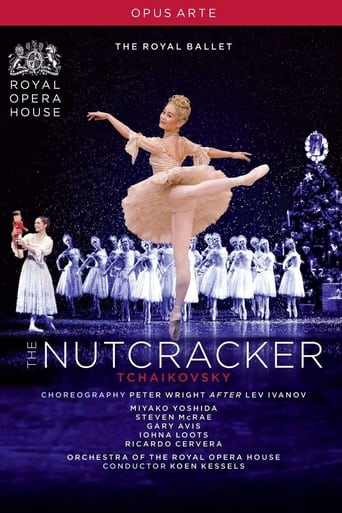
The Nutcracker is Mikhail Baryshnikov's breathtaking and critically acclaimed Emmy-nominated production. This spectacular performance is danced by the magnificent team of Baryshnikov, one of the greatest classical dancers of the century, and Gelsey Kirkland, both showcased at the peak of their careers, with members of the American Ballet Theatre.
Two young lovers, offspring of the feuding Montague and Capulet families, value feelings above the past, pitting love and forgiveness against hatred and revenge.
A group of 12 teenagers from various backgrounds enroll at the American Ballet Academy in New York to make it as ballet dancers and each one deals with the problems and stress of training and getting ahead in the world of dance.
Going to see Nutcracker with the whole family has been a tradition in other countries for many years. Now it is a tradition in the Netherlands as well. It became apparent that the Netherlands had also adopted this tradition in 1996, when the Dutch National Ballet presented its own version of the famous fairytale ballet. It is a magical production that has won the hearts of more than 250,000 people to date. Choreographers Toer van Schayk and Wayne Eagling created a Nutcracker for the children and adults of today. It is more dynamic and exciting, and less sweet than usual. They also chose to give a Dutch twist to their interpretation of the story, with skaters on the canals and a living room that transforms into a snowy forest. Unlike the original story, the production by Eagling and Van Schayk (who also designed the delightful sets and costumes) does not take place on Christmas Eve in a German town, but during St. Nicholas celebrations in Amsterdam, around 1810.
The Mother is a powerfil, narrative dance production choreographed and directed by Archar Pita a master storyteller: Inspired by Hans Christian Andersen's dark tale, The Story of a Mother, this sumptuously designed production stars international dance superstar Natalia Osipova and multi-award winning dancer Jonathan Goddard. This inventive new production conjures up a dangerous, kaleidoscopic world. combining narrative dance and drama. In setting out to save her sick child, a young mother journeys into the unknown to face life and death. Will she succumb to the forces of evil, or will the power of motherhood prevail?
In the spring of 1913, Parisian businessman Gabriel Astruc opens a new theater on the Champs Elysées. The first performance is the premiere of Igor Stravinsky's 'The Rite of Spring', danced by the Ballet Russes. The rehearsal process is extremely fraught: the orchestra dislike Stravinsky's harsh, atonal music; the dancers dislike the 'ugly' choreography of Vaslav Nijinsky. The volatile, bisexual Nijinsky is in a strained relationship with the much older Sergei Diaghilev, the Ballet Russes' charismatic but manipulative impresario. Public expectation is extremely high after Nijinsky's success in 'L'apres-midi d'un faune'. Finally, 'The Rite of Spring' premieres to a gossip-loving, febrile, fashion-conscious Parisian audience sharply divided as to its merits.