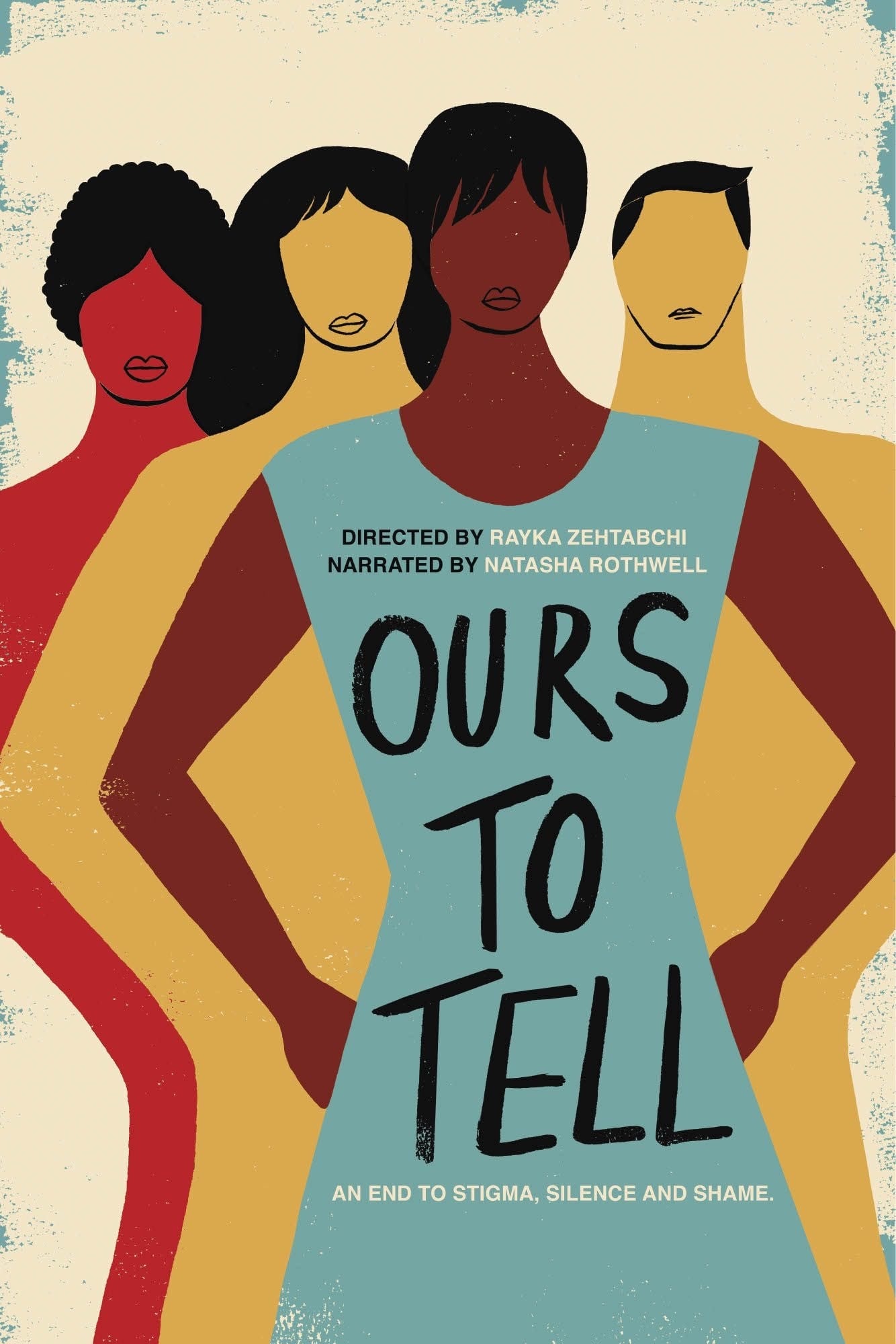
"An end to stigma, silence, and shame."
Four people - Brittany, Hannah, Nick, and Ylonda - tell their stories about how access to abortion in their community helped them empower themselves to lead lives they want to live.

Social & External
Narrator
This fascinating political look at a little-known chapter in women's history tells the story of "Jane", the Chicago-based women's health group who performed nearly 12,000 safe illegal abortions between 1969 and 1973 with no formal medical training. As Jane members describe finding feminism and clients describe finding Jane, archival footage and recreations mingle to depict how the repression of the early sixties and social movements of the late sixties influenced this unique group. Both vital knowledge and meditation on the process of empowerment, Jane: An Abortion Service showcases the importance of preserving women's knowledge in the face of revisionist history. JANE: AN ABORTION SERVICE was funded by the Independent Television Service (ITVS) with funds provided by the Corporation for Public Broadcasting.
Love in a concentration camp. A young Jewish gay man, Otto, is protected by a "kapo" (a fellow prisoner) and an SS guard who unexpectedly ends up saving his life.
Shut Up and Sing is a documentary about the country band from Texas called the Dixie Chicks and how one tiny comment against President Bush dropped their number one hit off the charts and caused fans to hate them, destroy their CD’s, and protest at their concerts. A film about freedom of speech gone out of control and the three girls lives that were forever changed by a small anti-Bush comment
Putito is a production with no specific genre, where reality and fiction blend through a testimony written by José Carlos Henríquez - a feminist activist and male prostitute who plays himself in the project. Available in a censored and uncensored version.
In focusing his attention on the competitors of Mr Gay Syria, director Ayse Toprak shatters the one-dimensional meaning of “refugee”. Using the pageant as a means of escape from political persecution, the organiser Mahmoud — already given asylum in Berlin — hopes to offer the winner a chance to travel as well as bring international attention to the life-threatening situations faced by LGBT Syrians.
With the aim of studying sexuality and the role of disciplinary power in controlling the female body for a Philosophy of Communication course, the short follows accounts by non-straight women about their process of discovering their sexuality and acceptance.
Between 1968 and 1970, J M Goodger, a lecturer at the University of Salford, made a film record of the living conditions in the slums of Ordsall, Salford, which were then in the process of being demolished. Under the title 'The Changing face of Salford', the film was in two parts: 'Life in the slums' and 'Bloody slums'.
Wes Hurley's autobiographical tale of growing up gay in Soviet Union Russia, only to escape with his mother, a mail order bride, to Seattle to face a whole new oppression in his new Christian fundamentalist American dad.
Kim Kardashian is the embodiment of our times. She's a total social figure. To analyze her is to talk about ourselves, our relationship with social networks, capitalism and aesthetic standards. Through the eyes of journalists Nesrine Slaoui and Guillaume Erner, this film proposes a theory in the zeitgeist, crossed by questions of race and gender. Journalist and sociologist Guillaume Erner wonders why Kim Kardashian is the most followed woman in the world on social networks "when she does nothing". With the help of journalist and director Nesrine Slaoui, he paints a portrait of this "total social character", who is famous because of... her fame. Fashion icon, star of a never-ending reality TV family saga, savvy businesswoman, future lawyer and activist outraged by the state of American prisons, the beautiful Kim, who is said to be tempted by a political destiny, is in fact not idle at all...
Over many years, the director’s father filmed his family life almost obsessively. His daughter’s birth, his son’s first steps, and always Valérie, the young mother. An impressive fund of material which their now grown-up daughter Faustine appropriates to tell quite a different story: that of a woman who sees her role as a mother and its demands take away her freedom step by step.
The 1920s saw a revolution in technology, the advent of the recording industry, that created the first class of African-American women to sing their way to fame and fortune. Blues divas such as Bessie Smith, Ma Rainey, and Alberta Hunter created and promoted a working-class vision of blues life that provided an alternative to the Victorian gentility of middle-class manners. In their lives and music, blues women presented themselves as strong, independent women who lived hard lives and were unapologetic about their unconventional choices in clothes, recreational activities, and bed partners. Blues singers disseminated a Black feminism that celebrated emotional resilience and sexual pleasure, no matter the source.
Vicky is fisherman by day and bar owner at night. When she was a little boy her dream was to be a radio soap opera star, nowadays she dreams of falling in love again. How is it possible that a small, barren place in the third world has managed to achieve this special form of freedom and tolerance?
French documentary campaigning for the liberalization of abortion and contraception, directed by Charles Belmont and Marielle Issartel in 1973.
In 1980, the first march of gays, lesbians and transvestites took place in Brazil in protest against the constant police operations that took place in São Paulo, which aimed to repress these groups. Based on Renan Quinalha's doctoral thesis, “Against morality and good customs: the sexual politics of the Brazilian dictatorship (1964-1988)”, carried out by the Institute of International Relations, a series of four 5 minute videos about the birth of the LGBT movement during the Military Regime.
In Uganda, AIDS-infected mothers have begun writing what they call Memory Books for their children. Aware of the illness, it is a way for the family to come to terms with the inevitable death that it faces. Hopelessness and desperation are confronted through the collaborative effort of remembering and recording, a process that inspires unexpected strength and even solace in the face of death.
The life story of Charlotte von Mahlsdorf, who survived the Nazi reign as a trans woman and helped start the German gay liberation movement. Documentary with some dramatized scenes. Two actors play the young and middle aged Charlotte and she plays herself in the later years.
Thomas Haemmerli is about to celebrate his fortieth birthday when he learns of his mother's death. A further shock follows when he and his brother Erik discover her apartment, which is filthy and full to bursting with junk. It takes the brothers an entire month to clean out the place. Among the chaos, they find films going back to the 1930s, photos and other memorabilia.
A docu-drama shot in 1970, but not completed until 1973, the film sought to encapsulate in an experimental form issues that were under discussion within the Women’s Liberation Movement at this time and to thus contribute to action for change. In its numerous community screenings, active debate was encouraged as part of the viewing experience.
Created from a treasure trove of archive, Queerama traverses a century of gay experiences, encompassing persecution and prosecution, injustice, love and desire, identity, secrets, forbidden encounters, sexual liberation and pride. The soundtrack weaves the lyrics and music of John Grant, Goldfrapp and Hercules & Love Affair with the images and guides us intimately into the relationships, desires, fears and expressions of gay men and women in the 20th century – a century of incredible change.