"La Trifulca II"
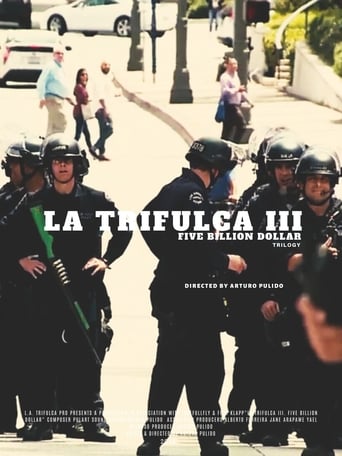
The citizens of Tijuana show their annoyance, what they call Central American invaders that ran out of their countries, fleeing violence, poverty, now installed and waiting to cross the wall to the United States.
Social & External
Olivia Martin McGuire (China Love) parallels a grandfather’s journey to safety during the Cultural Revolution with his granddaughter’s fight for freedom in Hong Kong today. Interweaving unflinching testimony of the elder’s exodus from the Chinese mainland, exquisitely animated recreations of the perilous escape to Hong Kong through land and sea, and vivid, evocative archival footage of both mid-20th-century China and the Hong Kong protests today, Freedom Swimmer emerges as a gripping and timely account of the struggle for survival across generations.
A girl from St. Petersburg walks around protest-ridden Moscow, talking to riot police and believing that sooner or later they will go over to the side of the demonstrators. An 18-year-old student of a St. Petersburg college introduces herself as Alice and tells about herself that from the age of four she lived in an orphanage and in foster families. In Moscow, Alisa, for whom this is the first rally in her life, walks along the police cordons and looks under the OMON helmet. "Under the mask you can't see, are you even human?"
Fragmentary perspectives on Human Rights and transgender (trans*) People in Turkey. What remains at the place where a murder happened? What constitutes trans* life? How to cope with daily violence and hatred? We begin to search for traces. We follow the tracks of resistance and survival. We are collectors of the expelled. We gather fragments of trans* lives inspired by texts of Nazim Hikmet, Foucault, Benjamin and Zeki Müren. Trans*BUT is a documental research study driven by the question: “What keeps you going when all else falls away?”
An exodus of migrants settled in Tijuana and they hope to cross each day regardless of the consequences, the children tell us what they see, want and what they are willing to pay.
"letters to eleanore" is a poignant feature-length documentary that explores the intertwined journeys of two remarkable girls, Keith from Canto Grande in Lima, Peru, who bravely navigates life with cerebral palsy alongside her devoted mother, and Olivia from Litchfield, Minnesota, whose experiences highlight the stark contrasts in societal attitudes towards disability in their respective countries. As their narratives unfold, they are beautifully interwoven with the legacy of Eleanore and her family, whose life, untimely death, and the impact of her wheelchair ignited a powerful movement of hope for countless children and their families facing similar challenges. This film is not just a story of perseverance and love; it is a testament to the strength of community, brought to life through the collaborative efforts of volunteers, students, and communities across Peru and the United States, embodying a true grassroots style of storytelling that resonates with authenticity and compassion.
Jesus 'Chuy' Aceves and a dozen living members of his extended family suffer from the very rare condition of congenital hypertrichosis, meaning they were born with excessive hair on their faces and bodies. Due to their appearance, they suffer from discrimination in all areas of their lives: the children are made fun of at school and abandoned by their 'non-hairy' parents, and the adults cannot find work unless they choose to exhibit themselves as freaks in circuses. This moving and visually arresting documentary is a portrait of Chuy and his family members. It examines their day-to-day lives and their struggle to find love, acceptance and employment.
An urgent and powerful documentary, shot in a detention centre where asylum seekers trying to reach Australian shores are indefinitely detained. Secretly shot on a mobile phone by Iranian journalist Behrouz Boochani while detained on Manus, in Papua New Guinea, the film is a collaboration with Dutch-Iranian filmmaker Arash Kamali Sarvestani. Boochani recounts, via the testimonies of fellow inmates, the abuse and violence inflicted and the precarious state of limbo they find themselves in. Chauka, the name of the dreaded solitary confinement unit within the detention centre, was originally the name of a beautiful bird and symbol of the Manus Island. By interweaving dialogue with two Manusian men and shots of daily life on the island, the film gives a much-needed voice to Manus inhabitants, understandably distressed by the current situation. With marked restraint, the film exposes lives broken by shocking immigration policies.
What is possible when we have guaranteed money to meet our basic needs? No requirements. No stipulations. No paybacks. We look to the village of Busibi to discover what’s possible when we give money directly to people. No strings attached. The answer lies in the residents’ personal stories. Their successes and tribulations illustrate the impact of one of the most daring projects in contemporary development cooperation. Their life stories unexpectedly prove to be all too familiar. They make us laugh. They move us. Blending in together, they create a colorful and poetic reality portrait, illustrating the big consequences of a small sum of money …
Through personal stories, the documentary approaches the issues of gender identity and legal gender recognition in Greece. The three main characters explain how society has treated them, by narrating their experiences from the past and the present.
Documentary about the Lyon sex workers who occupied the church of St. Nizier on June 3, 1975.
An unlikely collaboration between a forensic scientist from Texas and a group of Latin American students changes the course of forensic science and international human rights.
September 1st, 1939. Nazi Germany invades Poland. The campaign is fast, cruel and ruthless. In these circumstances, how is it that ordinary German soldiers suddenly became vicious killers, terrorizing the local population? Did everyone turn into something worse than wild animals? The true story of the first World War II offensive that marks in the history of infamy the beginning of a carnage and a historical tragedy.
Ompung Putra Boru, a sixties indigenous Batak woman from Humbang Hasundutan, North Sumatra, retraces her life stories through photographs that interweave her past and present as a wife, mother, healer and indigenous land defender in two neighboring villages. Her multi-layered stories are juxtaposed with visual records of everyday life in the two villages, where people’s living space is still increasingly threatened by a giant pulp expansion.
The documentary begins when the fictionalized drama ends. Sara spent three years volunteering to save refugees on the same journey that made her so famous, and was suddenly arrested in Aug. 2018, accused by Greek authorities of running a criminal enterprise with charges including “international espionage and people smuggling.” If convicted, she faces up to 25 years in prison and the end of her humanitarian career. Shot over three years, the film follows Sara’s fight for justice and journey of self-discovery.
In the wilderness of the Bucharest Delta, nine children and their parents lived in perfect harmony with nature for 20 years – until they are chased out and forced to adapt to life in the big city.
Once upon a time, the Venezuelan village of Congo Mirador was prosperous, alive with fisherman and poets. Now it is decaying and disintegrating—a small but prophetic reflection of Venezuela itself.
"Gaza Is Our Home" is a profoundly personal documentary that peels back the layers of devastation within the Gaza Strip, as witnessed through the lens of filmmaker Monear Shaer. His debut documentary was created out of agony as a timely, impactful, and tragic response to the collective anguish of all who call Gaza home... What began as an auto-generated slideshow on Monear’s iPhone of his own trip to see his family in 2021, has since transformed into a feature-length documentary. Through a tapestry of intimate interviews, unfiltered personal footage, and raw storytelling, "Gaza Is Our Home" transcends the political rhetoric and confronts audiences with the agonizing reality and ongoing cruelty thrust upon the film-makers own family. It is more than just a documentary... Rather, "Gaza Is Our Home" stands as a testament to the humanity behind the over 33,362 innocent lives massacred since Oct 2023...
Journalist Dermi Azevedo has never stopped fighting for human rights and now, three decades after the end of the military dictatorship in Brazil, he's witnessing the return of those same practices.