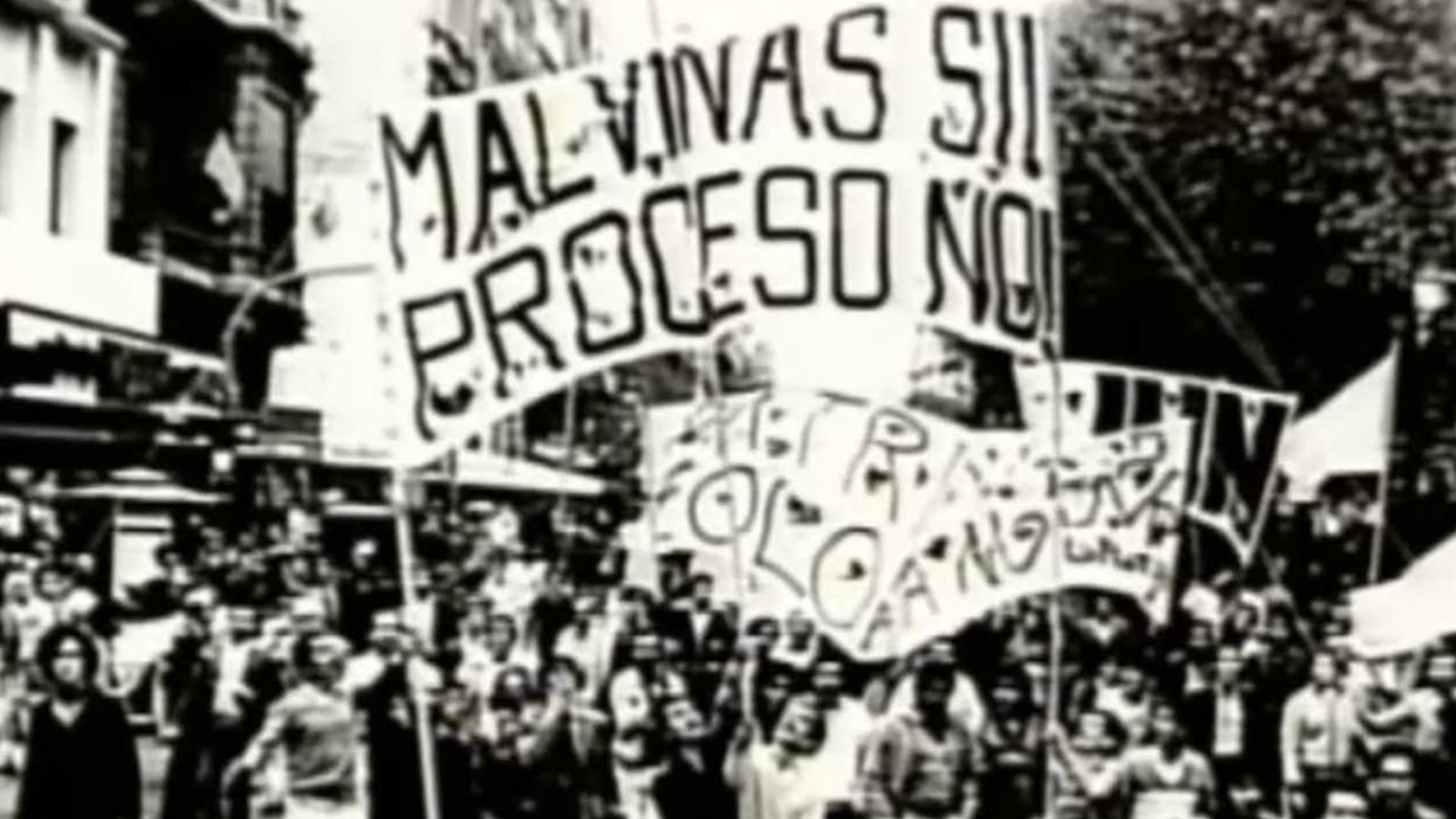
Malvinas, history of betrayals is an Argentine-Mexican co-production documentary film directed by Jorge Denti from a script by Irene Selzer and Alberto Adellach.
Social & External
The people behind it
Adolfo Pérez Esquivel
Self
Gregorio Selser
Anthony Buck
E.P. Thompson
This two-hour special looks back at Dec. 7, 1941 - the date that has indeed lived in infamy, as President Franklin Roosevelt promised - when imperial Japan attacked the U.S. naval forces in Hawaii, ushering America into World War II. The attack killed more than 2,400 people, wounded 1,000 and damaged or destroyed nearly 20 American ships and over 300 airplanes.
A look at French president Nicolas Sarkozy's rise to power.
When Ellen Johnson Sirleaf became Africa's first ever elected female head of state, filmmakers Siatta Scott-Johnson and Daniel Junge were there to follow her. It was the start of an extraordinary year they spent with the Liberian president as she struggled to take control of a country devastated by years of civil war. Together with her 'iron ladies' (the finance minister and police chief are also formidable females), she takes a firm hold on the government, trying to root out corruption and spend the tiny annual budget carefully. But it is not an easy task, and everything seems to be against her - even her presidential mansion burns down. (Storyville)
After the assassination of President Park, martial law has been declared. A coup d'état bursts out by Defense Security Commander Chun Doo-gwang and a private band of officers following him. Capital Defense Commander Lee Tae-shin, an obstinate soldier who believes the military should not take political actions, fights against Chun Doo-gwang to stop him. The conflict between the two grows while military leaders are holding their decision and Defense Minister is gone. In the midst of chaos, the spring of Seoul that everyone longed for heads to unexpected direction.
José Sánchez has big ambitions, terrible instincts, and a mustache to match. After a string of bad deals, he accidentally bluffs his way into becoming El Serpiente, a political boss feared for all the wrong reasons. Now he must pull off one final deal to stay alive — a deal far beyond anything he can fake.
UKIP: The First 100 Days is a 2015 mockumentary which was broadcast on Channel 4 in the United Kingdom on 16 February 2015, and in the run-up to the May 2015 general election. It tells the fictional story of how the country would be run if the UK Independence Party (UKIP), a Eurosceptic party, were to win the election and its leader Nigel Farage become Prime Minister. The programme is filmed in the style of a fly-on-the-wall documentary that follows UKIP's first female Asian MP as she struggles with the party's stance on immigration amid mounting public discontent with its hardline policies. The role of Deepa Kaur, who is elected to serve as MP for the Romford constituency, is played by Priyanga Burford.
Opening at the funeral mass for Mikel, we flashback to those that played a part in Mikel's life and death; his estranged wife, his traditional Basque mother, a female impersonator and friend to Mikel in his coming out, and even the local priest.
An analysis of the causes, social, political, and economic that caused the rise of Hugo Chávez as president of Venezuela; his abuse of power and the response of civil society, including the student movement; his political fall as well as the secrecy that surrounded his illness and the succession of Nicolás Maduro.
Five women veterans who have endured unimaginable trauma in service create a shared sisterhood to help the rising number of stranded homeless women veterans by entering a competition that unexpectedly catalyzes moving events in their own lives.
Mike Porcel is the lost member of the Cuban Nueva Trova musical movement. His lack of “revolutionary spirit” condemned him to the scorn of his peers and made him a pariah for a decade, until he managed to go into exile. Without resentment, but without forgetting, the film reconstructs his story and revives a forgotten brilliance.
A troubled youth is offered the opportunity to serve as a Senate page in Washington, DC.
Dreaming of the West, Boryana is determined not to have a child in communist Bulgaria. Nonetheless, her daughter Viktoria enters the world in 1979, curiously missing a belly button, and is declared the country’s Baby of the Decade. Pampered by her mother state until the age of nine, Viktoria’s decade of notoriety comes crashing down with the rest of European communism. But can political collapse and the hardship of new times finally bring Viktoria and her reluctant mother closer together
Director Anna Broinowski explores how Pauline Hanson's speech in 1996 and the decades of debate that followed has influenced Australia today; the impact of her political career on modern multicultural Australia, and the people who have helped her transition from local fish shop owner to Member for Oxley. Featuring many of Hanson's critics, opponents, advisors and commentators, from former Prime Minister John Howard, to current members of the media, including Margo Kingston and Alan Jones; and leading Indigenous commentator, Professor Marcia Langton.
A made-for-cable-TV docudrama about the trial of the men accused of conspiring to cause protesters to riot at the 1968 Democratic National Convention in Chicago. Combines in an innovative manner dramatic recreations (largely faithful to the actual trial transcripts) with documentary footage and interviews with the actual defendants.
Edward Said, Professor of English & Comparative Literature at Columbia University, was a prominent literary critic of the late 20th century and a leading spokesperson for the Palestinian cause in the US. Born to a Palestinian family in Al-Quds (Jerusalem) in 1935, he and his family were dispossessed in 1948 and settled in Cairo. Educated in the US, he lived in New York for many years. Said was a member of the Palestine National Council. After resigning from the PNC in 1991, Said wrote critically about the post-Oslo peace process, the political failures of Yasser Arafat and the PLO. Said was diagnosed with leukemia in 1991 and struggled with the disease while continuing to write and teach. He stopped giving interviews but made an exception less than a year before his death in 2003, speaking about his illness, work, Palestine, politics, life, and education. The last interview is the final testament of this passionately committed intellectual.
Deanna Durbin is all grown up in Hers to Hold, the unofficial sequel to her "Three Smart Girls" films of the 1930s. Durbin plays Penelope Craig, the starry-eyed daughter of wealthy Judson and Dorothy Craig (Charles Winninger, Nella Walker). Developing a crush on much-older playboy Bill Morley (Joseph Cotton), Penelope stops at nothing to land the elusive Morley as her husband. Highlights include Durbin's renditions of "Begin the Beguine" and the "Seguidilla" from Carmen, and a captivating sequence that includes highlights from Durbin's earlier films, presented as home movies!
This short film in support of the war effort focuses on the training and missions of Army Air Corps Captain Hewitt T. Wheless just after the U.S. entry into World War II.
Tom Mangold's inside story of the scandal that rocked Britain, showing what it was really like to live with Stephen Ward as he became the scapegoat for the Profumo affair.
The film is set in a small, snow-covered mountain village in Kurdistan. We follow a young woman, Helin, who wants to discover her family history. She lives with her mother, Susika, who has not spoken since her husband was arrested and imprisoned by the Turkish authorities. She cannot write or read either. Helin wants nothing more than to find out the story of her father. It is a story of how political oppression of a people and culture impacts that community, how it silences people, and about human resilience. Keeping a culture alive is a form of resistance.
A master thief coincidentally is robbing a house where a murder—in which the President of the United States is involved—occurs in front of his eyes. He is forced to run, while holding evidence that could convict the President.
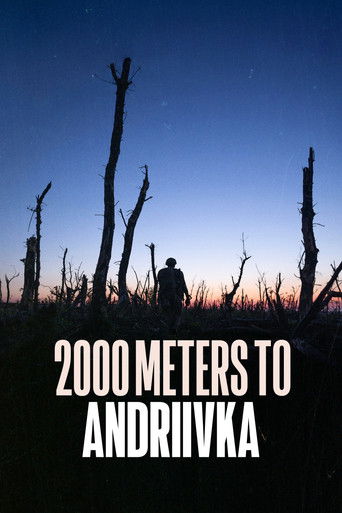
Amid the failing counteroffensive, a journalist follows a Ukrainian platoon on their mission to traverse one mile of heavily fortified forest and liberate a strategic village from Russian occupation. But the farther they advance through their destroyed homeland, the more they realize that this war may never end.
Prelude to War was the first film of Frank Capra's Why We Fight propaganda film series, commissioned by the Pentagon and George C. Marshall. It was made to convince American troops of the necessity of combating the Axis Powers during World War II. This film examines the differences between democratic and fascist states.
When Sgt. First Class Brian Eisch is critically wounded in Afghanistan, it sets him and his sons on a journey of love, loss, redemption and legacy.
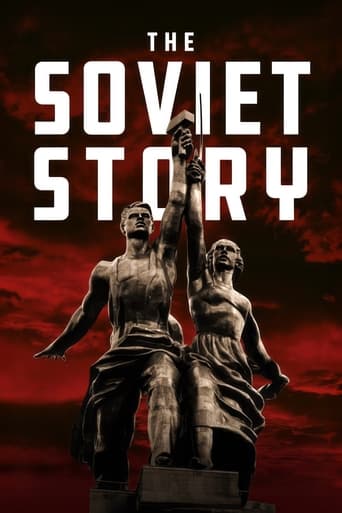
“The Soviet Story” is a story of an Allied power, which helped the Nazis to fight Jews and which slaughtered its own people on an industrial scale. Assisted by the West, this power triumphed on May 9th, 1945. Its crimes were made taboo, and the complete story of Europe’s most murderous regime has never been told. Until now...
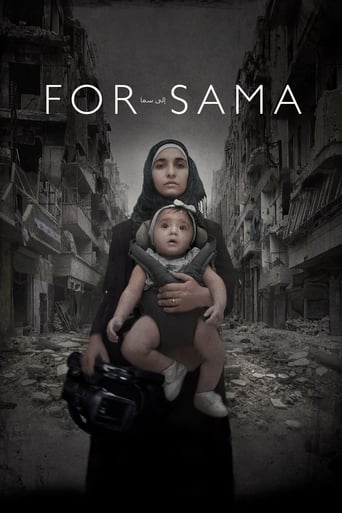
A love letter from a young mother to her daughter, the film tells the story of Waad al-Kateab’s life through five years of the uprising in Aleppo, Syria as she falls in love, gets married and gives birth to Sama, all while cataclysmic conflict rises around her. Her camera captures incredible stories of loss, laughter and survival as Waad wrestles with an impossible choice– whether or not to flee the city to protect her daughter’s life, when leaving means abandoning the struggle for freedom for which she has already sacrificed so much.
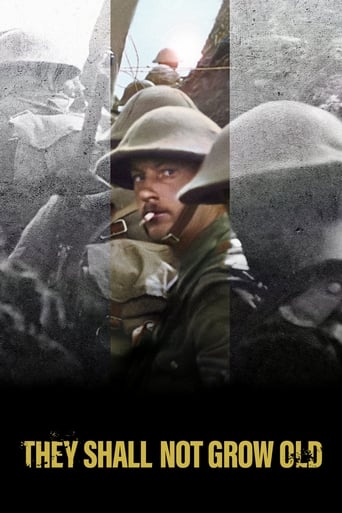
A documentary about World War I with never-before-seen footage to commemorate the centennial of Armistice Day, and the end of the war.
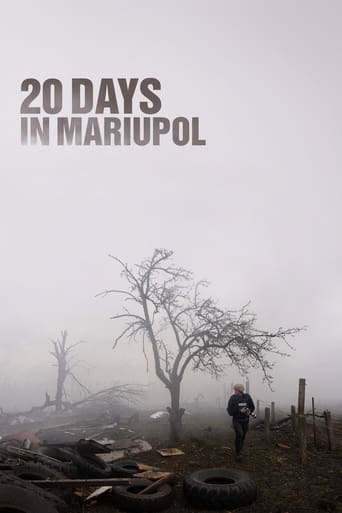
As the Russian invasion begins, a team of Ukrainian journalists trapped in the besieged city of Mariupol struggle to continue their work documenting the war's atrocities.
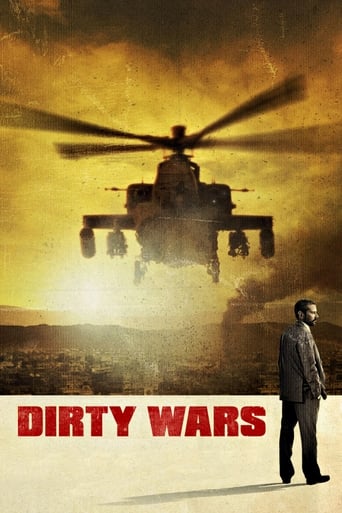
Korengal picks up where Restrepo left off; the same men, the same valley, the same commanders, but a very different look at the experience of war.
Against the darkening backdrop of New Delhi's apocalyptic air and escalating violence, two brothers devote their lives to protecting one casualty of the turbulent times: the bird known as the black kite.
This documentary movie is about the battle of San Pietro, a small village in Italy. Over 1,100 US soldiers were killed while trying to take this location, that blocked the way for the Allied forces from the Germans. Preserved by the Academy Film Archive in 2005.
Over a period of two years, Mark Cowen and his crew travelled to thirty U.S. states and ten European cities, to interview the veterans of Easy Company. The stories told by the veterans themselves, create a history of the Second World War from the point of view of this heroic company of men, made famous in the mini-series Band of Brothers.
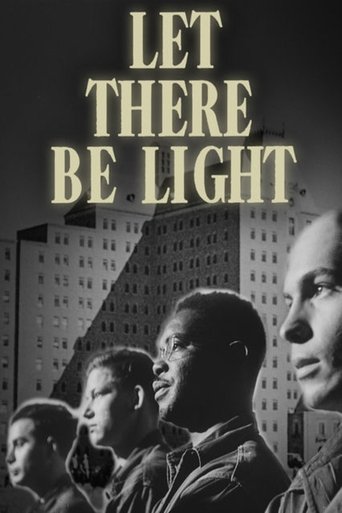
The final entry in a trilogy of films produced for the U.S. government by John Huston. Some returning combat veterans suffer scars that are more psychological than physical. This film follows patients and staff during their treatment. It deals with what would now be called PTSD, but at the time was categorised as psychoneurosis or shell-shock. Government officials deemed this 1946 film counterproductive to postwar efforts; it was not shown publicly until 1981.
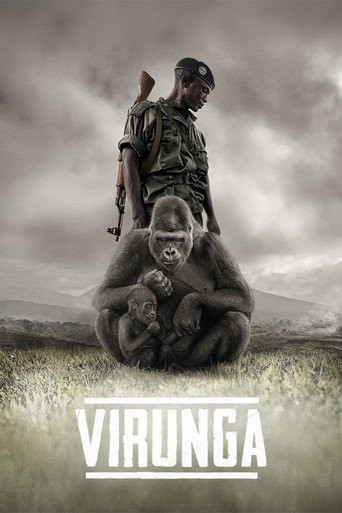
Virunga in the Democratic Republic of the Congo is Africa’s oldest national park, a UNESCO world heritage site, and a contested ground among insurgencies seeking to topple the government that see untold profits in the land. Among this ongoing power struggle, Virunga also happens to be the last natural habitat for the critically endangered mountain gorilla. The only thing standing in the way of the forces closing in around the gorillas: a handful of passionate park rangers and journalists fighting to secure the park’s borders and expose the corruption of its enemies. Filled with shocking footage, and anchored by the surprisingly deep and gentle characters of the gorillas themselves, Virunga is a galvanizing call to action around an ongoing political and environmental crisis in the Congo.
Many times during his presidency, Lyndon B. Johnson said that ultimate victory in the Vietnam War depended upon the U.S. military winning the "hearts and minds" of the Vietnamese people. Filmmaker Peter Davis uses Johnson's phrase in an ironic context in this anti-war documentary, filmed and released while the Vietnam War was still under way, juxtaposing interviews with military figures like U.S. Army Chief of Staff William C. Westmoreland with shocking scenes of violence and brutality.
Film from Andrew Morgan. The True Cost is a documentary film exploring the impact of fashion on people and the planet.
Director Peter Joseph examines examples of economic subjugation and offers solutions based on alignment with nature.
Set both in Latin America and the United States, the film explores the historic and current relationship of Washington with countries such as Venezuela, Bolivia and Chile. Pilger says that the film "...tells a universal story... analysing and revealing, through vivid testimony, the story of great power behind its venerable myths. It allows us to understand the true nature of the so-called "war on terror". According to Pilger, the film’s message is that the greed and power of empire is not invincible and that people power is always the "seed beneath the snow".
The extraordinary story of how Hollywood changed World War II – and how World War II changed Hollywood, through the interwoven experiences of five legendary filmmakers who went to war to serve their country and bring the truth to the American people: John Ford, William Wyler, John Huston, Frank Capra, and George Stevens. Based on Mark Harris’ best-selling book, “Five Came Back: A Story of Hollywood and the Second World War.”
Five broken cameras – and each one has a powerful tale to tell. Embedded in the bullet-ridden remains of digital technology is the story of Emad Burnat, a farmer from the Palestinian village of Bil’in, which famously chose nonviolent resistance when the Israeli army encroached upon its land to make room for Jewish colonists. Emad buys his first camera in 2005 to document the birth of his fourth son, Gibreel. Over the course of the film, he becomes the peaceful archivist of an escalating struggle as olive trees are bulldozed, lives are lost, and a wall is built to segregate burgeoning Israeli settlements.
Pete Postlethwaite stars as a man living alone in the devastated future world of 2055, looking at old footage from 2008 and asking: why didn’t we stop climate change when we had the chance?