A short opera about the assassination of poet and dramatist Federico García Lorca at the hands of Nationalist forces at the beginning of the Spanish Civil War.
Social & External
Dancer
A 2002 live performance of Mikel Rouse's Dennis Cleveland, a multimedia opera set entirely on a television talk show in the late 20th century.
The production was the Vienna State Opera debut for the young Swiss conductor Philippe Jordan – the Argentinian tenor Marcelo Álvarez, took the title role. His Charlotte on this occasion was the young Latvian mezzo-soprano Elīna Garanča. Her performances have been enthusiastically received and she has already been labelled as the new mezzo wonder. Staged by internationally sought-after Rumanian director, Andrei Serban, the apparently sentimental love story – normally presented in 18th century period costumes - reveals a study of personal relationships and a close observation of a woman, who comes of age too late. Serban’s aim was to rid the opera of the unjustified reputation of banality that clings to it despite its underlying tragic mood. By setting the production in the stiff, claustrophobic atmosphere of a small town in the 1950s, he aimed to make the audience more aware of its deeper levels of self-denial.
Emmanuelle Haïm has established herself as one of the world’s leading performers, conductors and interpreters of Baroque repertoire, not only with Le Concert d’Astrée, the ensemble she founded in 2000, but with several of the world’s greatest orchestras. Known for her fresh and expressive approach to Baroque music, she has garnered critical acclaim and several international awards with her own ensemble, including Victoires de la Musique Classique, ECHOs, Gramophone Awards, and Grammy nominations.
A musical drama based on Giuseppe Verdi's opera Rigoletto.
The writer Dario Fo applies his inventive genius to Rossini's comic opera in its premiere DVD release. Recorded in 2005 under the musical direction of Maurizio Barbacini, Fo's production brings fresh vitality and colour to the story of Lisetta, and of her father Don Pomponio's increasingly ridiculous attempts to find a husband for her through an advertisement in the newspaper LA GAZZETTA. Filmed using high definition cameras with multitrack sound.
A dying man in his forties recalls his childhood, his mother, the war and personal moments that tell of and juxtapose pivotal moments in Soviet history with daily life.
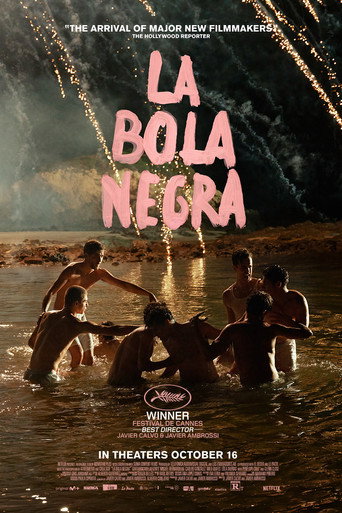
Spain, 1939. In the last days of the Spanish Civil War, the young Carlos arrives at the Santa Lucía orphanage, where he will make friends and enemies as he follows the quiet footsteps of a mysterious presence eager for revenge.
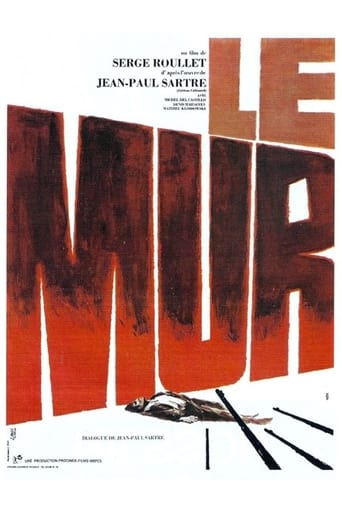
It is the year 1936 and the Spanish Civil War is raging. When the German commander of an international brigade is badly wounded he gives his five comrades a message which he divides up and secretes into in five cartridges. All five shells must reach the battalion in order for the message to be relayed. But Frenchman Pierre can’t bear the heat of the Sierra. When he leaves their hide-out to drink from a well he is hit by an enemy bullet.
Gustav Von Aschenbach, a passionate composer, arrives in Venice as a result of wanderlust and there meets a young man by whose beauty he becomes obsessed.
Jules Massanet's lyrical opera is transformed into a superb film production by Petr Weigl, shot on location in Prague, with music conducted by Libor Pesek. First produced by the Vienna Opera in February 1892, "Werther" rapidly confirmed Massanet's position on the French opera scene and achieved enormous popularity outside France, notably in Italy, America and England. The tragic story tells of Werther's intense passion for Charlotte, who has married his best friend, Albert, fulfilling a pledge to her now deceased mother. But Werther's letters of love bring Charlotte to his side when he promises to take his own life.
Frantisek Filip film version of the Smetana opera.
This tragic story revolves around the licentious Duke of Mantua, his hunch-backed court jester Rigoletto, and Rigoletto's beautiful daughter Gilda. The opera's original title, La maledizione (The Curse), refers to the curse placed on both the Duke and Rigoletto by a courtier whose daughter had been seduced by the Duke with Rigoletto's encouragement. The curse comes to fruition when Gilda likewise falls in love with the Duke and eventually sacrifices her life to save him from the assassins hired by her father.
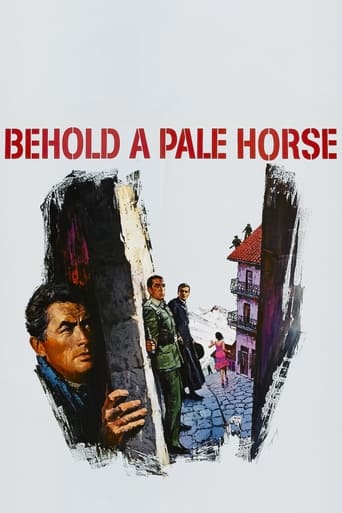
Manuela is left behind when her husband Justo fights for his ideals against Franco's Nationalists during the Spanish Civil War. He is deported to a concentration camp, and upon his release, continues the fight against nationalism in the French resistance. Years pass without a word from him, but his wife never gives up hope of seeing him again.
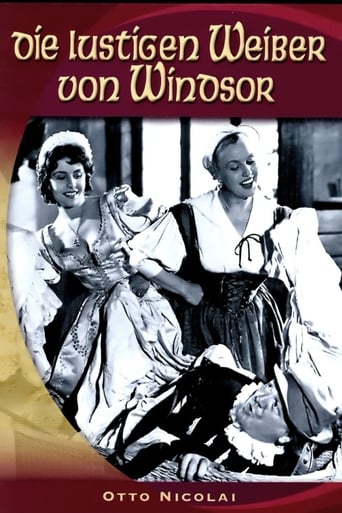
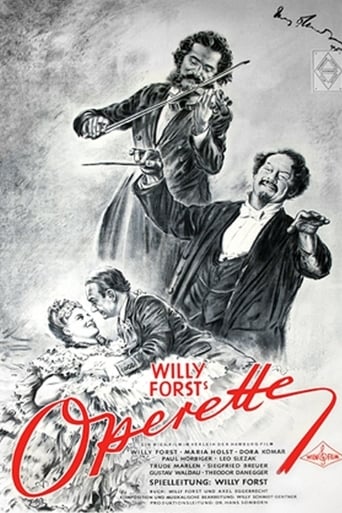
Shortly after WWII, the DEFA Studios produced a series of operas and operettas which belonged to the classical German musical heritage. This enchanting film, the very first opera production of DEFA, stands out because of its lavish decor and costumes, its outstanding actors and their masterful voices of that time.
Götterdämmerung, the final instalment of Wagner’s Ring of the Nibelung, is a story of human passions. Two essentially benevolent creatures, involved with and possibly doomed by their traffic with the gods, find treachery and evil in the world of the humans, and are ruined by the dark side of humanity. Iréne Theorin, acclaimed worldwide for her portrayal of Wagner’s heroines, stars as Brünnhilde opposite Lance Ryan, who continues his radiant portrayal of the tragic hero Siegfried. The strong cast also includes Mikhail Petrenko as the dark antagonist Hagen and Johannes Martin Kränzle, who once again shines as his father Alberich. Waltraud Meier has a memorable appearance as Brünnhilde’s sister Waltraute. With this 2013 recording of Götterdämmerung, the musically and visually compelling Scala Ring Cycle by Daniel Barenboim and Guy Cassiers was completed and proved to be one of the highlights of the Richard Wagner bicentenary.
Johann Strauss, Jr., a would-be composer of waltzes in mid-19th Century Vienna, attempts to thwart his father's efforts to prevent his success when the older man becomes jealous of his melodic skill.
Between two Thanksgivings, Hannah's husband falls in love with her sister Lee, while her hypochondriac ex-husband rekindles his relationship with her sister Holly.
Richard Wagner called Die Walküre the “first evening” of the Ring of the Nibelung; he called Das Rheingold the prologue or Vorabend. Musically and dramatically, we are introduced to a radically new and different world when the opening bars of Die Walküre resound. A fully developed orchestral palette of Leitmotivs paints a wild storm scene, and the curtain rises on a modest dwelling: a fully human scene that has nothing to do with the gods, dwarves and nymphs of Das Rheingold. At the same time, however, the way Die Walküre portrays radical beginnings reveals some telling reminiscences of the unfolding of Das Rheingold. Die Walküre is exciting and deeply feeling drama.
The tale of a quick-witted fox and her escape from confinement for a life in the forest.