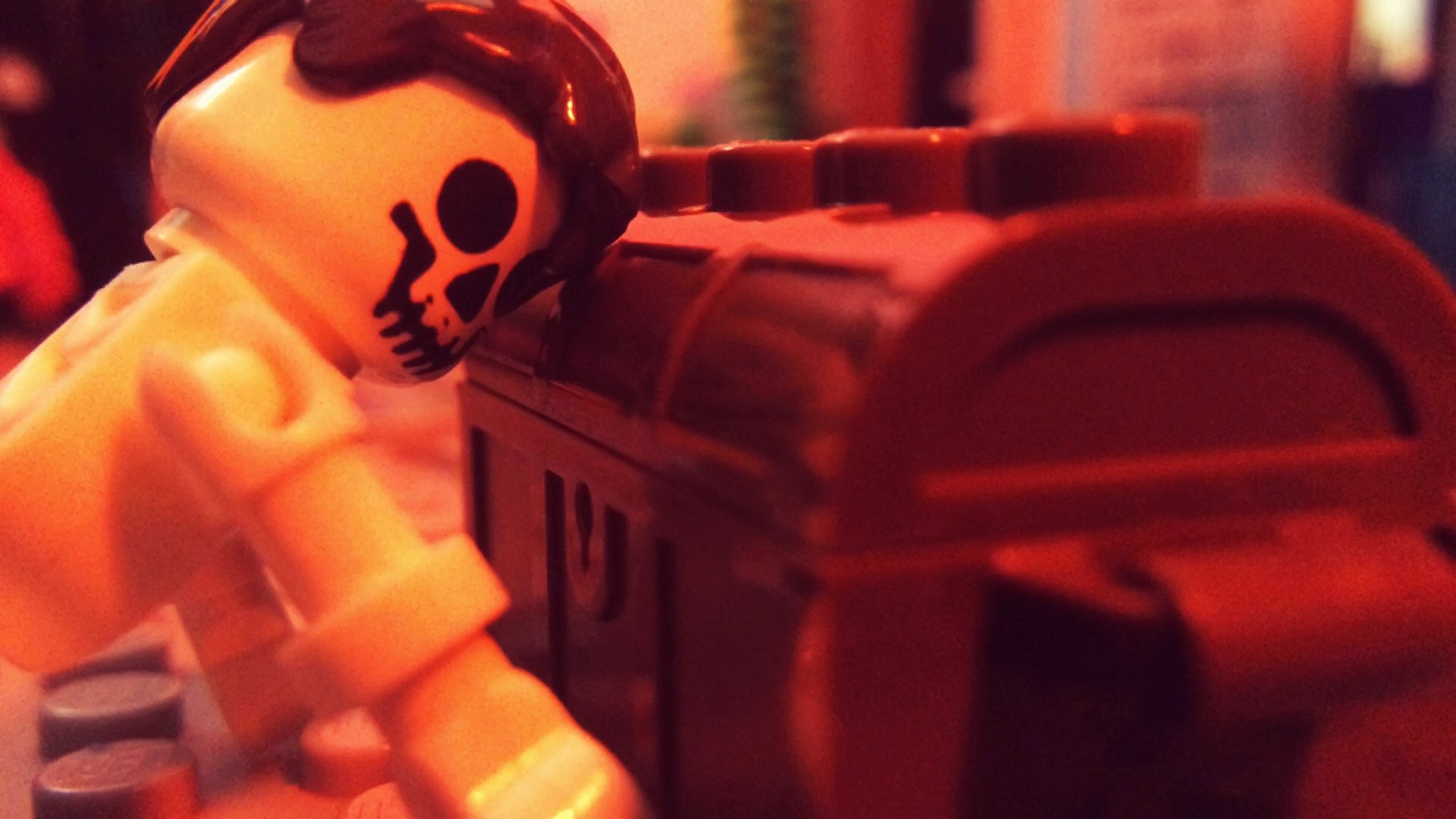
What happens when an earth-splitting disaster destroys the home world of a lone living skeleton? As long as he has his most valuable treasure, he doesn't worry about anything else. But can he hold onto his treasure in such a cataclysm?
Social & External
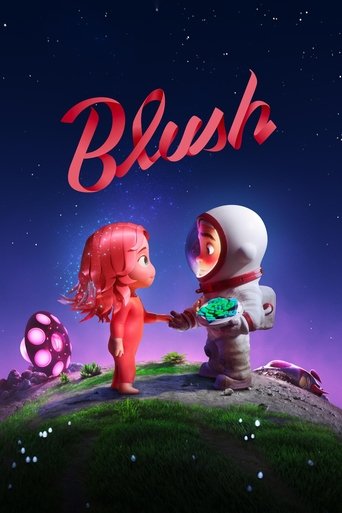
A young elf mistakes a tiny alien for a Christmas gift, not knowing her new plaything has plans to destroy Earth's gravity — and steal all the presents.
A Scientist-physicist created a living atom that here ran on will. Without control he brings many destructions, though follows kind intentions. But a scientist eventually compels him to work on a benefit to the people.
Inspired by the legendary live action series of the same name, Bush Mechanics is the story of four Warlpiri men on a journey to visit a powerful elder. As they drive across the desert they must overcome mechanical trouble and the tricks of a cheeky Munga Munga spirit. It will take all of their bush skills to keep their car running and themselves alive.
Every year, the Berliner Philharmoniker hold a kind of classical-music fête with a bright, cheerful concert to end the season. In 2009 about 22,000 people had come together at the Berlin Waldbühne to enjoy the traditional summer picnic concert. The theme of the evening was “Russian rhythms”, and star conductor Sir Simon Rattle, the Berliner Philharmoniker and Yefim Bronfman, one of the most famous pianists in the world today, presented a superb selection of Russian music. Repertoire Tchaikovsky: The Nutcracker, op. 71, Overture, The Christmas Tree, March, Pas de deux (Intrada) Rachmaninoff: Piano Concerto No.3 in D minor, op. 30 Stravinsky: Le Sacre du printemps Lincke: Berliner Luft
Repertoire Modest Mussorgsky: Night on Bald Mountain; Antonín Dvořák: Song to the Moon from “Rusalka”, Op. 114; Aram Chatschaturjan: Adagio from “Spartacus”; Richard Strauss: Final Scene from “Capriccio”, Op. 85; Richard Wagner: Overture to “Rienzi, der Letzte der Tribunen”; E. W. Korngold: Mariettas Lied from “Die tote Stadt”; Richard Strauss: Zueignung, Op. 10 No. 1; Sir Edward Elgar: Salut d’amour; Giacomo Puccini: Donde lieta uscì from “La bohème”; Tu che di gel sei cinta from “Turandot”; Ruggero Leoncavallo: Musette svaria sulla bocca viva from “La bohème”; Mimì Pinson, la biondinetta from “La bohème”; Piotr Tchaikovsky: “Romeo and Juliet” (Fantasy Overture)
Layar, a popular film star who feels bored with his career wants to make a musical theater set in a family history that is always linked to Indonesian film history.
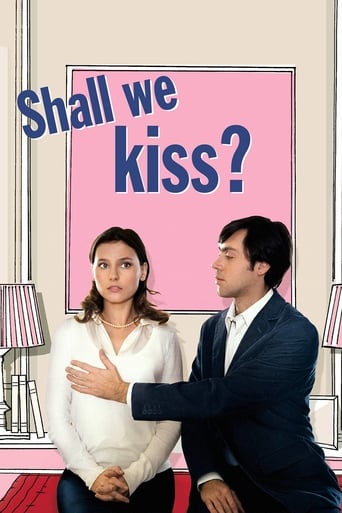
Solange is seriously depressed, and her kindhearted husband, Raoul, makes it his mission to cure her doldrums. After many failed attempts to cheer her up, Raoul hits upon a possible solution: find his wife a lover. Unfortunately, his choice, Stéphane, proves to be just as ineffectual in restoring her flagging spirits. In the end, the gorgeous Solange finds her own, highly problematic tonic to her troubles in the form of a 13-year-old boy.
Surely Bach’s French Suites, which he composed during his years at Cöthen (1717–1723), are among the finest inducements to practise that any teacher has ever made to a pupil. In this case Bach wrote them for his young wife, Anna Magdalena. The over-riding impression left by these suites is one of endearing tunefulness. Clavier-Übung II is a later collection of didactic keyboard pieces. It comprises two greatly contrasted works: the Italian Concerto and the Overture in the French Style. These performances admirably demonstrate the thoughtful and persuasive approach that András Schiff adopts when performing Bach. Recorded live at the Bachfest 2010, Protestant Reformed Church of Leipzig, 11 June 2010 Repertoire J.S. Bach: French Suites Nos. 1–6, Overture in the French Style in B minor, Italian Concerto in F major, BWV 971
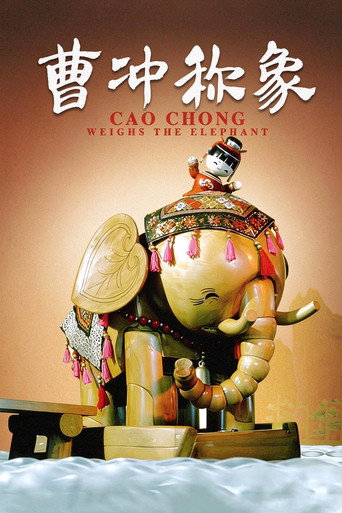
After a magic bell from Tibet is stolen, a little girl and an elephant undertake a dangerous journey to bring the bell home.
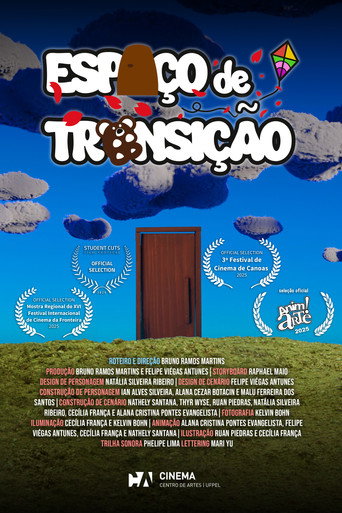
Prisoners, two sisters share their life in a strange place. The mundane routine, along curiosity, will bring Prita to break the boundaries of the secure place.
Three young children accidentally release a horde of nasty, pint-sized demons from a hole in a suburban backyard. What follows is a classic battle between good and evil as the three kids struggle to overcome a nightmarish hell that is literally taking over the Earth.
Sam's search for identity gets interrupted by a mysterious neighbourhood fox. Together they embark on a magical journey to the attic to discover the surprising things they might have in common, and how to celebrate the ways in which they differ.
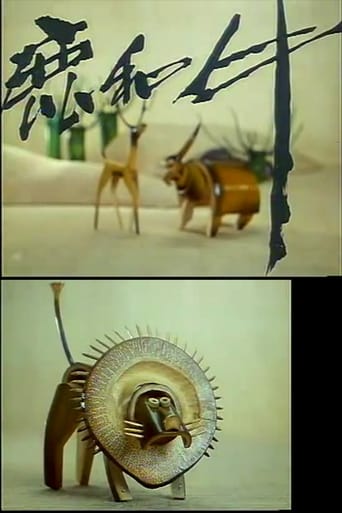
This film whose main characters are marionettes deals with the old Korean folktale "Heungbu and Nolbu." Greedy elder brother Nolbu kicks his good-natured brother Heungbu out of home and takes all the inheritance from their father. Poor but good man Heungbu one day cures a swallow's broken leg and frees it to fly away. Next year, the swallow comes to Heungbu's and gives him a gourd seed. He plants the seed and split it in fall. A huge amount of gold, silver and gems come out of the gourd, and he becomes rich over a night. Nolbu gets green with envy of him.
There is hardly a better way to approach Ludwig van Beethoven than through his piano concertos. Beethoven’s own instrument was the piano, and in his improvisations – which made him the darling of the Viennese salons – he merged virtuosity and unbridled expression. The piano concertos give a clear idea of these performances. At the same time, they are prime examples of Beethoven’s ability to create large orchestral works with seemingly endless arcs of tension. The complete recording of all five works with Mitsuko Uchida and Sir Simon Rattle was one of the most spectacular projects of the Berliner Philharmoniker during the Rattle era – and at the same time the highlight of the collaboration between the orchestra and the pianist, which began in 1984.
A papercut stopmotion animation in which human Travelers from 2053 travel 30 years into the past to warn "foundlings" of the future that awaits them. The story follows Jonah and his Traveler, learning about the possible chaotic future that could happen if such measures are not applied.
After hearing someone's "meow" for the first time in his life, baby puppy goes in search of the unknown beast and meets various inhabitants of the house and yard. On children's curiosity and the first acquaintance with the world.
X-ray images were invented in 1895, the same year in which the Lumière brothers presented their respective invention in what today is considered to be the first cinema screening. Thus, both cinema and radiography fall within the scopic regime inaugurated by modernity. The use of X-rays on two sculptures from the Bilbao Fine Arts Museum generates images that reveal certain elements of them that would otherwise be invisible to our eyes. These images, despite being generally created for technical or scientific purposes, seem to produce a certain form of 'photogénie': they lend the radiographed objects a new appearance that lies somewhere between the material and the ethereal, endowing them with a vaporous and spectral quality. It is not by chance that physics and phantasmagoria share the term 'spectrum' in their vocabulary.