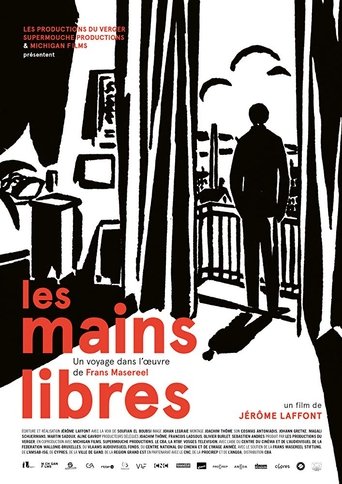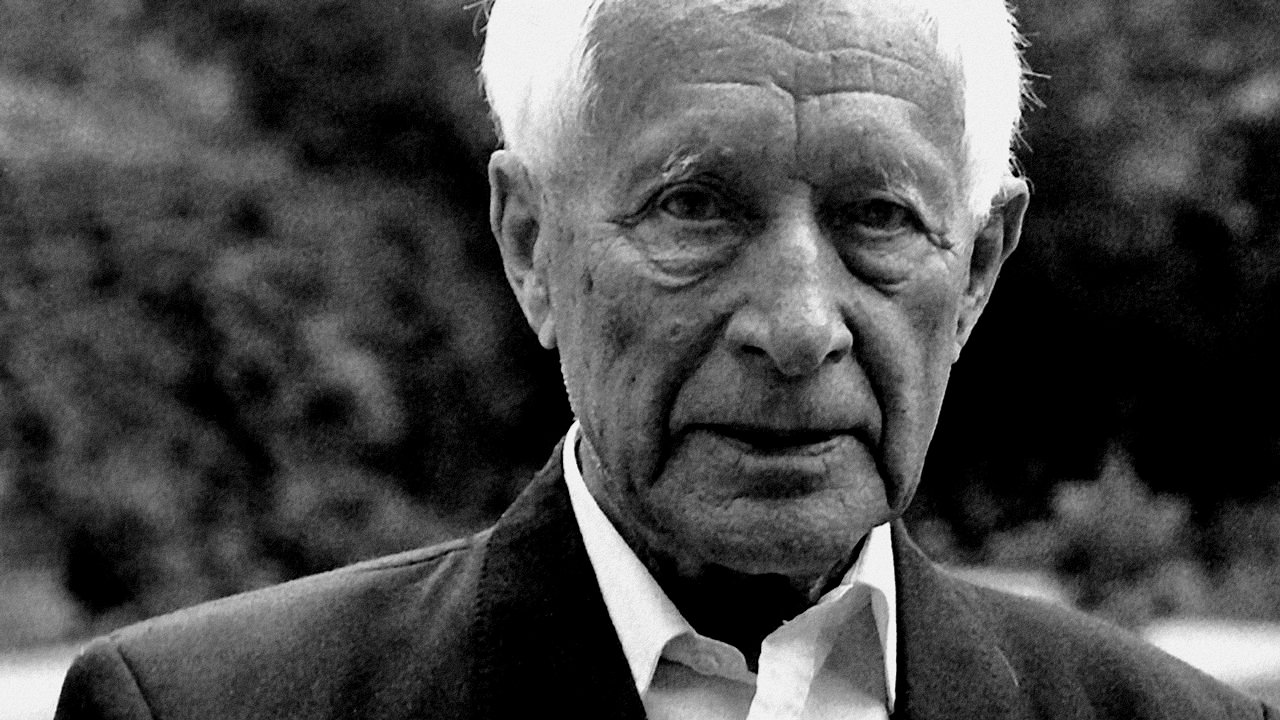
A portrait of the controversial German writer Ernst Jünger (1895-1998), the great stylist of 20th century German literature.
Social & External
Tina Turner overcame impossible odds to become one of the first female Black artists to reach a mainstream international audience. Her road to superstardom is an undeniable story of triumph over adversity. It’s the ultimate story of survival – and an inspirational story of our times.
French writer Jean-Claude Carrière (1931-2021) traces the life and work of Spanish painter Francisco de Goya (1746-1828).
In this biographical drama, Selena Quintanilla is born into a musical Mexican-American family in Texas. Her father, Abraham, realizes that his young daughter is talented and begins performing with her at small venues. She finds success and falls for her guitarist, Chris Perez, who draws the ire of her father. Seeking mainstream stardom, Selena begins recording an English-language album which, tragically, she would never complete.
The extraordinary story of Swedish writer Selma Lagerlöf (1858-1940), creator of Nils Holgersson, a memorable and legendary literary character, and the first female storyteller to win the Nobel Prize for Literature (1909); a woman as pioneering in her life as in her remarkable work.
A portrait of American actress Uma Thurman, muse of legendary filmmaker Quentin Tarantino and courageous voice for the many victims of despotic producer Harvey Weinstein.
Hardly any other world star has left such a profound mark on people's hearts and on music history. This documentary traces the influence of an exceptional artist and follows the paths she paved for a new generation of Black artists.
The documentary delves into Éric Rohmer's distinctive filmmaking process, using film clips, rare interviews, and unreleased test footage.
How Don Quixote de la Mancha, the immortal character created by Miguel de Cervantes in 1605, has been depicted in cinema, television, cartoons, theater, opera, ballet and other artistic disciplines. An adventure that began more than four hundred years ago in the pages of a book and is far from coming to an end.
An account of the life and work of Irish writer James Joyce (1882-1941) narrated by US actress Anjelica Huston.
Kim Novak never dreamed on being a star, but she became one. Most famous for her enigmatic performance in Hitchcock’s Vertigo (1958), the Chicago-born actress never quite fitted into the Hollywood mould and wanted to do things her own way.
Sir Elton John looks back on his life and the astonishing early days of his 50-year career in this emotionally charged, full-circle journey. As he prepares for his final concert in North America at Dodger Stadium, Elton takes us back in time and recounts his struggles with adversity, abuse, and addiction, and how he overcame them to become the icon he is today.
A portrait of French filmmaker Michel Gondry, creator, for three decades, of an imperfect, astonishing, fascinating, damaged and poetic work.
A documentary by author Steven Goldleaf. This 2003 extremely low-budget 32-minute documentary traces the geographic roots of F. Scott Fitzgerald’s 1925 novel The Great Gatsby, setting straight Fitzgerald scholars’ mistaken assumptions (including some in the authoritative 1991 annotated Cambridge edition of the novel) about where the novel was set, where Fitzgerald deliberately distorted the geography for literary effect, where he misapplied his geographic knowledge of Long Island and New York City. It traces where Fitzgerald lived and traveled as he was composing the novel, with many photographs of these locations in the mid-1920s. In one instance WHAT GATSBY SAW identifies (with a contemporary photograph) the precise location of the fatal automobile accident at the story’s climax, which had never before been definitively established. (credit Steven Goldleaf).
An intimate portrait of the superb actress Gena Rowlands, icon of independent cinema. Together with her husband, legendary director John Cassavetes (1929-89), she lived an unusual life beyond the dream factory, a life in which reality and fiction were so perfectly intertwined that it made possible films that still today seem incredibly real.
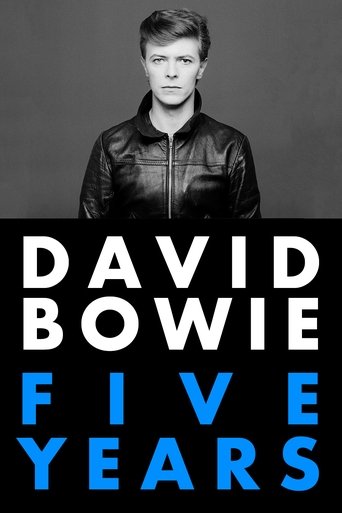
Experience an inside look at David Bowie's incredible influence on music, art and culture via interviews with some of the people who knew him best.
Eustacia Vye, an exquisite beauty despairing at her boring life on an English moor, sets up a fateful lovers' triangle when she uses her wiles to entice two men, a dashing suitor and a successful man who made his name abroad and returned to his home on the heath.
The biography of former Beatle, John Lennon—narrated by Lennon himself—with extensive material from Yoko Ono's personal collection, previously unseen footage from Lennon's private archives, and interviews with David Bowie, his first wife Cynthia, second wife Yoko Ono and sons Julian and Sean.
He was known as Trinita, but his name was Mario Girotti. The spaghetti western genre was born with the duo formed by the Italian-German actor and Carlo Pedersoli, alias Bud Spencer. Haunted by the bombing of Dresden, which he experienced at the age of 4, he refused to glorify violence or take himself seriously. An encounter with Terence Hill, who overcame his shyness and torment through cinema.
A portrait of the Spanish painter José Pérez Ocaña (1947-83), who used transvestism and performances as his calling card.
In 1973, a young gallery assistant goes on a wild adventure behind the scenes as he helps aging genius Salvador Dali prepare for a big show in New York.
When the Welsh poet Dylan Thomas and his flirtatious wife Caitlin sweep into war-torn London, the last thing they expect is to bump into Dylan's childhood sweetheart Vera. Despite her joy at seeing Dylan after so many years, Vera is swept off her feet by a dashing officer, William Killick, and finds herself torn between the open adoration of her new found beau and the wily charms of the exotic Welshman.
In this genre-bending tale, Errol Morris explores the mysterious death of a U.S. scientist entangled in a secret Cold War program known as MK-Ultra.
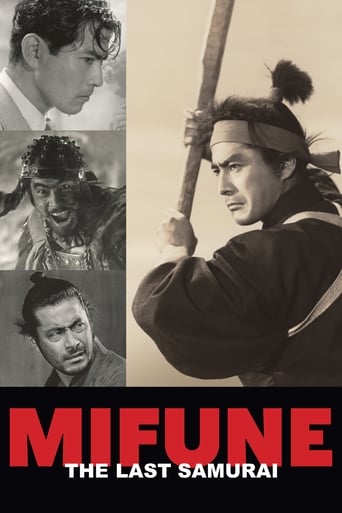
An account of the life and work of legendary Japanese actor Toshirō Mifune (1920-97), the most prominent actor of the Golden Age of Japanese cinema.
A fictional account of one year in the life of Empress Elisabeth of Austria. On Christmas Eve 1877, Elisabeth, once idolized for her beauty, turns 40 and is officially deemed an old woman; she starts trying to maintain her public image.
Eccentric British painter J.M.W. Turner lives his last 25 years with gusto and secretly becomes involved with a seaside landlady, while his faithful housekeeper bears an unrequited love for him.
An extravagant, exotic and moving look at Rembrandt's romantic and professional life, and the controversy he created by the identification of a murderer in the painting The Night Watch.
The life story of ‘Zen Anarchist’ filmmaker John Milius, one of the most influential storytellers of his generation.
From a prolific career in film and television, Anton Yelchin left an indelible legacy as an actor. Through his journals and other writings, his photography, the original music he wrote, and interviews with his family, friends, and colleagues, this film looks not just at Anton's impressive career, but at a broader portrait of the man.
Electricity titans Thomas Edison and George Westinghouse compete to create a sustainable system and market it to the American people.
Crown Prince Rudolf of Austria clashes with his father, Emperor Franz Joseph I of Austria, over implementing progressive policies for their country. Rudolf soon feels he is a man born at the wrong time in a country that doesn't realize the need for social reform. The Prince of Wales, later to become Britain's King Edward VII, provides comic relief. Rudolf finds refuge from a loveless marriage with Princess Stéphanie by taking a mistress, Baroness Maria Vetsera. Their untimely demise at Mayerling, the imperial family's hunting lodge, is cloaked in mystery.
Artists in LA discover the work of forgotten Polish sculptor Stanislav Szukalski, a mad genius whose true story unfolds chapter by astounding chapter.
Paris, 1964. The Swiss sculptor and painter Alberto Giacometti, one of the most accomplished and respected artists of his generation, asks his friend, the American writer James Lord, to sit for a portrait, assuring him that it will take no longer than two or three hours, an afternoon at the most.
Diaries, audiotapes, videotapes and testimonials from friends and colleagues offer insight into the life and career of Gilda Radner -- the beloved comic and actress who became an icon on Saturday Night Live.
Examines the life and career of singer Whitney Houston. Features never-before-seen archival footage, exclusive recordings, rare performances and interviews with the people who knew her best.
The film follows Kaspar Hauser, who lived the first seventeen years of his life chained in a tiny cellar with only a toy horse to occupy his time, devoid of all human contact except for a man who wears a black overcoat and top hat who feeds him.
In this sprawling, fictionalized history of the Black Panthers, 1960s Oakland becomes a war zone as the Panthers battle for the right to exist.
As his life comes to its end, famous Hollywood director Orson Welles puts it all on the line at the chance for renewed success with the film The Other Side of the Wind.
A dramatization, in modern theatrical style, of the life and thought of the Viennese-born, Cambridge-educated philosopher Ludwig Wittgenstein, whose principal interest was the nature and limits of language. A series of sketches depict the unfolding of his life from boyhood, through the era of the first World War, to his eventual Cambridge professorship and association with Bertrand Russell and John Maynard Keynes. The emphasis in these sketches is on the exposition of the ideas of Wittgenstein, a homosexual, and an intuitive, moody, proud, and perfectionistic thinker generally regarded as a genius.
Judge Clarence Thomas' nomination to the United States' Supreme Court is called into question when former colleague, Anita Hill, testifies that he had sexually harassed her.