Social & External
historien
historienne
WWII through the memories of a simple underground soldier, who struggles to keep his senses while caught up in a meaningless bloodshed. Moments of everyday life during three years of war inspired by real diary.
The story of the making of "The Night Witches: the amazing true story of how Russian woman pilots helped win World War II" at UNW Theatre.
This documentary about WW II, composed of clandestine Allied film takes and German Wochenschaubilder, focuses on the French Resistance, especially the heroic but disastrous battle of the Vercors plateau in July 1944, where German troops mercilessly slaughtered the Maquis and the inhabitants.
The history and trauma of two men, brought together by war, is exposed when a mysterious visitor treads familiar ground.
Germany, 1945. The War is over, and it has left a slew of devastated families in its wake. Among them are Maria and her mother, two refugees who find themselves working on a farm in the German countryside after they are forced out of their home by violence and political upheaval. It is there that little Maria makes an unlikely friend: an American soldier — an enemy soldier — who, through one act of unnecessary kindness, teaches Maria and her family a powerful lesson in compassion and humanity during the most inhumane of times.
Based on a true story, James Coburn portrays a military lawyer assigned to defend a confessed psychotic killer. Set in the context of WWII and the uneasy US-Australian military alliance. The accused killer claims to have killed 3 women in order to possess their voices. Despite the defense lawyer's concerns that the killer is not fit to stand trial, the US military presses forward with the case and its desire to have the killer executed in order to strengthen the shaky alliance.
President Franklin Delano Roosevelt once told the head of the Office of Strategic Services (precursor to the CIA), “Give my regards to the catcher.” The catcher was Moe Berg, who spent 15 seasons in the majors before taking up espionage for the government. Spyball tells the extraordinary story of Berg, a linguist/Ivy-educated lawyer/.243 lifetime hitter whom manager Casey Stengel called “the strangest man to ever play the game of baseball.” Berg walked in eclectic circles, counting Babe Ruth, Albert Einstein, and the Marx Brothers among his friends, but it was his service to his country that truly distinguished him. His surreptitious filming of Tokyo during a 1934 baseball tour helped develop strategies for the eventual bombing of the city during World War II, and his cloak-and-dagger mind games involving a German scientist helped prove that the Nazis were failing in their attempts to develop an atomic bomb.
Parallels are drawn between Abraham Lincoln's presidency and the presidency of Donald Trump. Not since 1860 have the Democrats so fanatically refused to accept the result of a free election. That year, their target was Lincoln. They smeared him. They went to war to defeat him. In the end, they assassinated him.
In January 2012 Italian divers discovered the wreck of a massive plane off the coast of Sardinia. At a depth of 65 meters (213 feet) lies a Messerschmidt `Gigant', the biggest aircraft to fly in WWII.
Sons, daughters and grandchildren of the greatest generation travel to England to uncover the history of a disappearing World War II air base.
A look at the parallel lives of Charlie Chaplin and Adolf Hitler and how they crossed with the creation of the film “The Great Dictator,” released in 1940.
An extraordinary journey into the past to that fateful day, June 6, 1944. Relive the event of D-Day on the beaches of Normandy with Company Sergeant-Major Charlie Martin of the Queen's Own Rifles. Experience an emotional and intensely personal account of D-Day through a combination of interviews, archival film and Charlie Martin's diary excerpts.
Explorer follows Bob Ballard and veterans from both America and Japan as they search for ships that were sunk during the Battle of Guadalcanal.
The Americans are swiftly closing on Okinawa, an island just south of the Japanese mainland. The Imperial command sends top generals and several army divisions to defend it at all costs. The mission quickly degenerates as vital resources and troops are diverted to other islands. After a civilian evacuation ends in tragedy most of non-combatants are forced to remain on the island. Many convert to soldier status. Tokyo sends mixed messages that squander time and resources, as when they order the defenders to build an airstrip for aircraft that never come. The truth soon becomes obvious: the high command decides that the island cannot be held and effectively abandons the Okinawan defenders. When the Americans land many troops are deployed in the wrong places. As the slaughter mounts, a suicidal attitude takes hold. Okinawa becomes a death trap, for civilian volunteers and non-combatants as well.
A young Bomber Command air crew deal with friendship, loss, and paralysing fear as British and allied forces prepare for the invasion of occupied France in June 1944.
April 1945. In a dramatic operation the SS transports 139 special prisoners, and kin of the prisoners, into the Alps. The plan: to use the prisoners as bargaining chips in possible negotiations with the Allies. During the journey a number of prisoners plan their escape and experience six days between liberty and death, their fates in the hands of ruthless and increasingly nervous criminals. But the hostages band together and turn the tables with a clever ploy: they call in the Wehrmacht to aid them…
This provocative documentary uncovers a lost chapter in Canadian military history: how the Armed Forces dealt with homosexual behaviour among soldiers, during and after World War II. More than 60 years later, a group of five veterans, barely adults when they enlisted, break the silence to talk about how homosexual behaviour "was even more unmentionable than cancer." Yet amidst the brutality of war, instances of sexual awakening among soldiers and officers were occuring. Initially, the Army overlooked it, but as the war advanced, they began to crack down: military tribunals, threats of imprisonment, discharge and public exposure. After the war, officers accused of homosexuality were discharged. Back home in Canada, reputations and careers were ruined. For the young men who had served their country with valour, this final chapter was often too much to bear. Based on the book Courting Homosexuals in the Military by Paul Jackson.
When Allied forces liberated the Nazi concentration camps in 1944-45, their terrible discoveries were recorded by army and newsreel cameramen, revealing for the first time the full horror of what had happened. Making use of British, Soviet and American footage, the Ministry of Information’s Sidney Bernstein (later founder of Granada Television) aimed to create a documentary that would provide lasting, undeniable evidence of the Nazis’ unspeakable crimes. He commissioned a wealth of British talent, including editor Stewart McAllister, writer and future cabinet minister Richard Crossman – and, as treatment advisor, his friend Alfred Hitchcock. Yet, despite initial support from the British and US Governments, the film was shelved, and only now, 70 years on, has it been restored and completed by Imperial War Museums under its original title "German Concentration Camps Factual Survey".
In his own words, the burglar behind the 2010 robbery of the Paris Museum of Modern Art tells how he pulled off the biggest art heist in French history.
Filmmaker Alain Resnais documents the atrocities behind the walls of Hitler's concentration camps.
Director Claude Lanzmann spent 11 years on this sprawling documentary about the Holocaust, conducting his own interviews and refusing to use a single frame of archival footage. Dividing Holocaust witnesses into three categories – survivors, bystanders, and perpetrators – Lanzmann presents testimonies from survivors of the Chelmno concentration camp, an Auschwitz escapee, and witnesses of the Warsaw Ghetto Uprising, as well as a chilling report of gas chambers from an SS officer at Treblinka.
“The Soviet Story” is a story of an Allied power, which helped the Nazis to fight Jews and which slaughtered its own people on an industrial scale. Assisted by the West, this power triumphed on May 9th, 1945. Its crimes were made taboo, and the complete story of Europe’s most murderous regime has never been told. Until now...
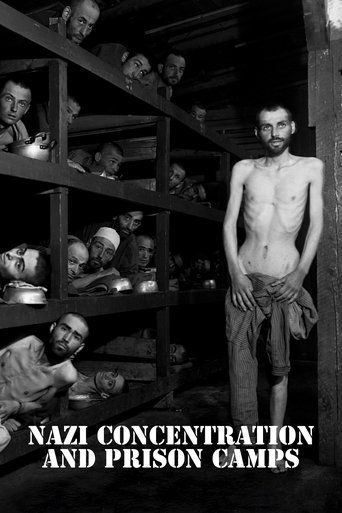
Produced and presented as evidence at the Nuremberg war crimes trial of Hermann Göring and twenty other Nazi leaders, this film consists primarily of dead and surviving prisoners and of facilities used to kill and torture during the World War II.
WWII from Space delivers World War II in a way you've never experienced it before. This HISTORY special uses an all-seeing CGI eye that offers a satellite view of the conflict, allowing you to experience it in a way that puts key events and tipping points in a global perspective. By re-creating groundbreaking moments that could never have been captured on camera, and by illustrating the importance of simultaneity and the hidden effects of crucial incidents, HISTORY presents the war's monumental moments in a never-before-seen context. And with new information brought to the forefront, you'll better understand how a nation ranked 19th in the world's militaries in 1939 emerged six years later as the planet's only atomic superpower.
A documentary examining possible historical and modern conspiracies surrounding Christianity, the 9/11 terrorist attacks, and the Federal Reserve bank.
A documentary on the expletive's origin, why it offends some people so deeply, and what can be gained from its use.
Prelude to War was the first film of Frank Capra's Why We Fight propaganda film series, commissioned by the Pentagon and George C. Marshall. It was made to convince American troops of the necessity of combating the Axis Powers during World War II. This film examines the differences between democratic and fascist states.
From a prolific career in film and television, Anton Yelchin left an indelible legacy as an actor. Through his journals and other writings, his photography, the original music he wrote, and interviews with his family, friends, and colleagues, this film looks not just at Anton's impressive career, but at a broader portrait of the man.
Documents the lives of infamous fakers Elmyr de Hory and Clifford Irving. De Hory, who later committed suicide to avoid more prison time, made his name by selling forged works of art by painters like Picasso and Matisse. Irving was infamous for writing a fake autobiography of Howard Hughes. Welles moves between documentary and fiction as he examines the fundamental elements of fraud and the people who commit fraud at the expense of others.
This documentary movie is about the battle of San Pietro, a small village in Italy. Over 1,100 US soldiers were killed while trying to take this location, that blocked the way for the Allied forces from the Germans. Preserved by the Academy Film Archive in 2005.
An account of the life and work of legendary Japanese actor Toshirō Mifune (1920-97), the most prominent actor of the Golden Age of Japanese cinema.
The story of artist Lil Peep from his birth in Long Island and meteoric rise as a genre blending pop star & style icon, to his death due to an accidental opioid overdose in Arizona at just 21 years of age.
Alexander McQueen's rags-to-riches story is a modern-day fairy tale, laced with the gothic. Mirroring the savage beauty, boldness and vivacity of his design, this documentary is an intimate revelation of McQueen's own world, both tortured and inspired, which celebrates a radical and mesmerizing genius of profound influence.
This WW2 documentary centers on the crew of the American B-17 Flying Fortress Memphis Belle as it prepares to execute a strategic bombing raid on Nazi submarine pens in Wilhelmshaven, Germany.
A detailing of the rise to prominence and global sporting superstardom of six supremely talented young Manchester United football players (David Beckham, Nicky Butt, Ryan Giggs, Paul Scholes, Phil and Gary Neville). The film covers the period 1992-1999, culminating in Manchester United's European Cup triumph.
The full story of the 1972 Munich Olympics Massacre and the Israeli revenge operation 'Wrath of God.' The 1972 Munich Olympics were interrupted by Palestinian terrorists taking Israeli athletes hostage. Besides footage taken at the time, we see interviews with the surviving terrorist, Jamal Al Gashey, and various officials detailing exactly how the police, lacking an anti-terrorist squad and turning down help from the Israelis, botched the operation.
Meet the real-life airmen who inspired Masters of the Air as they share the harrowing and transformative events of the 100th Bomb Group.