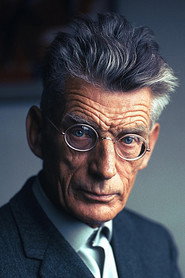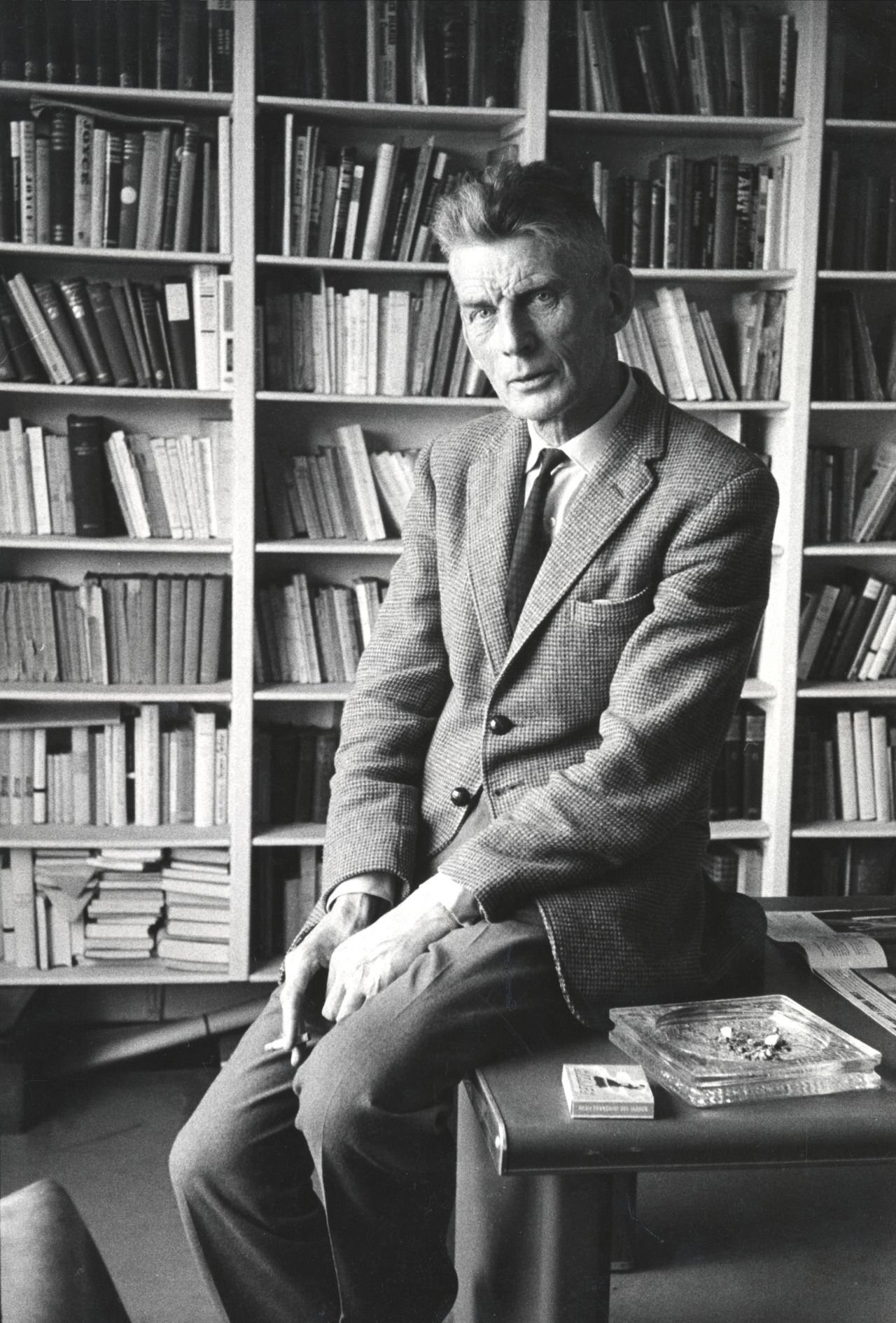
A wordless, silent interview with Samuel Beckett for Swedish Television after Beckett won the Nobel Prize in Literature.
Social & External
Self
An exploration —manipulated and staged— of life in Las Hurdes, in the province of Cáceres, in Extremadura, Spain, as it was in 1932. Insalubrity, misery and lack of opportunities provoke the emigration of young people and the solitude of those who remain in the desolation of one of the poorest and least developed Spanish regions at that time.

A fist-person story of the director of the documentary, who talks about the loneliness that entails living with an eating disorder and her vision now thar she is entering into adulthood.
Images and numbers illustrate the domestic political measures taken after the Nazis came to power to eliminate unemployment.
A 16 year old girl recalls the last moments of her summer vacation, spent with friends in the Laurentians north of Montreal. She reminisces about their talks on life, death, love, and God. Shot in direct cinema style, working from a script that left room for the teenagers to improvise and express their own thoughts, the film sought to capture the immediacy of the youths presence their bodies, their language, their environment.
Delphine Seyrig reads passages from a Valerie Solanas’s SCUM manifesto.
Aspects of a London day, including prostitutes on street corners, a striptease show and the 2i's Coffee Bar.
An isolated village in the Lithuanian countryside. Seated in her house, an elderly woman recites an old folk story. Then she climbs up the tall ladder that takes her to the rooftop of the church.
Paul Robeson was a celebrated African-American Actor, Athlete, Singer, Writer, and Civil Rights Activist. Robeson's many achievements are chronicled in this program, ranging from playing with the NFL to graduating from Columbia Law School, performing on Broadway and in Hollywood films to founding the American Crusade against Lynching as well as Council on African Affairs. Robeson was one of the most talented performers of his time and a dedicated humanitarian who ultimately sacrificed fame and fortune for what he believed in. His association with Leftist Politics during the era of the Cold War, and frequent denouncing of American political parties led to his eventual blacklisting with other prominent writers and artists during the McCarthy Era. His talents in all areas are remarkable, and his dedication to attaining a peaceful coexistence between all the people of the world is truly admirable.
Elem Klimov's tribute to his late wife, director Larisa Shepitko, killed in a car accident a year earlier. Features excerpts from all of her films, and archival audio of her discussing life and art.
Filmmaker Alain Resnais documents the atrocities behind the walls of Hitler's concentration camps.
In 1967, de Andrade was invited by the Italian company Olivetti to produce a documentary on the new Brazilian capital city of Brasília. Constructed during the latter half of the 1950s and founded in 1960, the city was part of an effort to populate Brazil’s vast interior region and was to be the embodiment of democratic urban planning, free from the class divisions and inequalities that characterize so many metropolises. Unsurprisingly, Brasília, Contradições de uma Cidade Nova (Brasília, Contradictions of a New City, 1968) revealed Brasília to be utopic only for the wealthy, replicating the same social problems present in every Brazilian city. (Senses of Cinema)
A portrait of Robert, a troubled but poetic soul struggling with his purgatorial existence in a hackney scrapyard.
The Veterans of Foreign Wars as a fraternal and social organization, with emphasis on their projects that benefit community life and cohesion.
Canadian author, humorist and storyteller W.O. Mitchell talks about his career as a writer and performer. Known for his witty radio and television appearances, Mitchell shows a more serious side as he reveals his personal views on writing and on the meaning of life and death.
Makulatura [which means both scrap paper and pulp fiction in Russian] is a duo of poets Evgeniy Alyokhin and Konstantin Speransky, who have been performing together since 2003. Blending classic literature references, mind-bending introspection, musings on modern love and an ironic attitude to their act, they create what faithful fans and listeners call “existential rap.” The film follows Makulatura on tour through several Russian cities.
Working men and women leave through the main gate of the Lumière factory in Lyon, France. Filmed on 22 March 1895, it is often referred to as the first real motion picture ever made, although Louis Le Prince's 1888 Roundhay Garden Scene pre-dated it by seven years. Three separate versions of this film exist, which differ from one another in numerous ways. The first version features a carriage drawn by one horse, while in the second version the carriage is drawn by two horses, and there is no carriage at all in the third version. The clothing style is also different between the three versions, demonstrating the different seasons in which each was filmed. This film was made in the 35 mm format with an aspect ratio of 1.33:1, and at a speed of 16 frames per second. At that rate, the 17 meters of film length provided a duration of 46 seconds, holding a total of 800 frames.
Glauco Mattoso, a blind sadomasochistic poet, agrees to participate in a documentary about his own life, but the conditions he imposes raise difficulties to the work of the young director.
Twenty-five films from twenty-five European countries by twenty-five European directors.
Documentary portrait of the poet Karla Erbová is a confession of a creative personality who, despite many twists and turns in life, remains true to her ideals and moral values. We witness the final year of the author's life, during which, even at the age of ninety, she continues to engage in public appearances and, above all, actively works on her craft. Through letters that Erbová wrote to her friend, the film offers an intimate, often self-deprecating reflection on old age, solitude, and relationships with loved ones, as well as an indomitable faith in poetry. The film "Ulita" not only highlights the pivotal moments of her life but also serves as a sociological exploration of the lives of the oldest generation.
Daniel Craig candidly reflects on his 15 year adventure as James Bond. Including never-before-seen archival footage from Casino Royale to the upcoming 25th film No Time To Die, Craig shares his personal memories in conversation with 007 producers, Michael G Wilson and Barbara Broccoli.
A compilation of over 30 years of private home movie footage shot by Lithuanian-American avant-garde director Jonas Mekas, assembled by Mekas "purely by chance", without concern for chronological order.
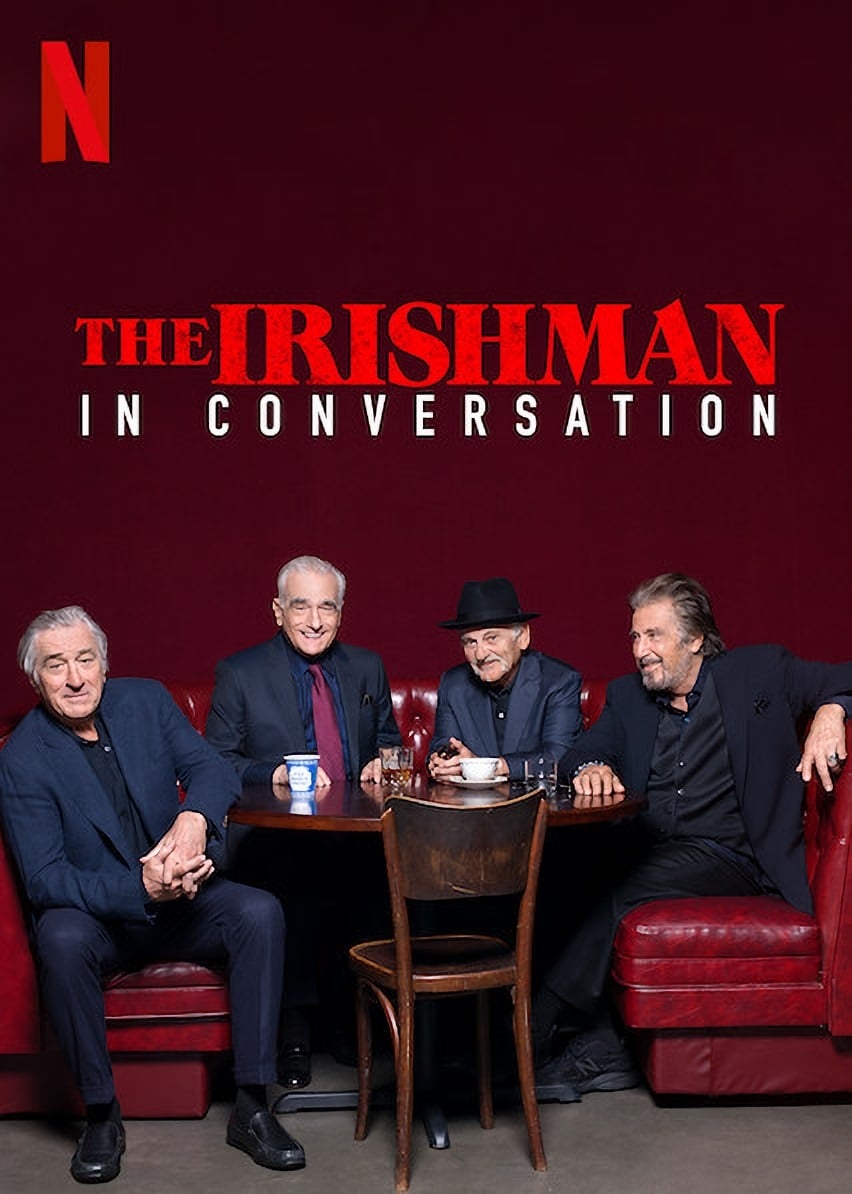
Martin Scorsese, Robert De Niro, Joe Pesci, and Al Pacino in conversation about The Irishman.
SEDUCED AND ABANDONED combines acting legend Alec Baldwin with director James Toback as they lead us on a troublesome and often hilarious journey of raising financing for their next feature film. Moving from director to financier to star actor, the two players provide us with a unique look behind the curtain at the world's biggest and most glamourous film festival, shining a light on the bitter-sweet relationship filmmakers have with Cannes and the film business. Featuring insights from directors Martin Scorsese, 'Bernando Bertolucci' and Roman Polanski; actors Ryan Gosling and Jessica Chastain and a host of film distribution luminaries.
Martin Scorsese’s portrait of writer and social commentator Fran Lebowitz, celebrated for her sharp wit and observations on modern life. Filmed at New York’s Waverly Inn and intercut with archival footage and interviews, the documentary captures Lebowitz’s distinctive worldview through her spontaneous monologues and public appearances.
Amber Heard and Nicole Kidman discuss their characters Mera and Atlanna.
Lyrical and powerfully personal essay film that reflects on the deaths of her husband Lou Reed, her mother, her beloved dog, and such diverse subjects as family memories, surveillance, and Buddhist teachings.
Fulton and Pepe's 2000 documentary captures Terry Gilliam's attempt to get The Man Who Killed Don Quixote off the ground. Back injuries, freakish storms, and more zoom in to sabotage the project.
This essential new documentary pays tribute to the legacy of the late, legendary casting director Marion Dougherty and shines a light on one of the most overlooked and least understood crafts in filmmaking.
A group of British children aged 7 from widely ranging backgrounds are interviewed about a range of subjects. The filmmakers plan to re-interview them at 7 year intervals to track how their lives and attitudes change as they age.
When Allied forces liberated the Nazi concentration camps in 1944-45, their terrible discoveries were recorded by army and newsreel cameramen, revealing for the first time the full horror of what had happened. Making use of British, Soviet and American footage, the Ministry of Information’s Sidney Bernstein (later founder of Granada Television) aimed to create a documentary that would provide lasting, undeniable evidence of the Nazis’ unspeakable crimes. He commissioned a wealth of British talent, including editor Stewart McAllister, writer and future cabinet minister Richard Crossman – and, as treatment advisor, his friend Alfred Hitchcock. Yet, despite initial support from the British and US Governments, the film was shelved, and only now, 70 years on, has it been restored and completed by Imperial War Museums under its original title "German Concentration Camps Factual Survey".
With exclusive access to his extraordinary unseen and unheard personal archive including hundreds of hours of audio recorded over the course of his life, this is the definitive Marlon Brando cinema documentary. Charting his exceptional career as an actor and his extraordinary life away from the stage and screen with Brando himself as your guide, the film will fully explore the complexities of the man by telling the story uniquely from Marlon's perspective, entirely in his own voice. No talking heads, no interviewees, just Brando on Brando and life.
A look behind the lens of Christopher Nolan's space epic.
An exploration of technologically developing nations and the effect the transition to Western-style modernization has had on them.
From a prolific career in film and television, Anton Yelchin left an indelible legacy as an actor. Through his journals and other writings, his photography, the original music he wrote, and interviews with his family, friends, and colleagues, this film looks not just at Anton's impressive career, but at a broader portrait of the man.
A detailing of the rise to prominence and global sporting superstardom of six supremely talented young Manchester United football players (David Beckham, Nicky Butt, Ryan Giggs, Paul Scholes, Phil and Gary Neville). The film covers the period 1992-1999, culminating in Manchester United's European Cup triumph.
The extraordinary story of the planet’s most famous contemporary scientist, told in his own words and by those closest to him. Made with unique access to Hawking’s private life, this is an intimate and moving journey into Stephen's world, both past and present.
JB Smoove and Martin Starr host a celebration of 20 years of "Spider-Man" movies, from the Sam Raimi trilogy to Marc Webb's movies and the trio from Jon Watts.
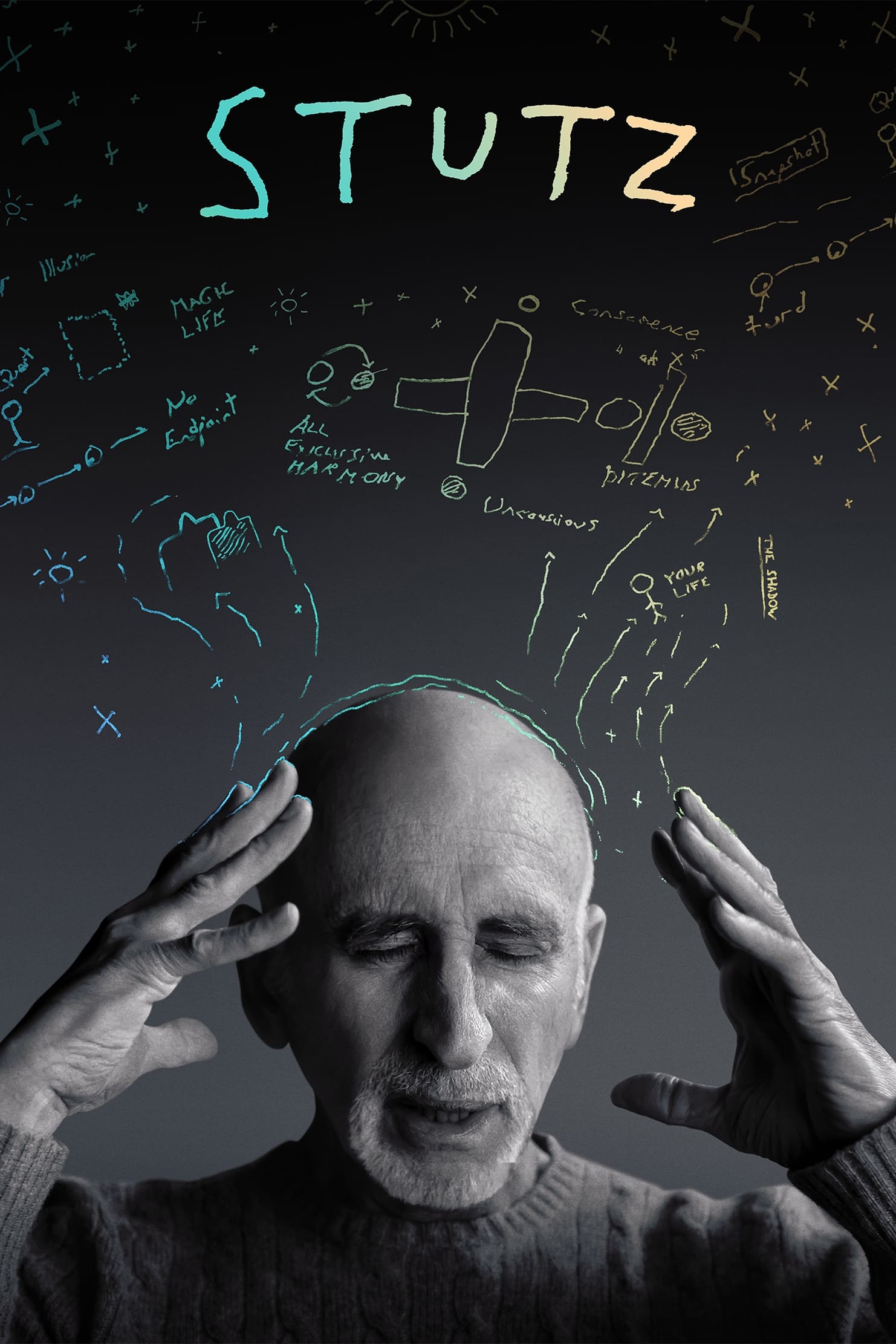
In candid conversations with actor Jonah Hill, leading psychiatrist Phil Stutz explores his early life experiences and unique, visual model of therapy.
The life and career of one of comedy's most inimitable modern voices, Mr. Gilbert Gottfried.