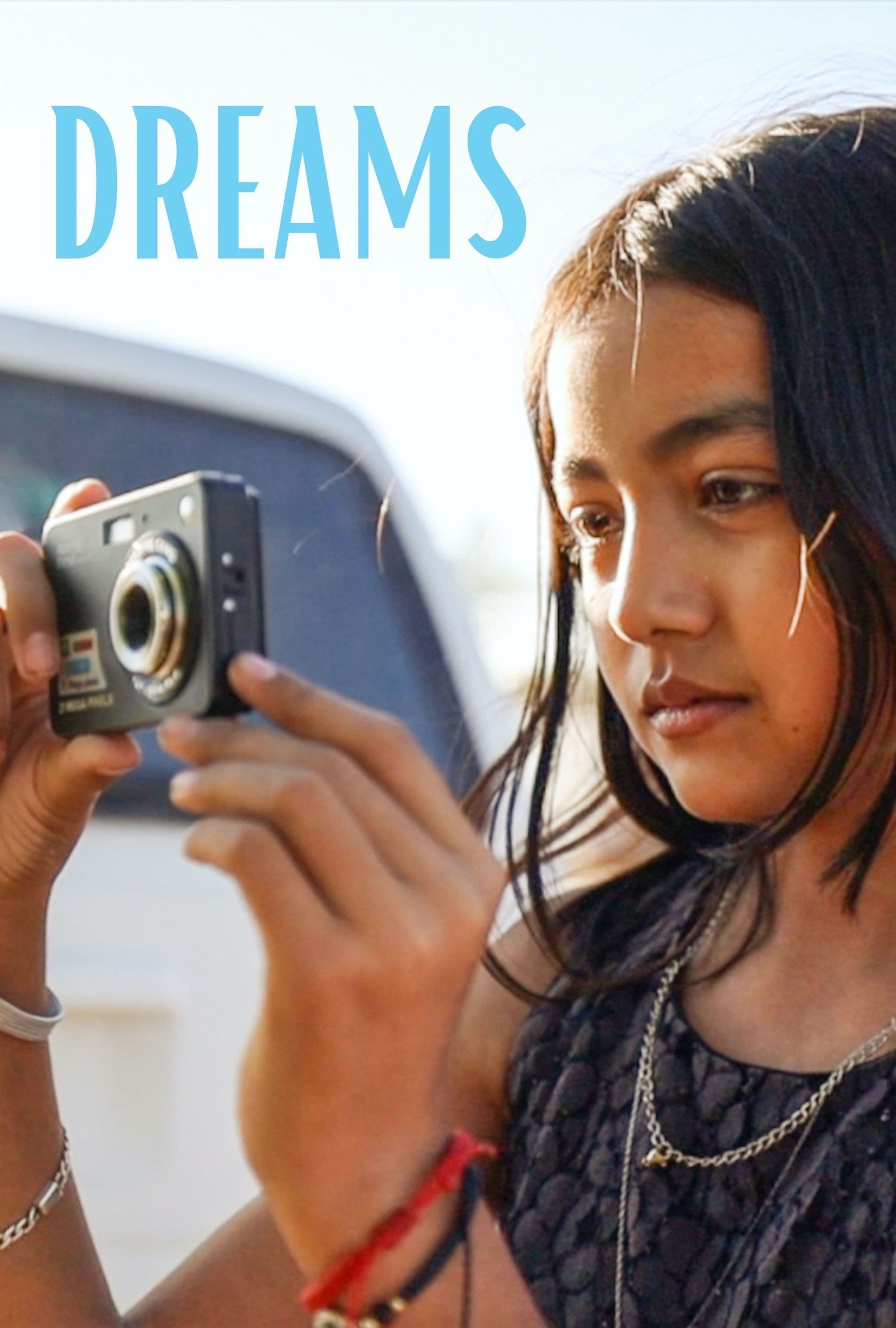
"Dreams. We all got 'em."
These are the future leaders of their communities. Ever wonder what it’s like to walk a day in their shoes? How the world looks through their eyes? We were curious. So, we asked them.

Social & External
Documentary film about four families in Pori, Finland, all struggling with unemployment and poverty.
J and Jacky are good friends who attend the same school. J is from a single-parent family, and will be taken care by Jacky’s family whenever his mother has to return to Mainland to renew her visa; such kind of story is not an isolated case. These families have been uprooted for a “better future” in Hong Kong, but is this “future” that the children really long to have? A Chinese saying: “How does one understand the joy of fish, if one is not a fish?” Will the adults really understand what the children want?
An exploration —manipulated and staged— of life in Las Hurdes, in the province of Cáceres, in Extremadura, Spain, as it was in 1932. Insalubrity, misery and lack of opportunities provoke the emigration of young people and the solitude of those who remain in the desolation of one of the poorest and least developed Spanish regions at that time.
Megacities is a documentary about the slums of five different metropolitan cities.
Highlighting the unique culture of the Zapotec people of Oaxaca, Mexico, this groundbreaking documentary chronicles the lives of those who identify as muxes, a widely recognized third gender.
This documentary is a portrait of Point St. Charles, one of Montreal’s notoriously bleak neighbourhoods. Many of the residents are English-speaking and of Irish origin; many of them are also on welfare. Considered to be one of the toughest districts in all of Canada, Point St. Charles is poor in terms of community facilities, but still full of rich contrasts and high spirits – that is, most of the time.
Werner Herzog takes a film crew to the island of Guadeloupe when he hears that the volcano on the island is going to erupt. Everyone has left, except for one old man who refuses to leave.
During World War I, African-Americans worked on the railroad near Corbin, Kentucky. When whites returned from the war, there was conflict. Whites sought their former jobs and positions in the community. In 1919, a race riot occurred. Whites put the African-Americans on railroad cars and ran them out of town. In Trouble Behind, members of the Corbin community speak out on the issue. The filmmakers also interview former members of the Corbin, which at the time of filming had only one black family. Some Corbin residents express confusion as to why African-Americans don't move back. Others openly use racial epithets. Some young adults seem troubled by the racism, past and present. Others don't.
An investigation into accusations of teenagers being sexually abused within the film industry.
In some of the most extraordinary natural landscapes in Mexico, a group of mountaineers have set out to explore a world labeled as impossible, but from a space reserved only for birds.
In the movies since he was an infant, Chris Olsen appeared in films by some of the best directors of the 1950's. Even though he never became a famous child actor, he played a pivotal role in some of the most iconic movies of the era. Retired since the age of 14, he looks back on his life as a child actor, trying to find the thread that ties his movie roles together.
Documentary about the foreign tourism in Rocinha, the biggest Latin America's favela, which receives about 3.000 foreign tourists per month. They come to Rocinha looking for the most varied aspects, from the poorness to the violence, from the geography to the architecture, from the viewing to the atmosphere, from the curiosity to the welfarism.
The capture of Naples, the first great European city to be liberated, revealed the magnitude of the tasks involved in re-creating the means of livelihood and the machinery of government in a devastated, starving and disease-ridden city.
This documentary shows how the Berliner workers lived in 1930. The director Slatan Dudow shows through images: a) the workers leaving the factory; b) the raise of the rents; c) the "unpleasant" guest, meaning the justice officer that brings the eviction notice; d) the fight of classes of the houses of capitalists and working classes; e) the parks of the working class; f) the houses of the working class, origin of the tuberculosis and the victims; g) the playground of the working class; h) the swimming pool for the working class, ironically called the "Baltic Sea" of the working class; i) the effects of humidity of basement where a family lives, with one member deaf; j) one working class family having dinner while the capitalist baths his dog; k) the eviction notice received from an unemployed family and their eviction.
My grandfather fought alongside Pancho Villa, became Master Mason, was an elected official who represented Oaxaca three times, and president of the national Association of Cattle Hands. In 1942, he formed the Legion of Mexican Fighters, a group of 100,000 cattle hands training to repel a possible Nazi invasion in Mexico. His story of success, however, held a secret that affected my family, and that I discovered while making this documentary.
Shot over the course of 18 months in New York City's Lower East Side, METHADONIA sheds light on the inherent flaws of legal methadone treatments for heroin addiction by profiling eight addicts, in various stages of recovery and relapse, who attend the New York Center for Addiction Treatment Services (NYCATS).
Chennu committed his first crime when he was 15 years old: being a street kid. And he entered hell: Pademba Road. The adult prison in Freetown. In hell, Mr. Sillah is in charge, and there is no hope. Chennu got out after four years. Now he wants to go back.
A former lawyer leaves everything behind to embark on the quest for a dinosaur-like animal supposedly living in Africa's unexplored forests.
When former child star Aaron Schwartz (Mighty Ducks, Heavyweights) returned to the acting world as an adult, he found himself always being asked this recurring question: 'how is he still normal having been a child star?' After seeing one too many sensationalized 'where are they now' publications he began to notice that being a child actor carried with it a stigma that seemed impossible to break. Aaron explores why the Stigma of being raised in Hollywood exists, and why child stars are so often misunderstood.
A couple of artists travels through the Mexico desert to present their puppet show.