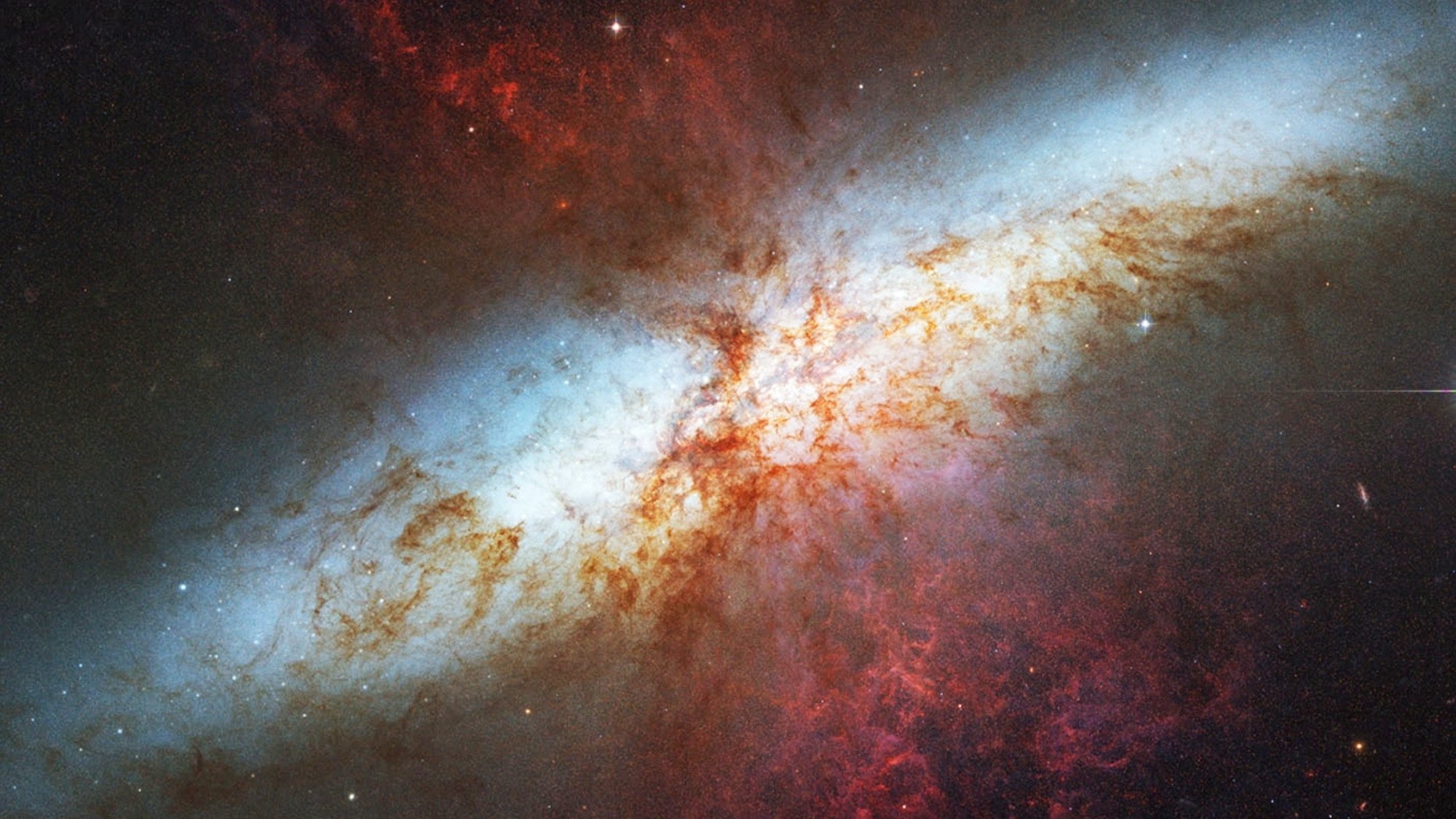

Ever wanted to journey into space? Wondered about the Milky Way or if aliens really exist? Then get Spaced Out! Learn about our universe through imagery taken from the Hubble Space Telescope, and see how it inspires our world and culture.
Social & External
narrator
Celebrating marine life from all corners of the UK as we dive deep to explore the health of our oceans.
See It Now is an American newsmagazine and documentary series broadcast by CBS from 1951 to 1958. It was created by Edward R. Murrow and Fred W. Friendly, Murrow being the host of the show. From 1952 to 1957, See It Now won four Emmy Awards and was nominated three other times. It also won a 1952 Peabody Award, which cited its
This BBC series offers a fresh look at an amazing organization and mankind's quest to understand the universe. Blending stunningly restored footage with revealing, insightful and engaging interviews with the people who were there - the astronauts, family members and journalists - this is an epic story of the heroes, the triumphs and the tragedies of space exploration. Starting with NASA's beginnings in the Cold War, the series follows the iconic moments of space exploration from the race to get the first man in space to the first steps on the moon. And with triumph and achievement comes risk and disaster, as the series follows the white-knuckle suspense of Apollo 13 and the tragedy of the shuttle Challenger. Intelligent, inspiring and accessible, The Space Age is a complete history of mankind's journey into space.
Cameras in space tell stories of life on our planet from a brand new perspective, revealing new discoveries, incredible colours and patterns, and just how fast it is changing.
Angler and biologist Jeremy Wade uncovers the bizarre, the weird and the mysterious as he investigates baffling, unsolved mysteries beneath the surface of dark waters.
For several thousand years the moose have walked the same path to get to the rich pastures of summer. Follow the walk live from Kullberg in the north of Sweden.
In this two-part series, we take a look at the monumental discoveries underway, specifically surrounding black holes and meteorites. Black holes have been revealed as one of the foundations for the basic conditions of life. Through black holes, life is possible in an infinite number of places in space. We also follow how meteorites brought the basic substances of life to our planet, allowing for its creation. The films describe the latest findings concerning cosmic events in relation to the origin of life, providing a grandiose perspective of what makes life possible.
Australian host Steve Irwin and his wife Terri run a wildlife refuge. Their shared passion is educating the world about wildlife, including the much feared crocodile and numerous venomous snakes. Steve's specialty is the capture and relocation of crocodiles. No animal appears too threatening to Steve, his true respect for animals is the foundation for everything he does.
Meerkat Manor is a British television programme produced by Oxford Scientific Films for Animal Planet International that premiered in September 2005 and ran for four series until its cancellation in August 2008. Blending more traditional animal documentary style footage with dramatic narration, the series told the story of the Whiskers, one of more than a dozen families of meerkats in the Kalahari Desert being studied as part of the Kalahari Meerkat Project, a long-term field study into the ecological causes and evolutionary consequences of the cooperative nature of meerkats. The original programme was narrated by Bill Nighy, with the narration redubbed by Mike Goldman for the Australian airings and Sean Astin for the American broadcasts. The fourth series, subtitled The Next Generation, saw Stockard Channing replacing Astin as the narrator in the American dubbing.
Three recent bull shark encounters in the heart of Sydney Harbor leave the city on edge. Shark attack survivor Paul de Gelder returns to the exact location where a bull shark nearly took his life to determine the cause for the spike in attacks.
Traveling aboard the OceanXplorer, OceanX's state-of-the-art scientific research and exploration vessel, to investigate the farthest frontiers of the world's oceans, 80% of which are entirely unknown. Armed with advanced technology, a hand-picked team of intrepid explorers and scientists, National Geographic Explorers and other ocean experts embark on a global odyssey to solve some of the ocean's greatest mysteries through the lives of its animals and their ecosystems.
All the incredible diversity of animal life sprang from a single organism. Every animal, no matter how weird, is related to every other. And behind each species is an incredible story of the millions of generations that gave rise to it - every animal we know and love today sprang from creatures that looked nothing like it.
The tropical islands that lie between Asia and Australia are among the biologically richest on earth, and home to a vast number of plants and animals. From tree kangaroos to tarsiers, manta rays to mudskippers, the region abounds with life. But why? The answer lies deep in time, due to the many millions of years these islands have existed - and the power of the earth, the sun and the moon.
The seven episodes explore North America: where civilization collides with untamed wilderness. Just feet beyond our own backyards rages a spectacle we never see. Join us as we step into this hidden world teaming with life - across impossible mountains and endless deserts. Dive into unexplored forests and crash into rugged coasts. This vast continent offers boundless rewards for those brave enough to take on this land - and call her home.
An ambitious seven-year natural history series documenting six of the planet's most threatened ecosystems and meeting the people fighting to restore the Earth’s delicate balance.
India - unique in its diversity and breathtakingly beautiful. The subcontinent is characterized by scenic, cultural and ethnic diversity. Despite growing space needs, there are efforts to preserve the wilderness through nature reserves and protected areas. So India still provides habitat for rare species such as the Bengal tiger or the Indian elephant. The 5-part series "India's wild beauty" leads to the most spectacular and beautiful regions and their inhabitants.
Gordon Buchanan, Kate Humble and Simon Reeve head north to follow the remarkable story of polar bears and the Arctic.
Millions dream of going into space, but how many of us have what it takes? Astronaut Chris Hadfield and his expert team will choose one winner from 12 exceptional applicants.
Ten years on from the original Frozen Planet, this documentary series takes audiences back to the wildernesses of the Arctic and Antarctica and tells the complete story of the entire frozen quarter of our planet that’s locked in ice and blanketed in snow.
Witness the remarkable story of our universe over billions of years and its inextricable link to life on Earth in this sweeping documentary series.
A users' guide to the cosmos, from the Big Bang to galaxies, stars, planets and moons: where did it all come from and how does it all fit together? A primer for anyone who has ever looked up at the night sky and wondered.
Filmed across six continents, this docuseries uses cutting-edge camera technology to capture animals' nocturnal lives, revealing new behaviours filmed in full color like never before.
PBS' premier science series helps viewers of all ages explore the science behind the headlines. Along the way, NOVA demystifies science and technology, and highlights the people involved in scientific pursuits.
A mind-bending, thrilling journey exploring the fragility and wonder of planet Earth, one of the most peculiar, unique places in the entire universe, brought to life by the only people to have left it behind – the world’s most well known and leading astronauts.
Natural World is a nature documentary television series broadcast annually on BBC Two and regarded by the BBC as its flagship natural history brand. It is currently the longest-running series in its genre on British television, with more than 400 episodes broadcast since its inception in 1983. Natural World is produced by the BBC Natural History Unit in Bristol, but individual programmes can be in-house productions, collaborative productions with other broadcasters or films made and distributed by independent production companies and purchased by the BBC. Natural World programmes are often broadcast as PBS Nature episodes in the USA. Since 2008, most Natural World programmes have been shot and broadcast in high definition.
Consistently stunning documentaries transport viewers to far-flung locations ranging from the torrid African plains to the chilly splendours of icy Antarctica. The show's primary focus is on animals and ecosystems around the world. A comic book based on the show, meant to be used an as educational tool for kids, was briefly distributed to museums and schools at no cost in the mid-2000s.
Famed astrophysicist Neil deGrasse Tyson provides clarity for the vision of the cosmos as he voyages across the universe with never-before-told stories that delve into the scientific concepts of the laws of gravity and the origins of space and time.
Hawking gives us the ultimate guide to the universe, a ripping yarn based on real science, spanning the whole of space and time -- from the nature of the universe itself, to the chances of alien life, and the real possibility of time travel.
Experience the wonders of our world like never before in this epic series from Jon Favreau and the producers of Planet Earth. Travel back 66 million years to when majestic dinosaurs and extraordinary creatures roamed the lands, seas, and skies.
This nature series’ new technology lifts night’s veil to reveal the hidden lives of the world’s creatures, from lions on the hunt to bats on the wing.
Experience our planet's natural beauty and examine how climate change impacts all living creatures in this ambitious documentary of spectacular scope.
Shot from land and air, in trees and cliff-blinds, on ice floes and underwater, this documentary tells the powerful stories of many of the planet's species and their movements, while revealing new scientific insights with breathtaking high-definition clarity and emotional impact. The beauty of these stories is underscored by a new focus into these species; fragile existence and their life-and-death quest for survival in an ever-changing world.
Horizon tells amazing science stories, unravels mysteries and reveals worlds you've never seen before.
David Attenborough celebrates the amazing variety of the natural world in this epic documentary series, filmed over four years across 64 different countries.
Hosted by Morgan Freeman, Through the Wormhole explores the deepest mysteries of existence - the questions that have puzzled mankind for eternity. What are we made of? What was there before the beginning? Are we really alone? Is there a creator? These questions have been pondered by the most exquisite minds of the human race. Now, science has evolved to the point where hard facts and evidence may be able to provide us with answers instead of philosophical theories. Through the Wormhole brings together the brightest minds and best ideas from the very edges of science - Astrophysics, Astrobiology, Quantum Mechanics, String Theory, and more - to reveal the extraordinary truth of our Universe.
A cinematic experience bringing you the most amazing human stories in the world. Humans and wildlife surviving in the most extreme environments on Earth.
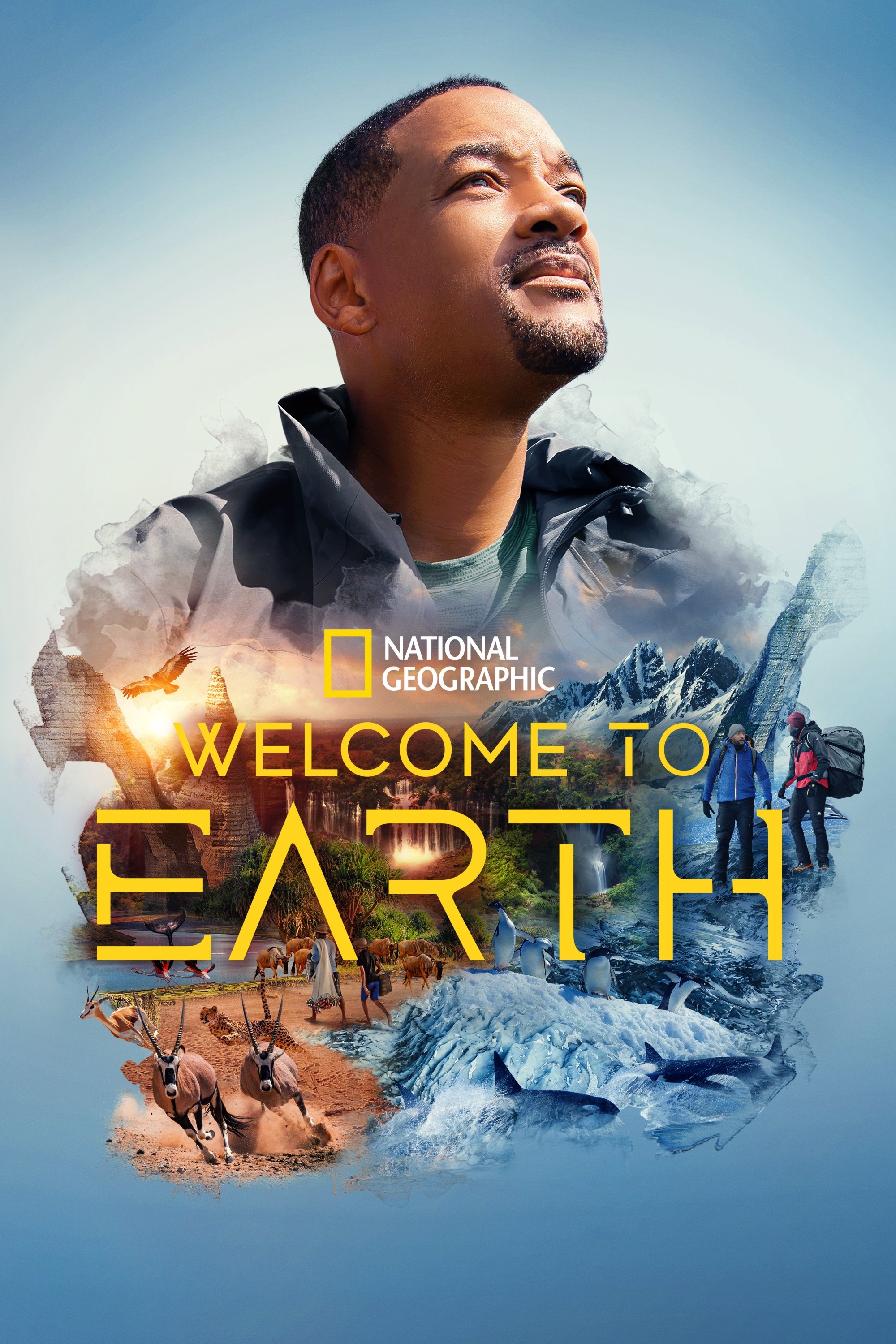
Will Smith whose curiosity and wonder is positively infectious—is guided by National Geographic Explorers traveling to different corners of the world to get up close and personal with the weirdest, most unusual, dangerous and thrilling spectacles of the planet.
This immersive series follows the world's most magnificent creatures, capturing never-before-seen moments from the heartwarming to the outrageous.
David Attenborough presents a documentary series exploring how animals meet the challenges of surviving in the most iconic habitats on earth.