Social & External
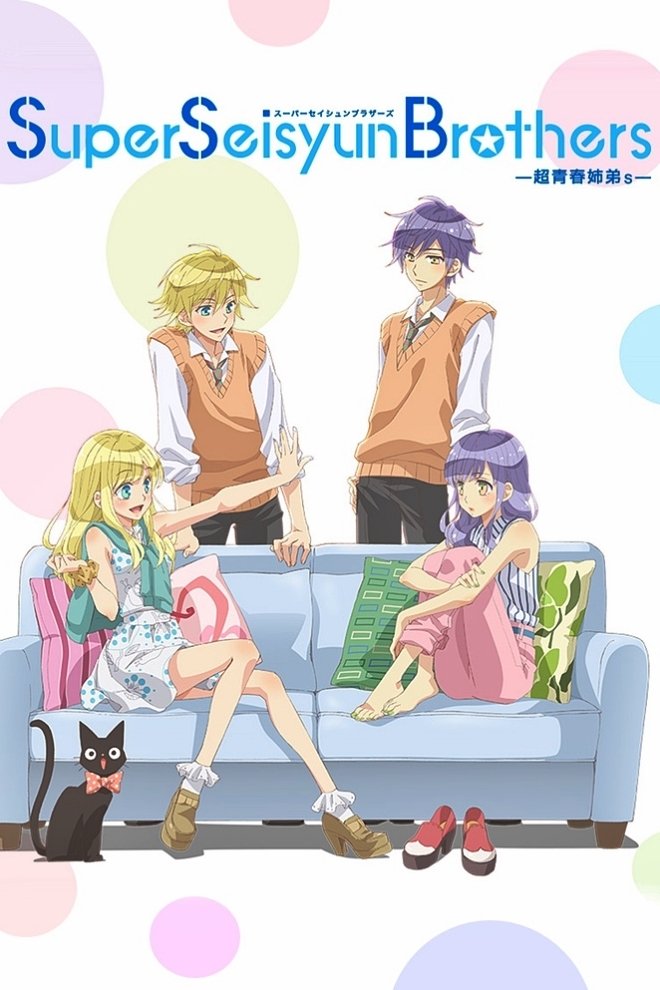
The story involves two pairs of teenage elder sister and younger brother, the Shinmoto's who are a bit narcissistic and the Saitou's who look a bit mysterious. It follows their everyday life in school and at home.
Takuma Hirose, an emotionally wounded boy becomes blind after his mother died in his childhood. For medical treatment, he moves to his mother’s home village where he enters a new school.
Each episode follows one T-ARA's member in her daily life.
The future, probably Japan. Robots have long been put into practical use, and androids have just come into use. Influenced by the Robot Ethics Committee, it's become common sense for people to treat androids like household appliances. Their appearance – indistinguishable from humans except for the ring over each android's head – has led some people to empathize unnecessarily with androids. Known as "android-holics", such people have become a social problem. Rikuo, a high school student, has been taught from childhood that androids are not to be viewed as humans, and has always used them as convenient tools. One day, Rikuo discovers some strange data in the behavior records of his family's household android, Sammy. Rikuo and his friend Masaki trace Sammy's movements, only to discover a mysterious café that features a house rule that "humans and robots are to be treated the same".
Hōzuki is the aide to the great king of Hell, King Enma. Calm and super-sadistic, Hōzuki tries to resolve the various problems in Hell, including a rampaging Momotarō and his companions. However, he also likes spending his free time on his hobbies, such as fawning over cute animals and raising "Goldfish Flowers."
A parody series featuring the entire cast of The Melancholy of Haruhi Suzumiya in a smaller form factor. Among the changes are: Yuki plays eroge, Haruhi is even more obnoxiuous and loud, Mikuru is even more emotional and Koizumi harbors a deep love for Kyon. Kyon, on the other hand, is generally the same as ever.
Kippei is a ladies man. Always in trouble for flirting in class, after class, anytime he can. So it is some big surprise to him when he gets saddled with watching Yuzuyu, a cute little girl.Yuzuyu`s mother has gone missing, and so Kippei`s family is watching her until her mother can be found. Of course, since Kippei could use a few lessons in responsibility, he is the "best" choice for the job.This story is working out to be very cute. Kippei`s natural "mother" instinct is really brought to the front while trying to to his best for Yuzuyu, but he is a boy. His ineptitude regarding the smallest things a mother would need to know [like packing a lunch for school] are endearing rather than hokey, and the character of Yuzuyu is cute, without being overly so.
Yukari is a typical high-school student who listens to her parents and attends school everyday. As she starts to question her way of life, she encounters a group of fashion design students who has a clothing label known as "Paradise Kiss". The group needs to find a model to showcase their designs in an up-coming fashion show and decides to pick Yukari instead. Initially, Yukari was reluctant to be associated with this seemingly eccentric group, but eventually, she realises that they are really nice people. Furthermore, their passion and enthusiasm to follow their ideals and dreams make Yukari realise that she has not been enjoying her life and this motivated her to pursue her own dreams.
Yuuta Takemoto, Takumi Mayama, and Shinobu Morita are college students who share the small apartment. Even though they live in poverty, the three of them are able to obtain pleasure through small things in life. The story follows these characters' life stories as poor college students, as well as their love lives when a short but talented 18 year old girl called Hagumi Hanamoto appears.
In the romantic comedy story, a high school girl named Kotoko finally tells a fellow senior named Naoki that she has loved him from afar since she saw him on their first day of school.
The story centres around Yutori-chan, a high school girl assigned to a part-time job in the marketing team of a medium-sized toy company called Popuu. There, she deal with the generation gaps that separate her from Tsumekomi-chan and Dankai-san.
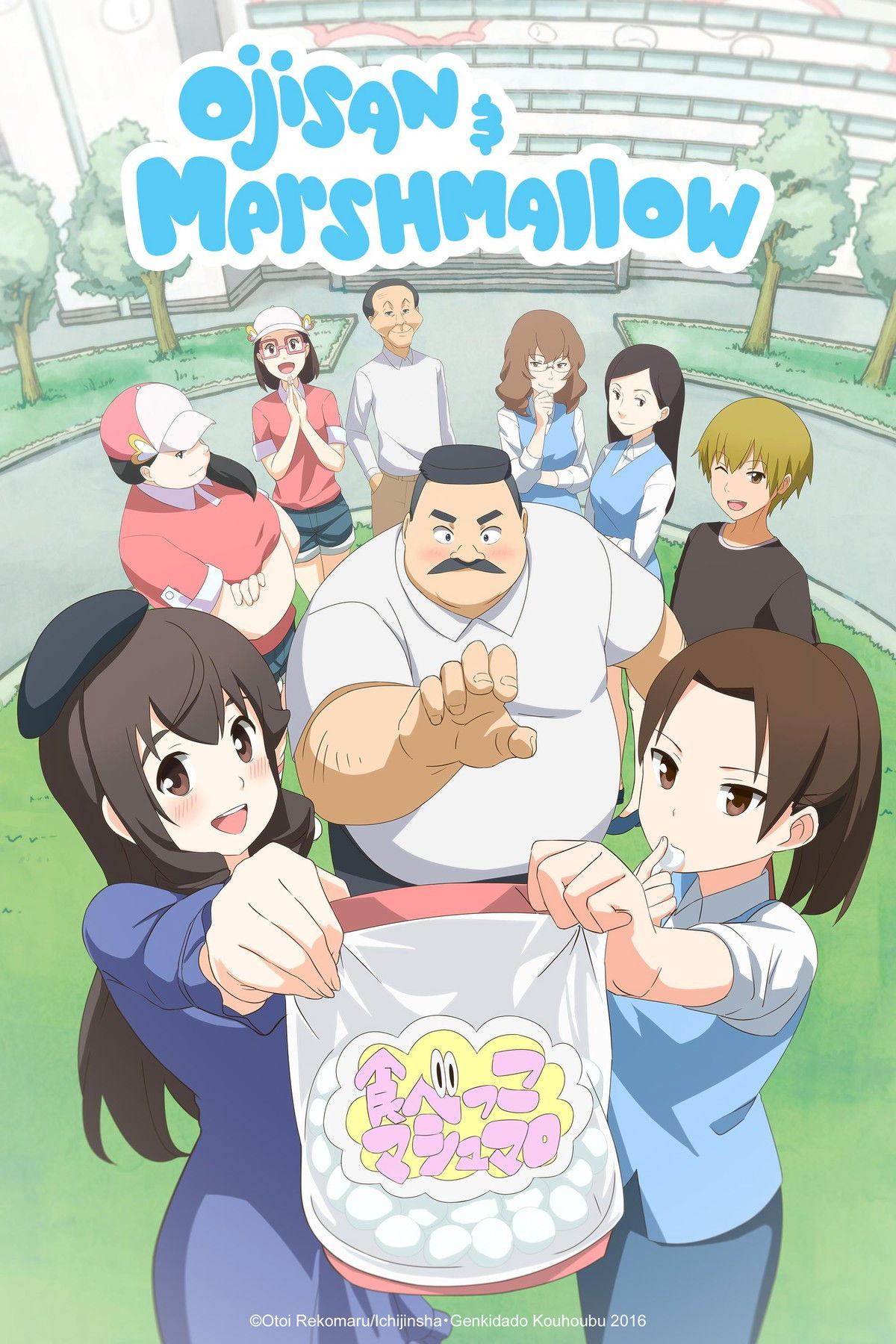
Kusaka is an older man who loves marshmallows, and Wakabayashi is an OL (office lady) who loves Kusaka. Their relationship unfolds at their office.
Hayao Imagawa is a 30 year-old virgin bachelor. One day, a cupid descends from heaven with the express purpose of forcing him to graduate from virginity. Thus unfolds a pure love story between a 30 year-old bachelor and a 30 year-old bachelorette.
Maeda-san is living alone in rented accommodations for the first time after finding employment. In his tiny, no-bath apartment he is visited by Chie Satonaka, who looks like the little sister he never had, but turns out to be the landlord of this apartment building. Chie's high degree of competence when it comes to cooking and housework, sometimes makes her appear very much older than the middle school girl she actually is. Maeda-san's other neighbour, Reiko Shirai, quite jealously tries to guard the cute landlord for herself though. And so Maeda-san's otherwise uneventful life, supposedly living alone, suddenly becomes quite lively...
Daisuke Higashida gets a job at a restaurant because of family financial difficulties, but no one who works there is normal.
Aoi’s soaked by a sudden rainstorm and takes shelter at Rainy Color, a cozy café where the warmth of the staff compliments the sweet hot cocoa he’s served. When he falls into a job at the café he feels like things are finally looking up— until Keiichi Iwase, the man he couldn’t help but stare at on the train, shows up.
What if you hold the power to hear the voices or see fragments of images from the future? Would that be a good thing or a bad thing? Glasslip follows the life of Touko Fukami, an aspiring glass artist born from a glass artisan family. She enjoys her worry-free life in Fukui, save for the fragments of images that she sees on occasion. On her 18th summer, she meets the transfer student Kakeru Okikura at her school, and then again at her favorite café called Kazemichi together with all four of her friends. The voices from the future lead Kakeru to Touko, and his arrival disrupts her mediocre existence. All six of the friends must face their most unforgettable summer full of hope, affection, and heartache.
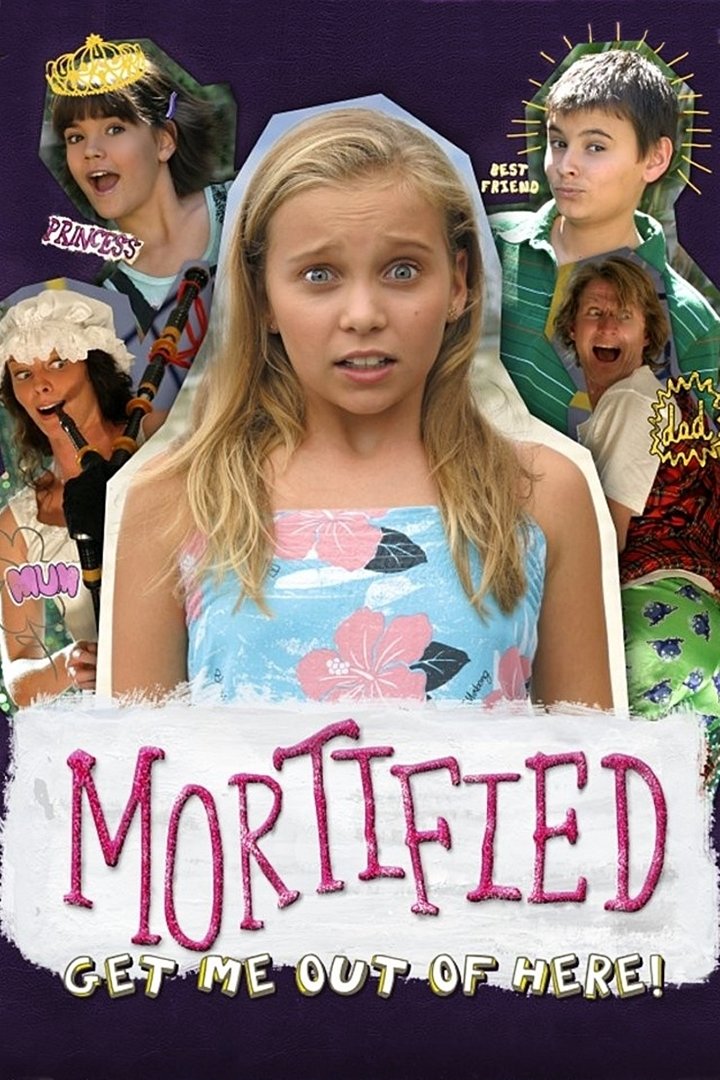
Mortified was an Australian children's television series, co-produced by the Australian Children's Television Foundation and Enjoy Entertainment for the Nine Network Australia, Disney Australia and the BBC. The series premiered on 30 June 2006 and ended on 11 April 2007 with two seasons and a total of 26 episodes. Currently, re-runs air on both ABC and the Disney Channel, in the U.S. on Starz Kids and Family, and in the UK on Pop Girl.
VICE News' half-hour nightly newscast. We now interrupt your regularly scheduled worldview.
America's popular television News magazine in which an ever changing team of CBS News correspondents contribute segments ranging from hard news coverage to politics to lifestyle and pop culture.
The sparkling notes of a trumpet fanfare and the familiar logo of the sun alert viewers that it's time for CBS's Sunday morning staple. Journalist Jane Pauley helms the show, taking over hosting duties from Charles Osgood, who spent 22 years on the job. A morning talk show, this program airs at a different pace and focuses much of its attention on the performing arts. After a quick update of the day's news and national weather, correspondents offer longer-length segments on a variety of topics, from architecture to ballet to music to pop culture to politics.
60 Minutes, an Australian version of the U.S. television newsmagazine 60 Minutes, airs on Sunday nights on the Nine Network and is presented in much the same way as the American program on which it is based. The New Zealand version of the show has also featured segments of the Australian version. Gerald Stone, the founding executive producer, was given the job by Kerry Packer and was told: "I don't give a f... what it takes. Just do it and get it right." After the first episode was broadcast on 11 February 1979, Packer was less than impressed, telling Stone: "You've blown it, son. You better fix it fast." Over the years, Stone's award winning 60 Minutes revolutionised Australian current affairs reporting and enhanced the careers of Ray Martin, Ian Leslie, George Negus, and later Jana Wendt. Since it was first broadcast, 60 Minutes has won five Silver Logies, one Special Achievement Logie, and received nominations for a further six Logie awards.
Veteran political journalist Tucker Carlson hosts this nightly series that bears his name. Fox News describes the show as an "hour of spirited debate and powerful reporting," with Carlson taking on issues that viewers care about. He is joined by guests to help him discuss issues that don't seem to get much coverage in other parts of the media. Regular segments include Carlson calling out political correctness that goes too far and putting overblown social-media outrage in its place, all done in what the network calls "his signature style."