The acclaimed MLB Network original countdown show that ranks the best of the best - both on and off the baseball field.
Social & External
Kkachi is a young boy who lost his mother at the age of 6 and lives with his father who has the habit of crossing Korea with his caravan but they suddenly move to Seoul where he joins baseball team at his college and his father marries a new wife. His father wants to force him to forget about losing his mother and has to learn to live with her father's new wife and daughter of her, Annie, a young handicapped girl who moves in a wheelchair. It took him a while to finally accept his stepmother and his new sister. During this period, he is fully participating in baseball quickly becoming the star player on his team and got to know Julie, with whom he gets along...
MLB Network counts down its version of the 20 greatest games played since about 1950. The network first came up with 50 games and a "blue ribbon panel" -- aided by fan votes -- whittled that to 20. Hosts Bob Costas and Tom Verducci dissect each game, and given the format, with each episode running at least one hour, there's plenty of time to delve into nuances such as pitch selection, defensive alignment, managerial moves and so on. Also making each episode must-see TV for longtime baseball fans is the ex-players and managers who join Costas and Verducci to provide insight. Bucky Dent, for example, talks about his famous home run in the 1978 American League tiebreak game, and Johnny Bench and Fred Lynn reminisce about Game 6 of the 1975 World Series, the No. 1 game on the list.
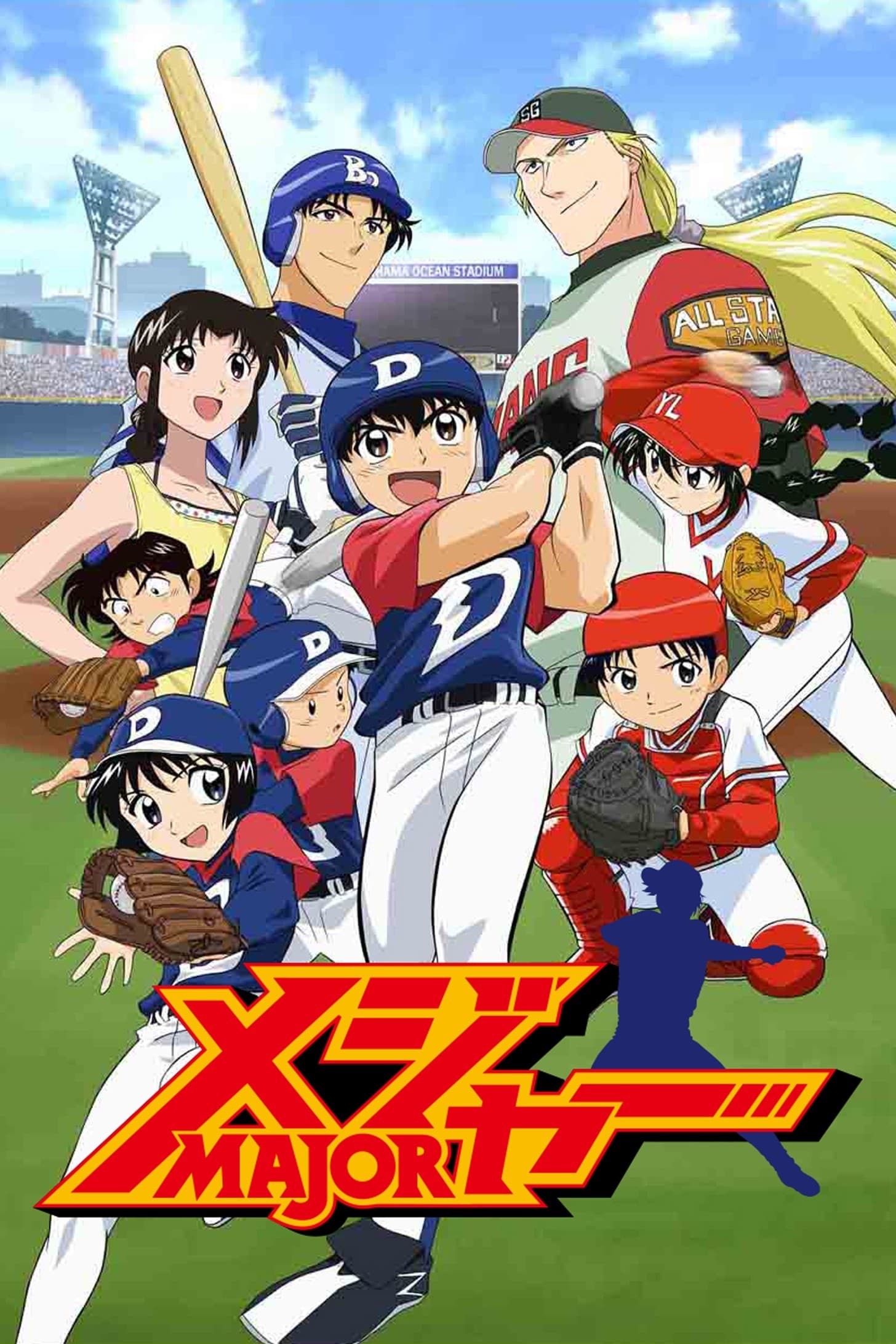
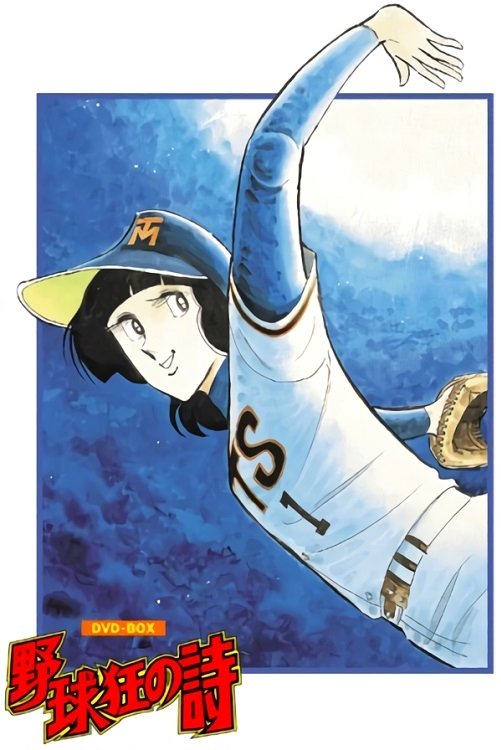
Honda Goro the son of a famous baseball player loves nothing more than baseball itself. His biggest dream is to show his father that he can become the best pitcher in the world despite all the hardships he had to endure he keeps on running towards his goal at full speed.
Why the hell would you want to play for the Toronto Boxsprings? They’re a bad team in a lousy inter-county league. They’re owned by a crappy discount mattress store. Even their locker room sucks - stuck in the leaky basement of a local dive bar.
Cha Mi-rae is a doctor and single mother to her young daughter Sa-rang. When she gets diagnosed with terminal cancer and told she has one year left to live, she seeks out her ex-boyfriend Han Yeol, a former baseball player. Mi-rae and Yeol were a couple a decade ago, but she broke up with him to study abroad and because she didn't think much of his prospects. Soon after, a serious injury forced him to retire from the sport, and Yeol became the rehabilitation coach of a major league baseball team. Mi-rae is determined to transform still-single, grungy, irritable Yeol into the best father possible for her daughter.
Se Young is the youngest head of the management team of Dreams, a cellar-dwelling baseball team. She's highly recognized for her perseverance and intense passion for the team. One day, Seung Su is appointed as a general manager. Although he's been working in the sports field, the teams he led to the championship were unpopular, and some of them were even disbanded after winning the league due to the financial difficulties of their parent companies. Would this unlucky new general manager be able to steer Dreams to the championship with passionate Se Young?
This immersive documentary series goes inside the dugout and gets up close and personal with the 2024 Boston Red Sox during their roller-coaster season.
Chris Russo has never been afraid to bring the heat as a radio host. Nicknamed "Mad Dog," he shows real passion for sports when the subject is baseball. Hearing him rant on satellite radio is one thing; seeing him is electrifying, which is why MLB Network collared Mad Dog to talk hardball each weekday. The hourlong studio show begins with Russo's monologue on the day's big headlines, then accelerates to league news with a roster of contributors including analysts Al Leiter, Dan Plesac, Harold Reynolds, Bill Ripken, insider Tom Verducci, and national/local beat writers and broadcasters.
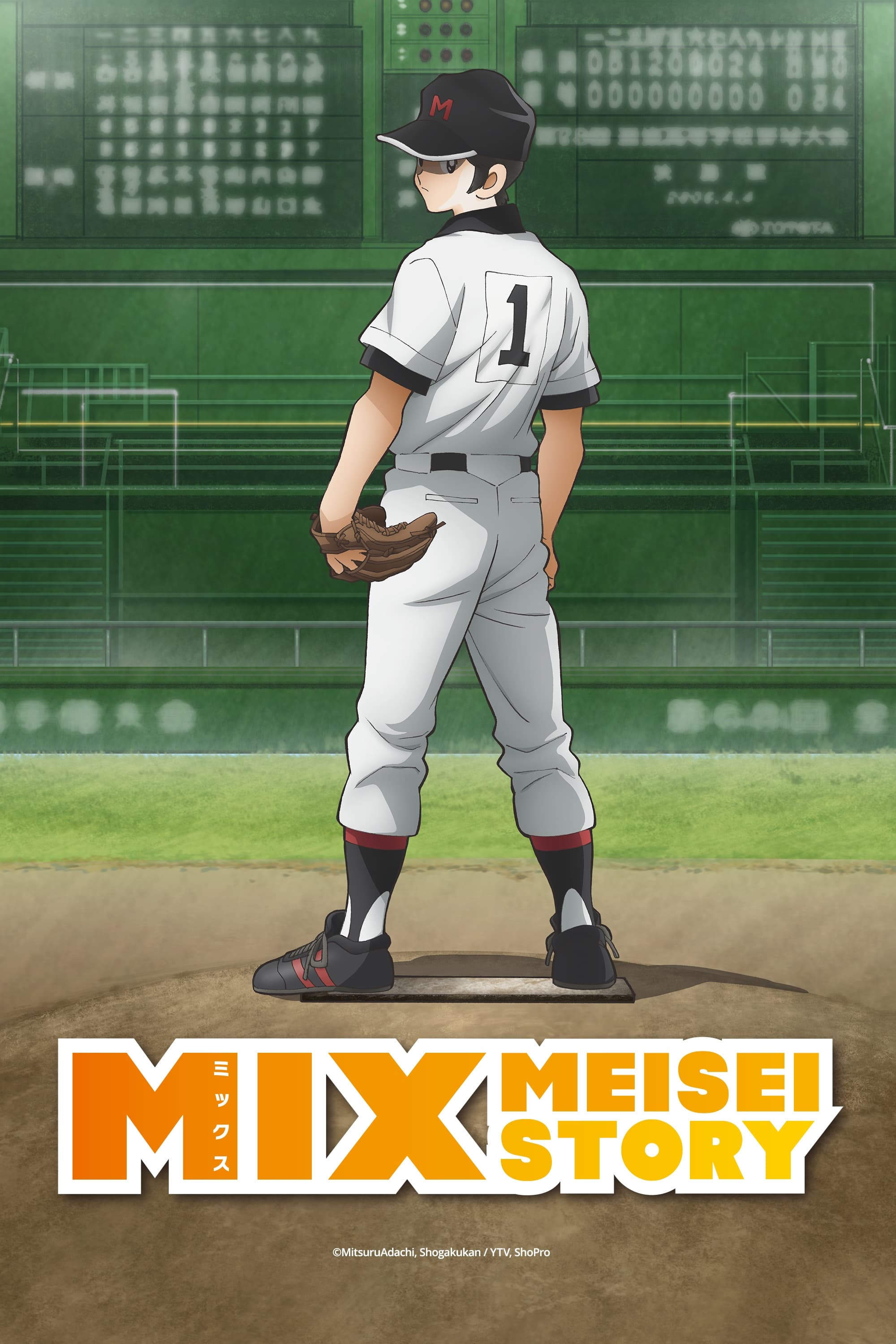
Because of the legend left by Tatsuya Uesugi, Meisei Academy High School was well-known for their strong baseball team. But 26 years after their glory, the team has not been able to keep their record and has since lost their fame. Two stepbrothers, Souichirou and Touma Tachibana, aim to revive of the once-strong Meisei Academy baseball team and enter the National High School Baseball Championship. Souichirou and Touma are second years in Meisei Academy Middle School. Both boys are talented baseball players. Souichirou has shown excellent skill as a catcher and batter. Though having an extraordinary skill as a pitcher, Touma no longer pitches due to a certain reason. Once the two enter high school, they pair as a battery and aim to enter the National High School Baseball Championship!
When Arihara Tsubasa enters Rigahama Municipal High School and learns that it has no baseball club, she starts up the Girls' Baseball Club on her own. Drawn to the club are girls who have never played baseball before, girls who once played it but quit, and girls who are constantly tackling great challenges. The Rigahama Girls' Baseball Club races through the trials of youth, periodically clashing and quarreling, but supporting each other all the way! And so begins the hottest summer the world has ever known...
Review of Samurai Japan and the 2023 World Baseball Classic
The first female professional baseball player who strikes out sluggers with her magical pitch... The manager who makes every effort to amend the Baseball Regulations so that she can join the pros... The separated twin brothers who couldn't have met each other if they weren't both totally absorbed in baseball... This series describes the joys and distress, the glory and frustration of those who enthusiastically love baseball.
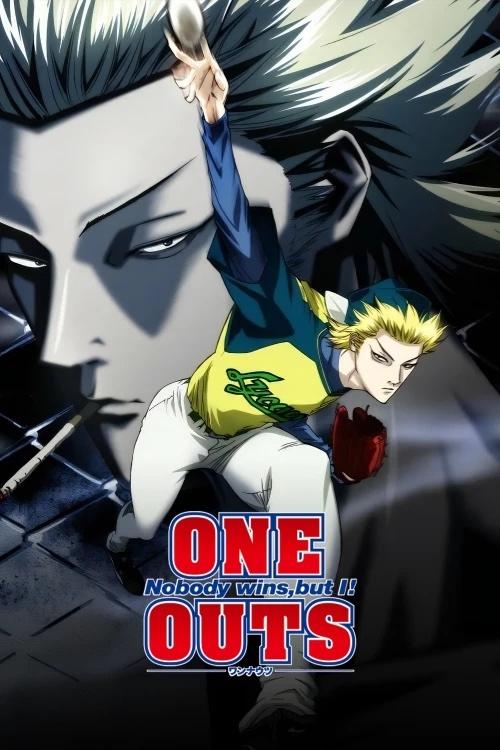
Hiromichi Kojima, the star batter of the Lycaons, heads to the southern Japanese island of Okinawa to train and find a new pitcher for the team. There, he meets Toa Tokuchi, a 134-kmph pitcher and the undisputed king of a gambling form of baseball called "One Outs". At Kojima's urging, Tokuchi signs up with the Lycaons under an unusual contract: he gets 5,000,000 yen for every out he pitches, but loses 50,000,000 yen for every point he gives up. A high-level psychological game of baseball, gambling and logic is about to begin..
The Woojoo High School baseball team, once dreaming of winning the Bonghwanggi National High School Baseball Championship, faces a crisis of survival after an unfortunate incident leaves its members scattered. A new transfer student begins to reassemble the team to restore Woojoo High School's former glory.
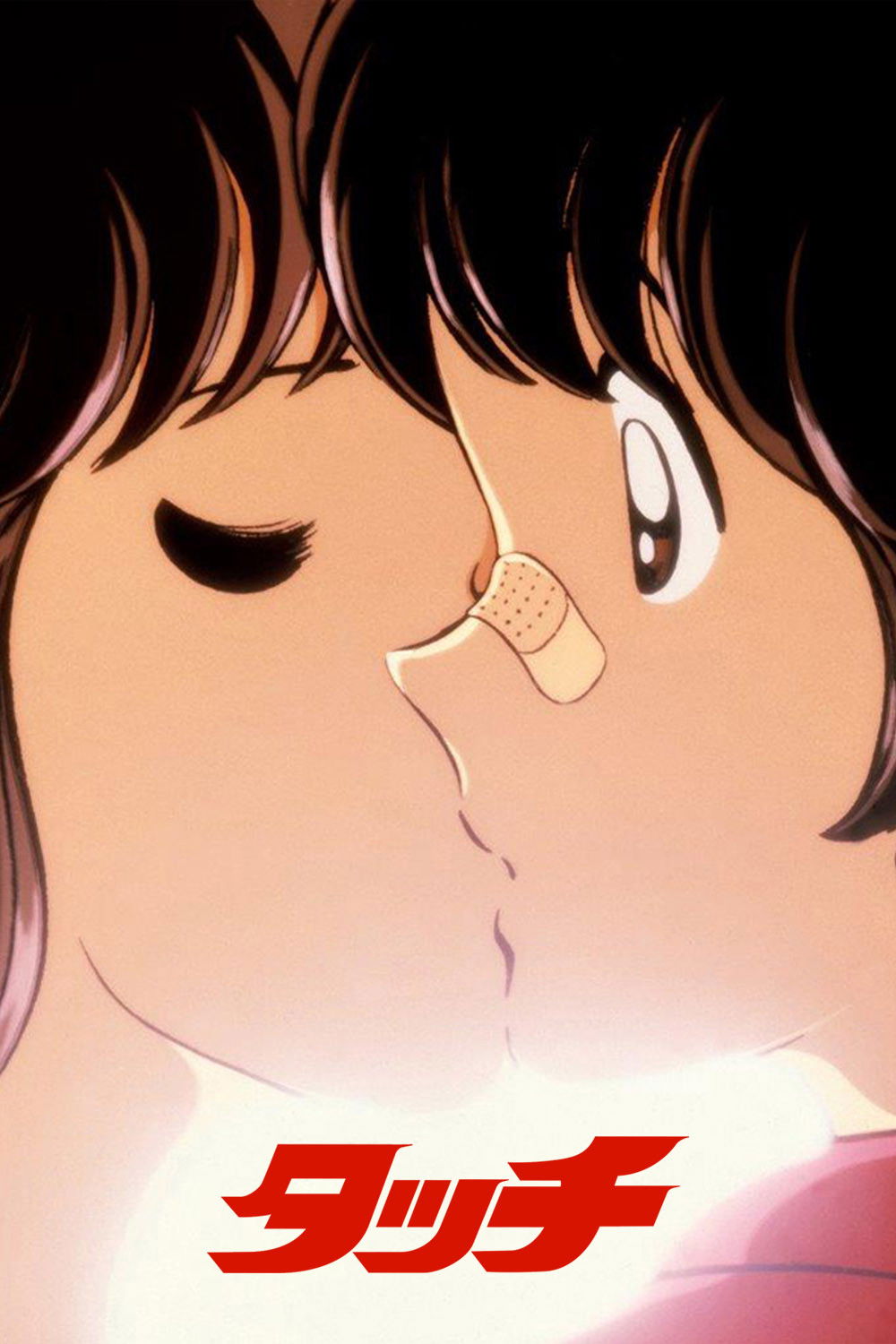
Twins Kazuya and Tatsuya, and their neighbor Minami have played together since they were children and built an unbreakable bond. But with puberty, the twins realized something: Minami is a girl, and three is a crowd. As the trio tries to preserve their relationship, Kazuya's pledge to make Minami's dream come true by taking her to Koshien with his baseball pitching skills makes the slackerish Tatsuya wonder about himself, and his own goals. But Minami has another dream she wants fulfilled, and as the twins continue to push themselves, with Minami in the middle, a life-changing tragedy leads one twin down a path he once never would've considered...
Emanating from Studio 42 -- named in honor of Jackie Robinson -- in MLB Network's Secaucus, N.J., headquarters, this series features the Hall of Fame-worthy interview skills of Bob Costas talking baseball with the legends of the game, Hall of Famers in their own right. Guests including Willie Mays, Bob Feller, Hank Aaron, George Brett, Reggie Jackson and Cal Ripken Jr. have graced the replica baseball field-designed studio set, reminiscing with Costas about their days on the diamond while also discussing current events and issues surrounding the game. Costas has also spent time on the show with broadcasters Al Michaels and Ernie Harwell, entertainer and big-time baseball fan Billy Crystal, and fronted episodes discussing baseball in Cuba and the state of umpiring.
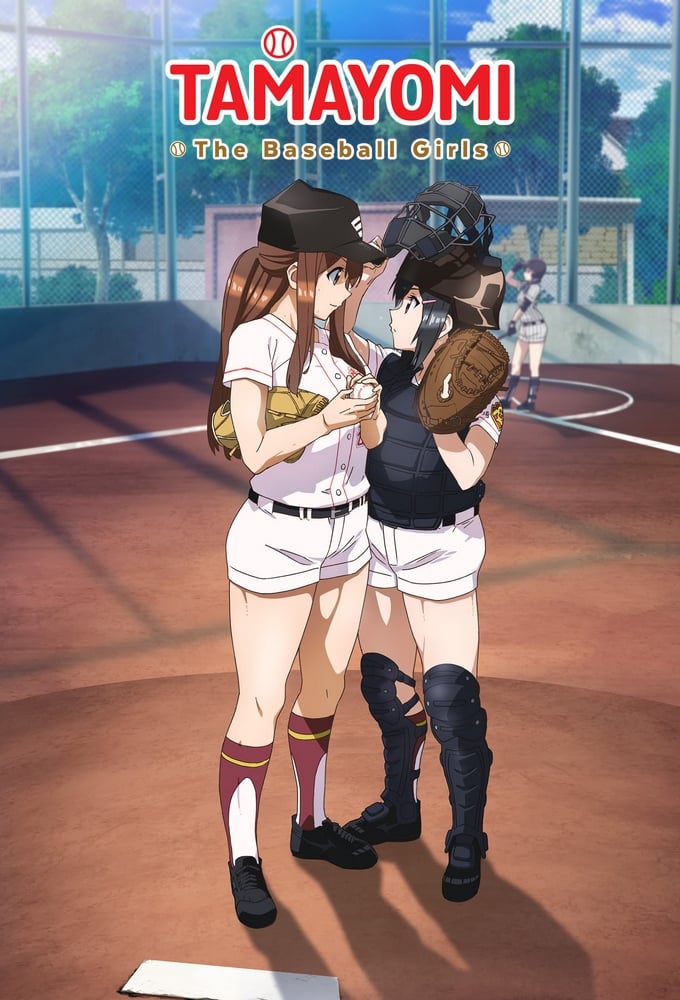
In her Junior High years, the pitcher Yomi Takeda was not able to get very far in a cross-school baseball tournament. Since the catcher on her team wasn't at her level, she couldn't use her signature move, the "Magic Throw," and eventually regretted not being able to use it. After Junior High, she decided to stop playing baseball and went to Shin Koshigaya High School, a school without a baseball club. There, she found her long lost childhood friend, Tamaki Yamazaki, who used to play catchball with her when they were kids. Tamaki also played baseball during her Junior High years as a catcher, and could even catch Yomi's "Magic Throw!" Their promise with each other during their childhood could now be fulfilled! Walking together on the road of baseball once again... The story of the girls who love baseball will begin!
Loosely based on the baseball writing of W. P. Kinsella, the series was set in a world populated by anthropomorphic birds, and centred on the minor league baseball team in the town of Mynaville. The baseball games were represented by placing two-dimensional characters in three-dimensional backgrounds. The teams of bird characters were opposed by rival teams like the Weasels, the Pigs, the Beavers and the Elephants.
Ball Four is a 1976 American situation comedy that aired on CBS in 1976. The series is inspired by the 1970 book of the same name by Jim Bouton. Bouton co-created the show with humorist and television critic Marvin Kitman and sportswriter Vic Ziegel. Bouton also starred in the series. Ball Four followed the Washington Americans, a fictitious minor league baseball team, dealing with the fallout from a series of Sports Illustrated articles written by Americans player Jim Barton. Like the book, the series covered controversial subjects including womanizing players, drug use, homosexuality in sports and religion. The series included a gay rookie ballplayer, one of the earliest regular gay characters on television. The trio began developing the series in 1975, looking to other series like M*A*S*H and All in the Family as models. CBS expressed interest and the creative team developed a script. CBS shot the pilot episode and ultimately bought the series. Ball Four aired at 8:30 PM Eastern time, which was during the Family Viewing Hour, an FCC-mandated hour of early evening "family-friendly" broadcasting. Consequently the writers had some trouble with the network's Standards and Practices in their attempt to portray realistic locker room scenes, especially the language used by the players. Pseudo-profanity such as "bullpimp" was disallowed, while "horse-crock" and "bullhorse" were approved.