This film presents the principal features of the planets and the National Aeronautics and Space Administration (NASA) program for exploring them during the 1970s.
Social & External
With more than 27 years of service, the space shuttle Discovery has clocked more time in space than any other shuttle. She has flown more than 148 million miles, and has become one of the most storied spacecraft in American history. Join us as we celebrate her remarkable past and follow her final flight: to the Smithsonian National Air and Space Museum. It's an emotionally charged mission full of logistical challenges. Discovery is a robust, but very fragile aircraft, and getting her to D.C. in one piece will require some innovative engineering.
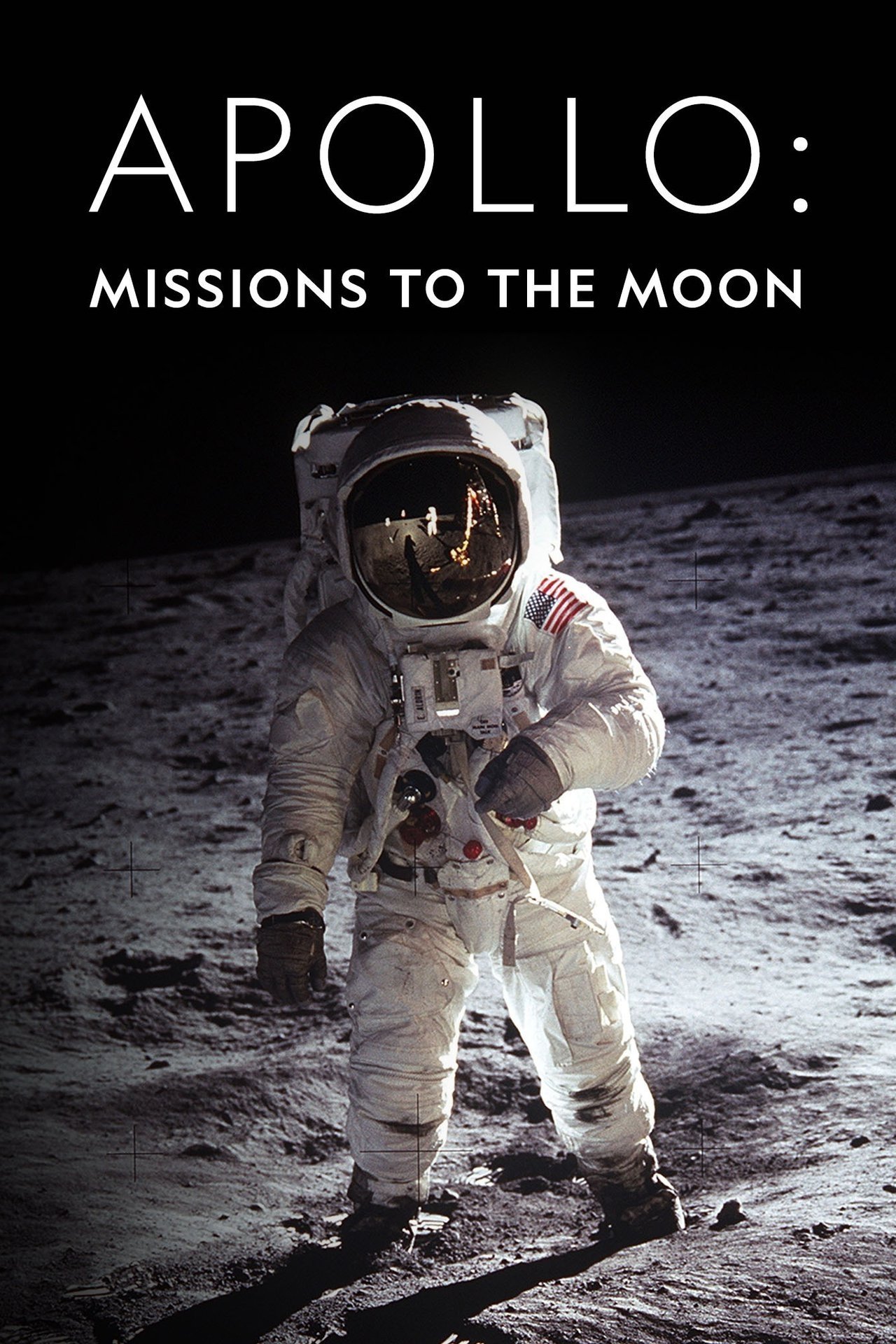
July 1969. Astronauts Neil Armstrong and Buzz Aldrin are 240,000 miles from earth facing the most hazardous venture in the history of space flight; the first human landing on another world. They'll succeed, abort, or die in the attempt.
What if you could get behind the wheel and race through space? We scale down the Solar System to the continental United States and place the planets along the way to better appreciate the immense scale of the Universe. See space as never before, with Mars looming over the Freedom Tower and Jupiter towering above the Lincoln Memorial. Join former astronaut Chris Hadfield - a YouTube sensation for his performance of David Bowie’s “Space Oddity” aboard the International Space Station - and his interstellar hitchhikers Michio Kaku and astronomers Derrick Pitts and Laura Danly. It’s a joyride from coast to coast - and from the sun to Pluto.
The remarkable story of the determination and courage of a generation. A tribute to three brave astronauts and the thousands of men and women behind them during the final days of NASA's Apollo program.
One Small Step: The Story of the Space Chimps is the dramatic and moving real-life tale of the United States Air Force chimponauts and their NASA compatriots.
A brief visualisation of NASA’s historic spacecrafts Mariner, Pioneer, Voyager, and Dawn, exploring the solar system, culminating in the New Horizons mission.
In unusual circumstances, scientists from different countries work together to achieve a common scientific goal. Locked in their spinning space lab, they are isolated from the world — family and friends - and can only watch from the outside as life on Earth continues without them. The space station is a monument not only to the weaknesses of humanity, but also to its ability to do the impossible for the sake of life in space.
What forms might life take in the Solar System and beyond? In the Academy's newest original planetarium show, see how a deeper understanding of Earth might help us locate other living worlds, light years away.
Black holes stand at the limit of what we can know. To explore that edge of knowledge, the Event Horizon Telescope links observatories across the world to simulate an earth-sized instrument. With this tool the team pursues the first-ever picture of a black hole, resulting in an image seen by billions of people in April 2019. Meanwhile, Hawking and his team attack the black hole paradox at the heart of theoretical physics—Do predictive laws still function, even in these massive distortions of space and time? Weaving them together is a third strand, philosophical and exploratory using expressive animation. “Edge” is about practicing science at the highest level, a film where observation, theory, and philosophy combine to grasp these most mysterious objects.
Nearly forty years after the moon landing the men on the mission reveal what really happened. On how close the mission came to disaster.
Venture into deep space for a fascinating look at asteroids, their cosmic origins and the potential threat they pose to our world. Written and produced by Phil Groves, produced by Jini Durr and directed by W.D. Hogan, Asteroid Hunters introduces asteroid scientists – the best line of defense between Earth and an asteroid’s destructive path – and reveals the cutting-edge tools and techniques they use to detect and track asteroids, and the technology that may one day protect our planet. The effects of an asteroid impact could be catastrophic and while the current probability of an event in our lifetime is low, the potential consequences make the study of asteroids an incredibly important area of scientific research. Witness the latest in planetary defense and how science, ingenuity and determination combine to explore the world’s most preventable natural disaster.
Twin astronauts Scott and Mark Kelly were separated for almost a year, undergoing intensive measurements when one was in space and one was on Earth. But that was only the beginning of their scientific odyssey. "Beyond A Year in Space," PBS and Time's follow-up documentary to last year's — which followed Scott Kelly from launch to landing — chronicles Kelly's return to life on Earth and the extensive medical testing the duo undergo to determine exactly what changes have occurred as a result of his record-breaking stay on the International Space Station. The documentary also follows two new astronauts, Jessica Meir and Victor Glover, training to go even further.
This documentary by Theo Kamecke from 1970 gives an in-depth and profound look at the Apollo 11 mission to the moon. NASA footage is interspersed with reactions to the mission around the world as the film captures the intensity as well of the philosophical significance of the event. Won special award at Cannes.
Luca Parmitano is the first italian astronaut to perform an extravehicular activity, currently part of the crew engaged in the Expedition 61 mission on board the International Space Station (SSI), is ready to tell his latest space adventures.
"Houston, we've had a problem." Apollo 13 has become known as “a successful failure” that saw a safe return of the crew in spite of a catastrophic explosion in the middle of their lunar journey. This 30-minute documentary features interviews with Apollo 13 Astronauts Jim Lovell and Fred Haise, as well as Flight Directors Gene Kranz and Glynn Lunney, with engineer Hank Rotter. Parts of their interviews take place in the restored Apollo mission control room. This documentary also features original NASA footage and newly synchronized audio from Mission Control. Thanks to Stephen Slater and Ben Feist/Apollo in Real-Time (apolloinrealtime.org/13) for providing additional footage and audio.
A short documentary about Fritz Lang's film 'Frau im Mond', and its relation to the science and history of real space travel.
A respectful overview of Dr. Marvin E. Grunzke’s career that included training Ham, the first chimpanzee launched into orbit by NASA.
July 1969. America made history and sent the first humans to the moon. High-quality NASA footage and extensive news broadcasts bring this sensational moment in history bursting back into life. Live news footage from every corner of the globe recreates the excitement and elation that surrounded the event, as 600 million people tuned in to watch Neil Armstrong's remarkable first steps.
The Space Race comes alive through the eyes of the ultimate insider - retired NASA Mission Control Flight Director Gene Kranz. A history of the U.S. manned space program from Mercury to Apollo 17, as seen by the men of Mission Control.