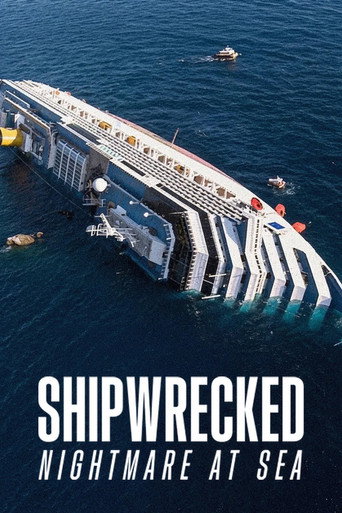
Residents of an idyllic island town off the coast of Georgia demand answers after the largest shipwreck removal in US History doesn't go as planned.
Social & External
Self
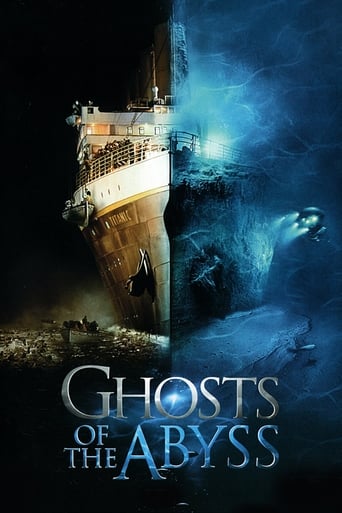
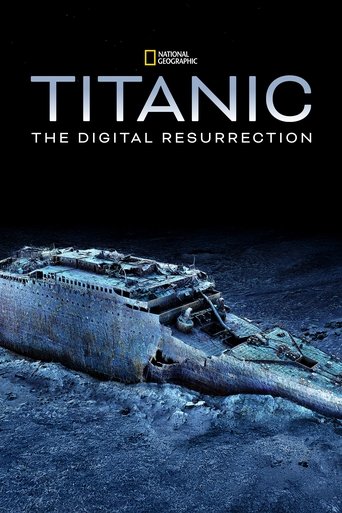
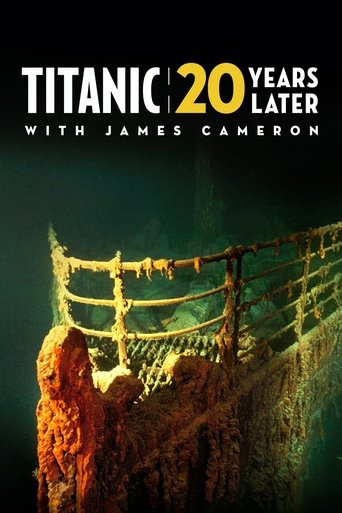
With a team of the world's foremost historic and marine experts as well as friend Bill Paxton, James Cameron embarks on an unscripted adventure back to the wreck of the Titanic where nearly 1,500 souls lost their lives almost a century ago.
Through a choral diversity of testimonies, the documentary explores the myth of the axolotl, transporting us from the story of a chinampero whose lifestyle reflects the environmental decay of Mexico City, to the efforts of a group of scientists racing against the consequences of the extinction of our symbols and ecological heritage.
Hurricanes, earthquakes, volcanic eruptions: How do animals and plants actually react to such natural disasters? Some animals can sense impending natural disasters and protect themselves from them. Others are forced to stay and have to fight for their survival against the unpredictability of nature. For some time now, scientists have been studying how flora and fauna respond to the whims of planet Earth. The results suggest remarkable survival strategies. However, it remains uncertain whether animals and plants will be able to face the new, man-made challenges.
The documentary follows Polish artists on the first sailing expedition to Antarctica, their struggles, the first ever concert by Polish artists there, the first wet plate photography session & rare underwater encounters with leopard seals & other wildlife.
Penetrating the oil industry's secretive world, The Great Invisible examines the Deepwater Horizon disaster through the eyes of oil executives, explosion survivors and Gulf Coast residents who were left to pick up the pieces when the world moved on.
A sea-turtle grew tumors that are believed to be human induced. Experts talk about their relationship with turtles like her and call audiences to action.
June 1971 - in a fluid landscape completely below sea level, a young biology student dies during the last year of his studies, leaving behind an unfinished scientific collection. More than fifty years later, a group of ecologists and volunteers are trying to understand and document the same environment as it is today.
Shot over the course of 30 days at sea, filmmaker Alizé Jireh documents the group’s voyage across the North Atlantic—from moments of stillness and calm to the chaos of storms and setbacks. With an observational approach and an eye for the emotional and physical rhythms of life at sea, Jireh captures not just the external landscape, but the internal shifts that come with navigating the vast unknown.
Ben is worried. Overwhelmed by the world's encroaching crises, he travels from Brandenburg to London to Kansas to the Yucatan peninsula and many places in between, to find out how to cope with social and ecological collapse.
The loss of biodiversity is highly alarming: our planet is currently experiencing the greatest extinction since the age of the dinosaurs. This film documents the extinction of species currently happening around the world. But it also highlights hopeful initiatives as committed men and women on every continent fight to save endangered species and work towards improving biodiversity.
Searching for life in daily rituals, Losing Touch undertakes a shift in perception and presents the city as an ugly yet ecologically rich landscape. The film depicts the internal dialogue on coping with the grief and fear of ecological degradation, using the local streets of Berlin as a means to materialise and confront these emotions. As both the body and mind begin to wander, encounters with the landscape over a 24 hour period are transformed into an overstimulating and emotionally charged journey. Camcorder footage, film developed in beer and cyanotype create sensational and playful depictions of the surroundings, joining the rats scurrying on the ground and fleeing the night lights with the moths. Creatures of metal and flesh interact within and between the frames, coming together as an ugly yet vibrant community. Subverting the nature-culture dichotomy, a new image of nature is formed, not only as a romantic, distant place, but rather a dirty, omnipresent force.
In an era of throw-away ease, convenience has cost us our well-being. Plastics have been found inside our bodies— in our colons, our brains, and even in mothers’ developing wombs. Scientists around the country are sounding the alarm, but without public buy-in, there is little that can be done. How much evidence do we need before we decide to take action?
The Wild Defending Itself is a feature-length documentary (90 min) by Vincent Verzat, produced by Partager c'est Sympa. The film traces his path between militancy and naturalism, his search for a balance between combat and contemplation. Based on a personal and sensitive story, the film makes the link between wild animals and the struggles being waged throughout France against the destruction of their habitats. The Wild Defending Itself sets out a path for living with dignity and preparing for what lies ahead.
As Cyclone Remal approached, we arrived in Debpur village of Dhankhali Upazila, Bangladesh. What struck us immediately was the stark contrast between the official warnings of impending devastation and the villagers' apparent lack of preparedness. Over the following days, amidst the unfolding chaos, we documented the lives of individuals as they grappled with the imminent threat of destruction. The film captures the overbearing anxiety that grips entire communities in the face of an approaching cyclone. Through intimate encounters, and candid interviews, we witness firsthand the resilience and fear of those directly in Remal's path. Their voices echo the overwhelming power of nature and the human spirit in adversity.
Brazil is one of the most dangerous countries for environmentalists. The rural community of Belisário holds the country's second largest bauxite reserve, right below one of the most bio-diverse areas in the world: the Atlantic Forest. The small community was shaken when the beloved Gilberto, a Franciscan Friar, received a death threat followed by the lines: "you've been talking against mining way too much". PT: O Brasil é um dos países mais perigosos do mundo para defensores do meio ambiente. Em Minas Gerais, a comunidade rural de Belisário abriga a segunda maior reserva de bauxita do país, em uma das áreas de maior biodiversidade do mundo: a Mata Atlântica. A tranquilidade do pequeno vilarejo foi abalada quando Frei Gilberto, um franciscano que dedica sua vida à preservação da natureza, recebeu uma ameaça de morte com o seguinte aviso: "você tem falado demais contra a mineração".
We follow a team of scientists on a gruelling expedition into a remote rainforest in Mozambique. They're hoping to prove that Mount Mabu's animals and insects are unique and in need of official protection.
A 45 minute account of the life of a humble logger, named Vince Shute, who made one decision that would ultimately affect the black bear and the attitudes that people have of this often misunderstood animal. This short film goes into great detail about the history of The American Bear Association and the formation of the Vince Shute Wildlife Sanctuary.
A choral portrait with 16 voices, 16 unique trajectories, reflective and intimate, of an intergenerational resistance movement led by young people who live and fight against land and water grabbing, industrial devastation, the rise of totalitarianism, and face political repression. A deep dive into the heart of Soulèvements de la Terre, revealing the unprecedented composition of the multiple forces deployed throughout the country, experimenting with other ways of life, forging new links with living things, thus overturning the established divisions between the political and the sensitive, opening us up to a field of possibilities.
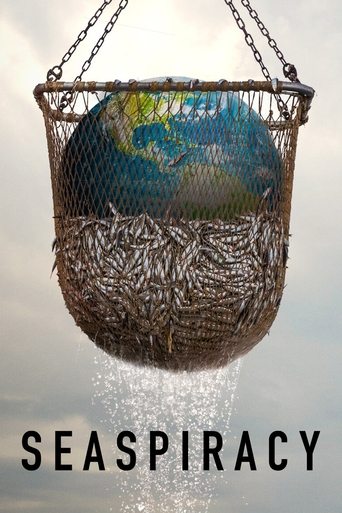
Passionate about ocean life, a filmmaker sets out to document the harm that humans do to marine species — and uncovers an alarming global conspiracy.
An experimental portrait of the North American commercial fishing industry through the lens of GoPro cameras placed on a fishing vessel off the coast of New England.
A commercial diver is stranded on the seabed with only five minutes of oxygen supply, but with no chance of rescue for more than 30 minutes. With access to amazing archival footage, this is the true story of one man’s impossible fight for survival.
A close examination of the Whakaari / White Island volcanic eruption of 2019 in which 22 lives were lost, the film viscerally recounts a day when ordinary people were called upon to do extraordinary things, placing this tragic event within the larger context of nature, resilience, and the power of our shared humanity.
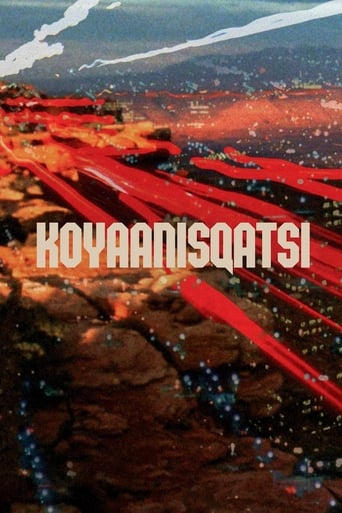
Takes us to locations all around the US and shows us the heavy toll that modern technology is having on humans and the earth. The visual tone poem contains neither dialogue nor a vocalized narration: its tone is set by the juxtaposition of images and the exceptional music by Philip Glass.
Deep Blue is a major documentary feature film shot by the BBC Natural History Unit. An epic cinematic rollercoaster ride for all ages, Deep Blue uses amazing footage to tell us the story of our oceans and the life they support.
A documentary focused on plastic pollution in the world's oceans.
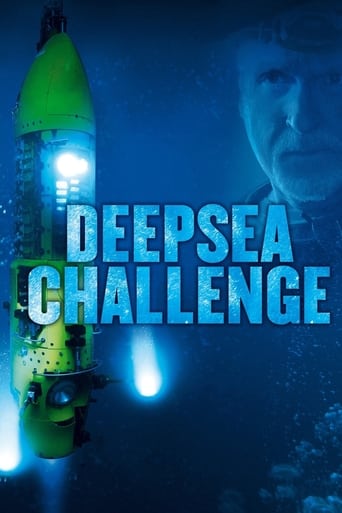
Described as being a film about determination, danger and the ocean’s greatest depths, James Cameron's "Deepsea Challenge 3D" tells the story of Cameron’s journey to fulfill his boyhood dream of becoming an explorer. The movie offers a unique insight into Cameron's world as he makes that dream reality – and makes history – by becoming the first person to travel solo to the deepest point on the planet.
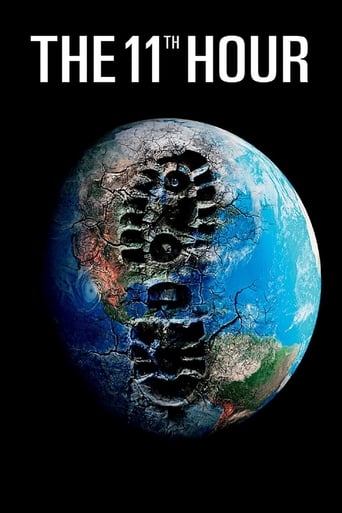
A look at the state of the global environment including visionary and practical solutions for restoring the planet's ecosystems. Featuring ongoing dialogues of experts from all over the world, including former Soviet Prime Minister Mikhail Gorbachev, renowned scientist Stephen Hawking, former head of the CIA R. James Woolse
A documentary on Al Gore's campaign to make the issue of global warming a recognized problem worldwide.
A documentary on a former Miss Wyoming who is charged with abducting and imprisoning a young Mormon Missionary.
A documentary on the expletive's origin, why it offends some people so deeply, and what can be gained from its use.
Early Errol Morris documentary intersplices random chatter he captured on film of the genuinely eccentric residents of Vernon, Florida. A few examples? The preacher giving a sermon on the definition of the word "Therefore," and the obsessive turkey hunter who speaks reverentially of the "gobblers" he likes to track down and kill.
Director Michael Apted revisits the same group of British-born adults after a 7 year wait. The subjects are interviewed as to the changes that have occurred in their lives during the last seven years.
Pushed to his breaking point, a master welder in a small town at the foot of the Rocky Mountains quietly fortifies a bulldozer with 30 tons of concrete and steel and seeks to destroy those he believes have wronged him.
A documentary shot by filmmakers all over the world that serves as a time capsule to show future generations what it was like to be alive on the 24th of July, 2010.
Unravel the case of Utah therapist Jodi Hildebrandt, whose child abuse arrest with parenting YouTuber Ruby Franke exposed a twisted tale of manipulation.
An ecological drama/documentary, filmed throughout the globe. Part thriller, part meditation on the vanishing wonders of the sub-aquatic world.
This revealing documentary honors the legendary Sidney Poitier—iconic actor, filmmaker, and civil rights activist. Featuring interviews with Denzel Washington, Spike Lee, Halle Berry, and more.