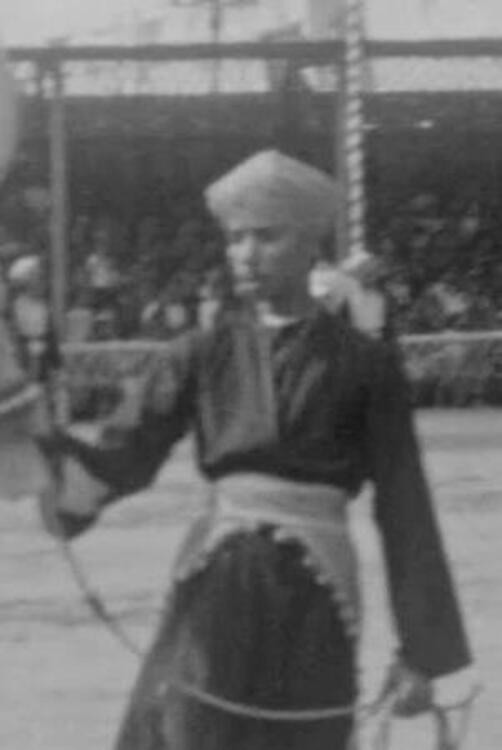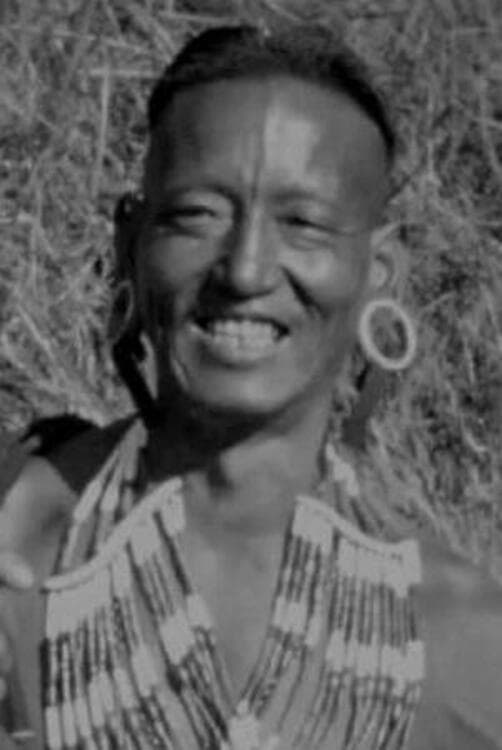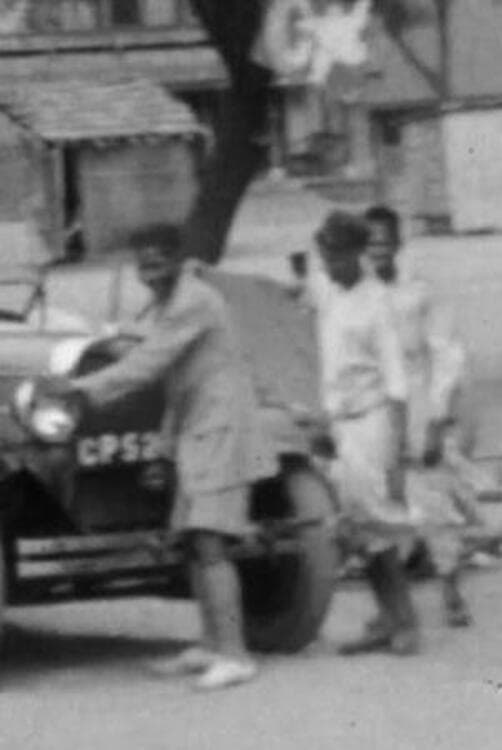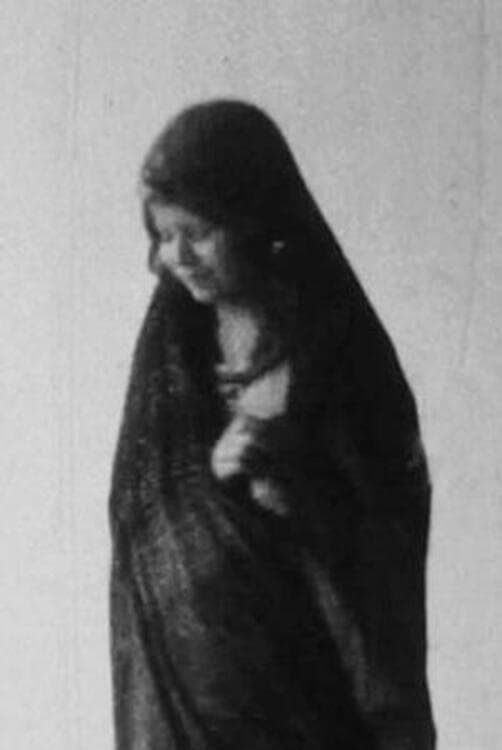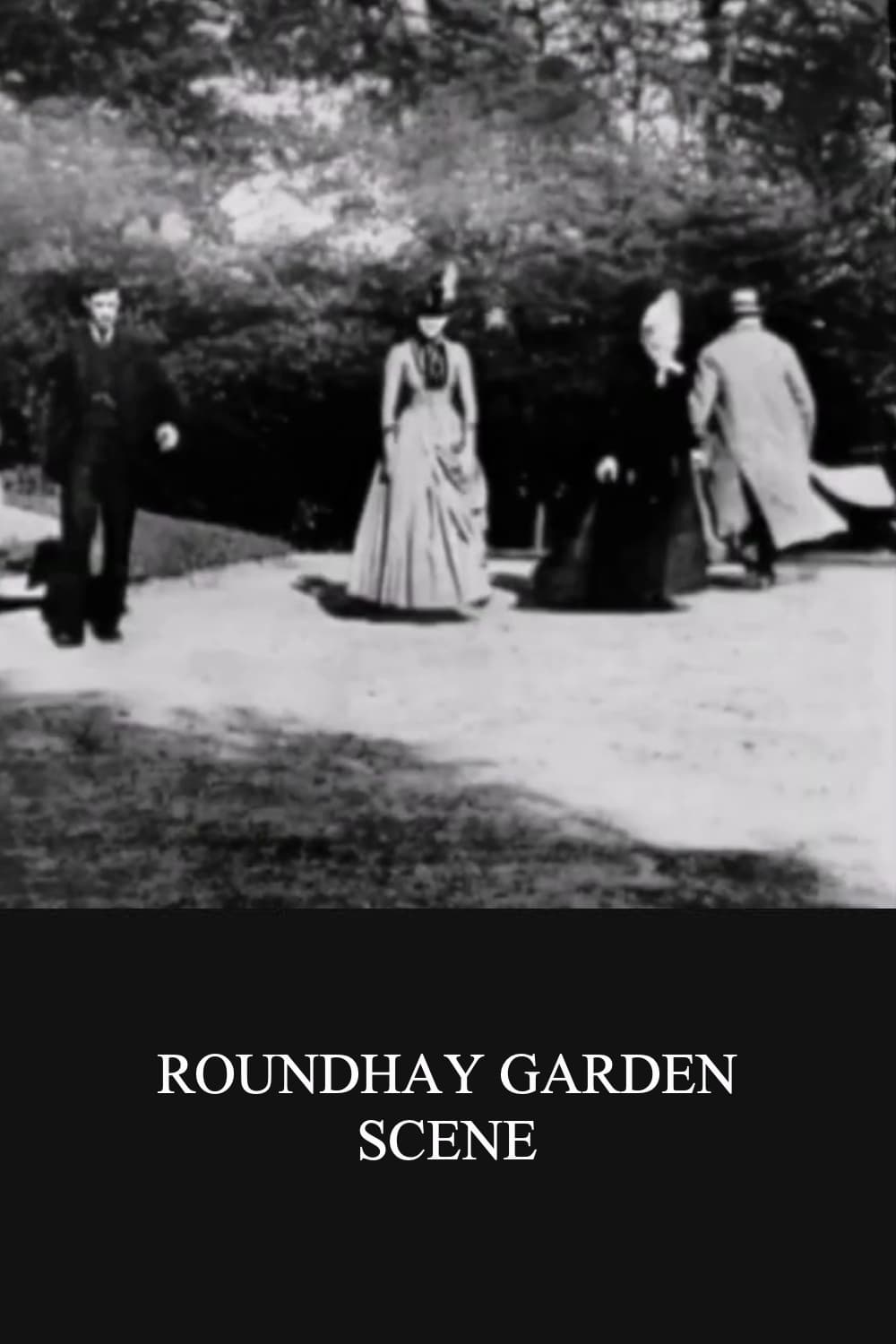
Charming amateur film featuring the Eisner family, who emigrated to Britain from Romania the year this film was made.
Social & External
A captivating and personal detective story that uncovers the truth behind the childhood of Michaël Prazan's father, who escaped from Nazi-occupied France in 1942 thanks to the efforts of a female smuggler with mysterious motivations.
An undocumented immigrant explores his and his family's immigration trauma while grasping hope through a voicemail.
A humorous observation in Barcelona’s immigrant neighbourhood El Raval. Four barber shops, four places of remembrance, strange time and space capsules inhabited by people who left their home to find a better one, while the Spaniards are about to leave their own country themselves.
An intimate look inside the immigrant community in Portland, Maine, as told by Nyamuon Nguany Machar who arrived as refugee in 1995 and David Zwalita Mota who came as an asylum seeker in 2019.
A short film following Anthony, a young child from the small, rural town of San Antonio de los Baños, Cuba. We see him in different moments of his daily life as he interacts with different forms of environmental, familial, and social influences. While Anthony displays contradictory traits of creativity, destruction, rigidity, and tenderness as he interacts with his external and internal worlds, we see a story built from the the multidimensionality of Anthony's layered personality as a young man.
Twenty-five films from twenty-five European countries by twenty-five European directors.
In the midst of economic prosperity, when Venezuela welcomed millions of migrants, this documentary narrates different realities of the country.
1968, The Socialist Republic of Romania. Women catch up on the latest tendencies in beachwear, the young hippies of Hamburg are harshly criticized by Romanian students, while Nicolae Ceaușescu reads the famous defiance speech against the intervention of the Warsaw Pact troops in Czechoslovakia. Floating solemnly over all this is The Internationale, sung on a stadium by a crowd of pioneers dressed in white shirts and red ties. A certainty for each probability: the documentary is at the same time a history lesson and an ideological warning sign, the director’s endeavour permanently draws our attention to the functions of the propaganda film, yet without tarnishing the fascination that dwells in the core of the images, that of the figures that wave at us from a past buried in commonplaces and political parti pris.
"Take my love" is a documentary film about "Las Patronas", a group of women who daily cook, pack and throw food to the migrants riding the "Beast" train.
"From Mexico to Vietnam: A Chicano Story" is an inspiring documentary that chronicles the life of Jesus S. Duran, a Mexican immigrant who became a decorated U.S. Army soldier during the Vietnam War. Born in Juarez, Mexico, Duran moved to the United States as a child and enlisted in the Army in 1968. On April 10, 1969, while serving as an M-60 machine gunner with Company E, 2nd Battalion, 5th Cavalry, 1st Cavalry Division (Airmobile), he displayed extraordinary bravery by rescuing several wounded comrades during an intense enemy ambush in Tay Ninh, Vietnam. His valorous actions led to a posthumous Medal of Honor by President Barack Obama. Directed by Andrés Gallegos, the film delves into Duran's personal journey, his family's migration from Mexico, and the broader impact of the Vietnam War on the Chicano and Latino communities.
Between 1990 and 1993, at a time when rap was not yet on the radio in France, Olivier Cachin hosted a musical TV show on M6 called "RapLine". The show exclusively devoted to rap and other alternative music. This cult show presented all the facets of these emerging movements through interviews, lives and clips made especially for the show, around fifty clips were produced by RapLine. Another sequence of the show consisted of broadcasting new US rap clips subtitled in French.
The Freedom of the Sea is a short documentary highlighting the freedom of living in the UK - in contrast to a more restrictive life in Iran - through the joy of daily sea swimming in Brighton.
Every year, on the steppes of the Serengeti, the most spectacular migration of animals on our planet: Around two million wildebeest, Burchell's zebra and Thomson's gazelles begin their tour of nearly 2,000 miles across the almost treeless savannah. For the first time, a documentary captures stunning footage in the midst of this demanding journey. The documentary starts at the beginning of the year, when more than two million animals gather in the shadow of the volcanoes on the southern edge of the Serengeti in order to birth their offspring. In just two weeks, the animal herd's population has increased by one third, and after only two days, the calves can already run as fast as the adults The young wildebeest in this phase of their life are the most vulnerable to attacks by lions, cheetahs, leopards or hyenas. The film then follows the survivors of these attacks through the next three months on their incredible journey, a trip so long that 200,000 wildebeest will not reach the end.
The film explores the reasons for emigrating from Italy and describes the feeling of being a stranger in one's own country after many years in Switzerland. It is the sequel to Emigrazione.
A documentary-essay which shows Costică Axinte's stunning collection of pictures depicting a Romanian small town in the thirties and forties. The narration, composed mostly from excerpts taken from the diary of a Jewish doctor from the same era, tells the rising of the antisemitism and eventually a harrowing depiction of the Romanian Holocaust.
This documentary follows various migratory bird species on their long journeys from their summer homes to the equator and back, covering thousands of miles and navigating by the stars. These arduous treks are crucial for survival, seeking hospitable climates and food sources. Birds face numerous challenges, including crossing oceans and evading predators, illness, and injury. Although migrations are undertaken as a community, birds disperse into family units once they reach their destinations, and every continent is affected by these migrations, hosting migratory bird species at least part of the year.
This anthology film, whose Chinese title begins with a romantic name for human excrement, premiered internationally at Rotterdam and won Best Screenplay from the Hong Kong Film Critics Society. A variety of Hong Kong people wrestle with nostalgia when facing an uncertain future. Their stories give way to a documentary featuring a young barista turned political candidate.
The protagonists of this docudrama are old farmers who migrated to Banat after the First World War, in 1922. The film is focused on a couple of important events in their impressive lives, which are woven into lively scenes and stories full of wise instances. Their statements become spontaneous recounts of the lives of people in this region.
Rosa is a Mexican woman who, at the age of 17, migrated illegally to Austin, Texas. Some years later, she was jailed under suspicion of murder and then taken to trial. This film demonstrates how the judicial process, the verdict, the separation from her family, and the helplessness of being imprisoned in a foreign country make Rosa’s story an example of the hard life of Mexican migrants in the United States.