This instructional film shows the three parts of a lever and demonstrates how various levers help to move things more easily, or move them farther and faster.
Social & External
Using only archive film and a new musical score by the band Mogwai, Mark Cousins presents an impressionistic kaleidoscope of our nuclear times – protest marches, Cold War sabre-rattling, Chernobyl and Fukishima – but also the sublime beauty of the atomic world, and how x-rays and MRI scans have improved human lives. The nuclear age has been a nightmare, but dreamlike too.
Computer animation and footage from NASA space missions explain how our solar system evolved and the place Earth has within the system.
ADHD is one of the most commonly diagnosed-and widely misunderstood-neurological conditions in the world today, affecting nearly 10% of kids and a rising number of adults. But what if having an ADHD brain is actually an asset? A growing number of innovators, entrepreneurs, CEO's, Olympic athletes, and award-winning artists have gone public about their diagnosis, saying that their ADHD, managed effectively, has played a vital role in their success. The Disruptors hears from many of those game-changing people speaking candidly about their ADHD, and intimately takes viewers inside a number of families as they navigate the challenges, and the surprising triumphs, of living with ADHD. The Disruptors takes an immersive look at our approach to ADHD that debunks the most harmful myths, and examines the flip side of this trait that ultimately offers a revelatory understanding of the diagnosis, and real hope for millions of kids, families and adults with ADHD.
Like almost all children, Celeste is fascinated by dinosaurs. She is preparing a talk for her class about how they went extinct when Moon, a very wise and magical character, poses a tantalizing question: What if I told you that there are still dinosaurs among us? Celeste will join Moon on a journey through time, an exciting adventure that will show them the Earth as it was in the very, very distant past. They will see the fascinating transformations that these animals underwent over millions of years, creating giant creatures, armored beasts, and super-predators, until the day that a cataclysmic impact event caused a mass extinction on Earth. But all is not lost. Celeste will discover the key to their survival.
Is nuclear energy the solution to the climate crisis? Whether it is the only carbon-neutral technology capable of tackling the crisis or a fatally convenient stopgap, time is running out.
Patrick Moore presents this documentary about the Apollo 13 space mission of April 1970. The video features the live TV coverage of the real-life drama from lift-off to splash-down in the Pacific Ocean.
How do we influence the world around us? A fluid analysis tool ordinarily used in the laboratory offers new interpretations of human interaction and provides surprising insights about our place in the world.
In this fascinating sequel to "Is Genesis History?", watch a team of scientists discover new evidence for the global Flood. By the time the journey is over, you'll understand exactly how modern science connects to the book of Genesis.
This remarkable journey across our planet and universe explores how meteorites, shooting stars, and deep impacts have awoken our wonder about other realms—and make us rethink our destinies.
Enter the captivating world of scientific exploration through the lens of Kiana Frank who is a proud Native Hawaiian and microbiologist. Her unique journey intertwines traditional wisdom with the latest molecular techniques, casting light on the intricate interactions between microorganisms and the environment they inhabit. It is within the ancient oral narrative of Meheanu, a revered goddess, that Kiana finds a clue about nitrogen cycling in fish ponds—a pivotal ecological process orchestrating the relationship between microorganisms, plants, and fish.
From the Los Angeles Times and Pulitzer Prize-finalist Rosanna Xia, OUT OF PLAIN SIGHT is a cinematic exposé of an environmental disaster lurking just off the coast of Southern California. Not far from Catalina Island, aboard one of the most-advanced research ships in the world, David Valentine discovered a corroded barrel on the seafloor that gave him chills. The full environmental horror sharpens into greater clarity once he calls Xia, who pieces together a shocking revelation: In the years after World War II, as many as half a million barrels of toxic waste had been quietly dumped into the ocean – and the consequences continue to haunt the world today.
In a world where 92 million Americans rely on statins as their lifeline, one man's unexpected health journey uncovers a medical mystery that could upend everything we think we know about heart health, cholesterol, and the ketogenic diet.
The biggest tech revolution of the 21st century isn’t digital, it’s biological. A breakthrough called CRISPR gives us unprecedented control over the basic building blocks of life. It opens the door to curing disease, reshaping the biosphere, and designing our own children. This documentary is a provocative exploration of CRISPR’s far-reaching implications, through the eyes of the scientists who discovered it, the families it’s affecting, and the genetic engineers who are testing its limits.
Archaeologists generally regard Mesopotamia as "the beginning of civilization" but shocking new evidence that defies comprehension clearly suggests that highly advanced civilizations existed in pre-history. With new advanced technology, archaeologists are now able to image undiscovered worlds before our own from above. The truth to mankind's true origins is being rapidly revealed to be very different than what we've been told.
In today's climate debate, there is only one factor that cannot be calculated in climate models - humans. How can we nevertheless understand our role in the climate system and manage the crisis? Climate change is a complex global problem. Increasingly extreme weather events, rising sea levels, and more difficult living conditions - including for us humans - are already the order of the day. Global society has never faced such a complex challenge. For young people in particular, the frightening climate scenarios will be a reality in the future. For the global south, it is already today. To overcome this crisis, different perspectives are needed. "THE UNPREDICTABLE FACTOR" goes back to the origins of the German environmental movement, accompanies today's activists in the Rhineland in their fight against the coal industry and gives a voice to scientists from climate research, ethnology and psychology.
Experimental meditation on land, consciousness, and artificial intelligence. Shot in the Okanagan and West Kootenays. Original music by Jack Brintnell.
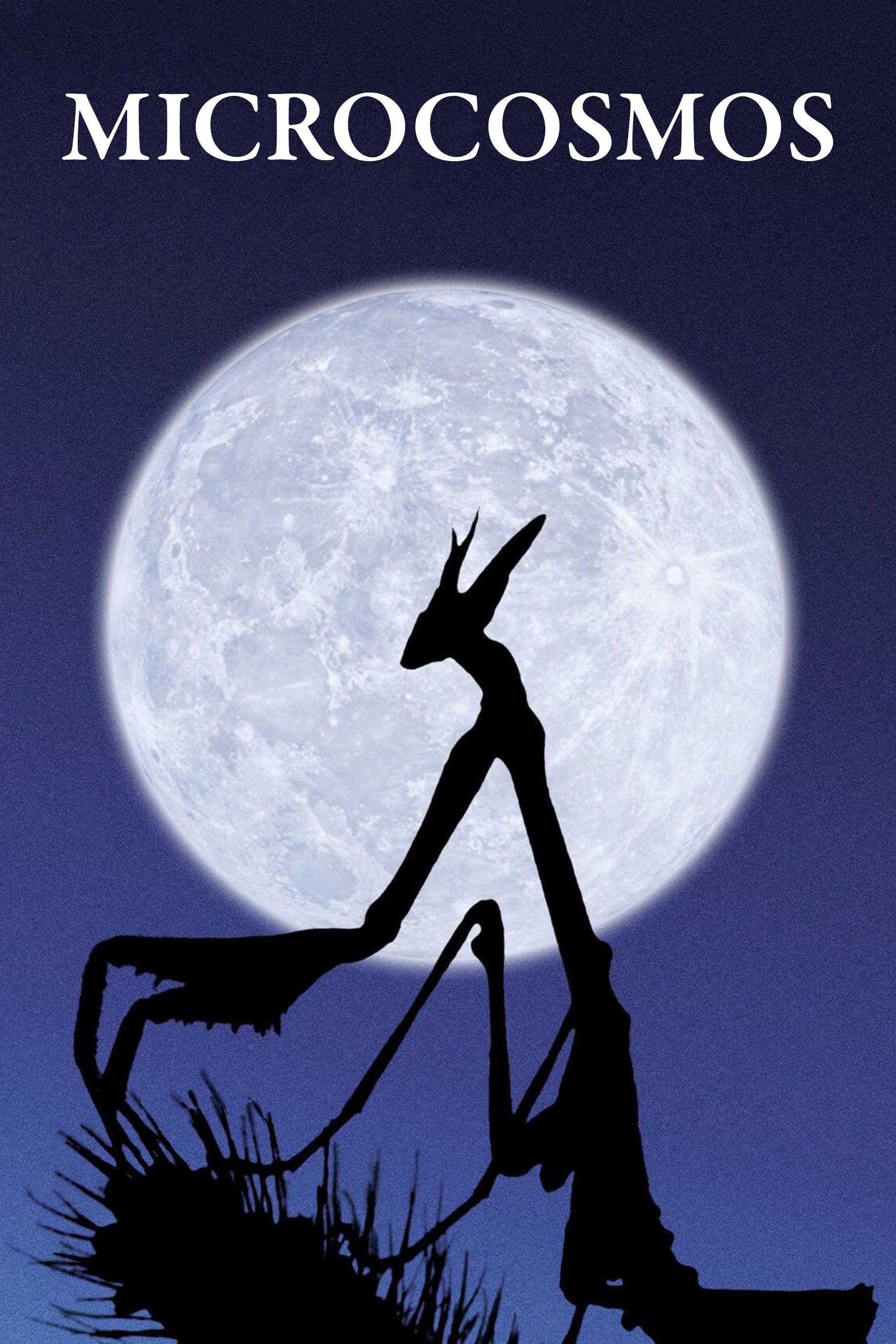
A documentary of insect life in meadows and ponds, using incredible close-ups, slow motion, and time-lapse photography. It includes bees collecting nectar, ladybugs eating mites, snails mating, spiders wrapping their catch, a scarab beetle relentlessly pushing its ball of dung uphill, endless lines of caterpillars, an underwater spider creating an air bubble to live in, and a mosquito hatching.
What forms might life take in the Solar System and beyond? In the Academy's newest original planetarium show, see how a deeper understanding of Earth might help us locate other living worlds, light years away.
The 1977 discovery of RNA splicing by Dr. Phillip A. Sharp, Kentucky farm boy turned Nobel-prize winning scientist, set the stage for a revolution in molecular biology, enabling research into a new class of medicines predicated on recombinant DNA techniques ranging from the development of synthetic insulin and human growth hormone to the COVID-19 vaccine.