How to distinguish and deal with various insects that destroy vegetables.
Social & External

From the fragile democracy of the Weimar Republic to the brutal tyranny of the Nazi regime, this in-depth series explores how Germany's descent into chaos paved the way for Adolf Hitler's rise to power. After World War I, Germany faced economic collapse, political instability, and widespread social unrest, creating the perfect storm for radical ideologies to flourish. Tracing the Nazis' emergence from the fringes of politics to their consolidation of power, the series reveals the pivotal events, propaganda, and policies that reshaped Germany into a totalitarian state.
"Letters from Europe" brings to light the words of men and women who gave their lives resisting the Nazi and fascist conquest from 1939 to '45 across the European continent. The moving goodbyes penned by a few of those sentenced to death are sometimes true spiritual testaments that explore the meaning of civic responsibility, human existence, fraternity, and life and death. Their words, which the film mingles with footage of the present day, can perhaps restore meaning to a humanist ideal and to the ever-changing idea of a united Europe.
The perfectionist Life magazine photojournalist, famous for his pictures of Elvis, Jackie, and Marilyn, makes an emotional return to France, where he and his Jewish mother almost during World War II.
Using exclusively archival footage, Erwin Leiser traces the rise and collapse of the Third Reich, from Adolf Hitler’s early years to the devastation of Europe and his suicide in 1945. The film draws heavily on material produced and preserved by the Nazi propaganda apparatus to confront the mechanisms, imagery, and consequences of totalitarian power.
This documentary explores the creation of the Holocaust Memorial in Berlin as designed by architect Peter Eisenman. Reaction of the German public to the completed memorial is also shown.
He built the mightiest army in history and selected its leaders. Eisenhower, MacArthur and Patton all obeyed his commands. George Marshall was the only soldier ever to receive the Nobel Peace Prize.
In this feature-length documentary film essay, archival footage weaves together childhood memories from once-opposing sides on the Gorizia border to rethink—80 years after WWII, and amid renewed calls for rearmament—the meaning of home and belonging.
The story of Hitler’s final hours told by people who were there. This special features exclusive forgotten interviews, believed lost for 65 years, with members of Hitler’s inner circle who were trapped with him in his bunker as the Russians fought to take Berlin. These unique interviews from figures such as the leader of the Hitler Youth Artur Axmann and Hitler’s secretary Traudl Junge, have never before been seen outside Germany. Using rarely seen archive footage and dramatic reconstruction, this special tells the story of Adolf Hitler’s final days in his Berlin bunker.
This powerful and thought provoking film chronicles the compelling events in the Pacific Theater of WWII, from the bombing of Pearl Harbor in 1941 to the American occupation of Japan in 1945. It depicts the strength and courage of America's youth, while examining how these men and women dealt with being thrust into this brutal war. The film includes interviews with war veterans, both American and Japanese, from all branches of the military. It features testimony from medics, nurses, dog handlers, as well as Japanese-Americans who were imprisoned at internment camps in the United States. The film also includes a first hand account of the tragic impact of the atomic bomb on Japanese citizens. Among the veterans who appear is Zenji Abe, a Japanese veteran who flew the mission to bomb Pearl Harbor, and retired General Paul Tibbets who flew the mission to bomb Hiroshima.
This WW2 documentary centers on the crew of the American B-17 Flying Fortress Memphis Belle as it prepares to execute a strategic bombing raid on Nazi submarine pens in Wilhelmshaven, Germany.
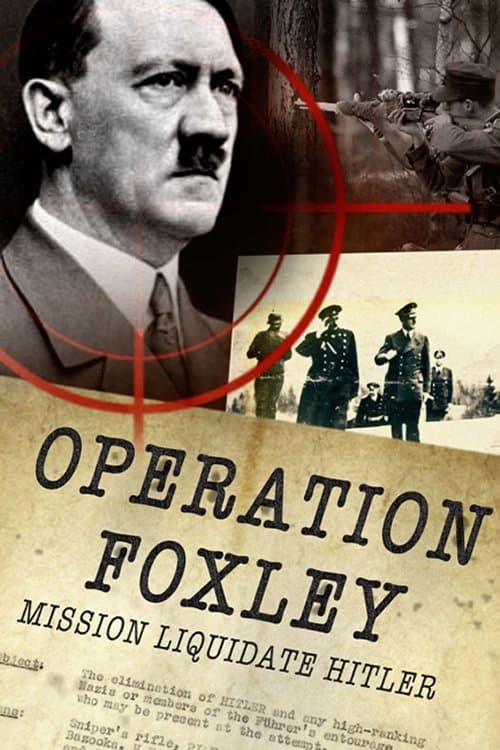
Reinhard Heydrich was considered the most dangerous man in Nazi Germany after Hitler himself. The plot to kill him masterminded in England and carried through to finality in Prague in 1942, is told in this gripping dramatised documentary special. Featuring meticulous reconstructions, coupled with authentic historical film, some of it never shown before the film powerfully presents a vivid account of the only successful assassination of a leading Nazi in World War II. It also chillingly recreates the terrible human cost of SS savagery against the Resistance and the total obliteration of the village of Lidice.
After the World War I, Mussolini's perspective on life is severely altered; once a willful socialist reformer, now obsessed with the idea of power, he founds the National Fascist Party in 1921 and assumes political power in 1922, becoming the Duce, dictator of Italy. His success encourages Hitler to take power in Germany in 1933, opening the dark road to World War II. (Originally released as a two-part miniseries. Includes colorized archival footage.)
Evocation of the Oradour-sur-Glane Massacre on 10 June 1944, when 642 of its inhabitants were slaughtered by a Nazi Waffen SS company, based on a visit to Diors' Museum of the Three Wars" and archive photographs.
In 1943, the Imperial Japanese Secret Service made a film called Calling Australia! to show the "exemplary conditions" under which prisoners of war were kept, and to "soften up" the Australian public for the anticipated occupation of their country by Japanese forces. Prisoners of Propaganda tells why the film was made, and how it came to be forgotten.
The documentary that captures the compelling story and eyewitness account of six survivors in war-torn Netherlands during World War II.
Meet the real-life airmen who inspired Masters of the Air as they share the harrowing and transformative events of the 100th Bomb Group.
The Captains is a feature-length documentary film written and directed by William Shatner. The film follows Shatner as he interviews the other actors who have portrayed starship captains in the Star Trek franchise.
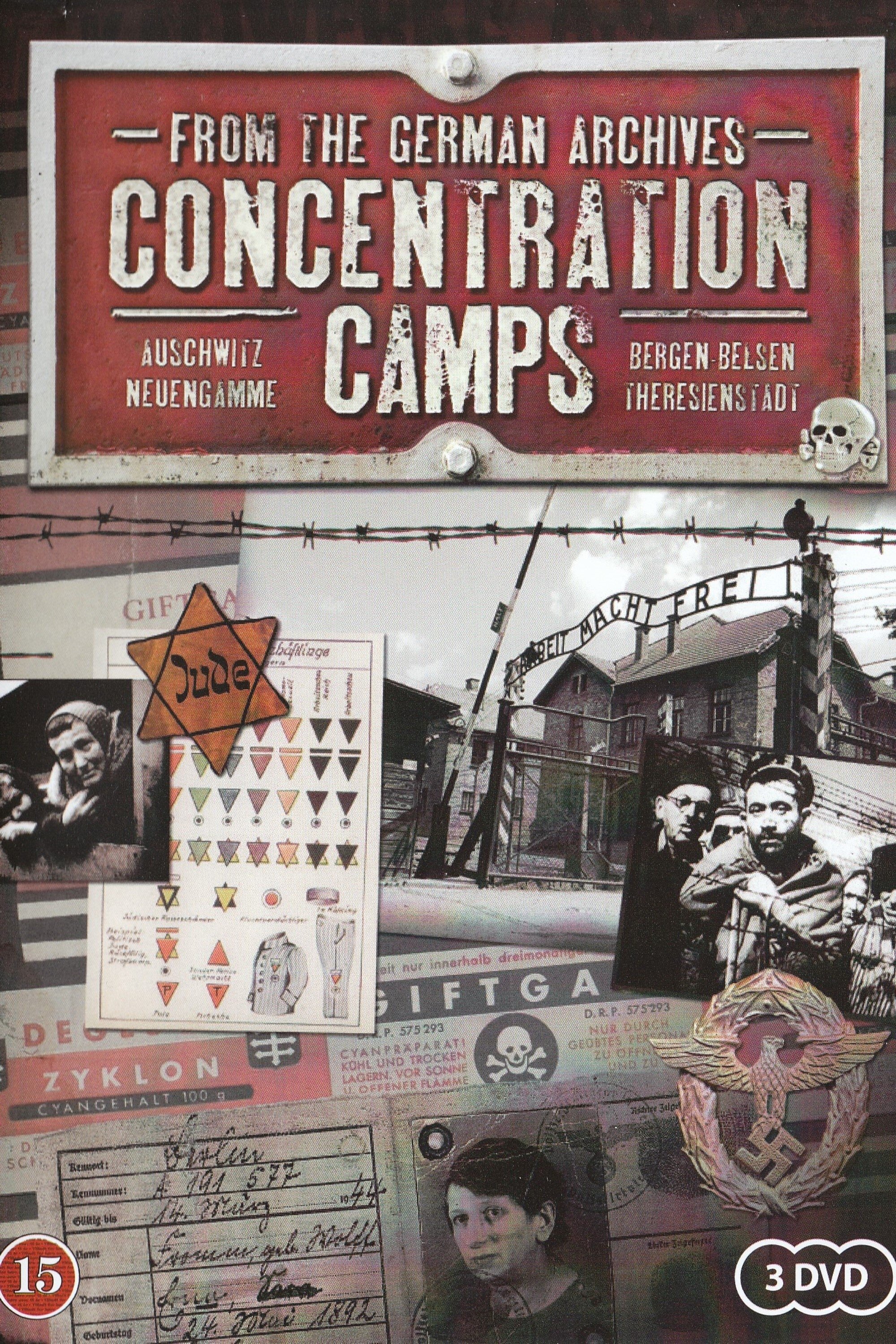
When Allied forces liberated the Nazi concentration camps in 1944-45, their terrible discoveries were recorded by army and newsreel cameramen, revealing for the first time the full horror of what had happened. Making use of British, Soviet and American footage, the Ministry of Information’s Sidney Bernstein (later founder of Granada Television) aimed to create a documentary that would provide lasting, undeniable evidence of the Nazis’ unspeakable crimes. He commissioned a wealth of British talent, including editor Stewart McAllister, writer and future cabinet minister Richard Crossman – and, as treatment advisor, his friend Alfred Hitchcock. Yet, despite initial support from the British and US Governments, the film was shelved, and only now, 70 years on, has it been restored and completed by Imperial War Museums under its original title "German Concentration Camps Factual Survey".
Through deeply personal interviews with her siblings and an examination of the photographs, letters, and belongings left behind, Mariska assembles a new portrait of her mother Jayne Mansfield, an extraordinary and complex woman.
Those who knew iconic funnyman John Candy best share his story, in their own words, through never-before-seen archival footage, imagery, and interviews.
A look at the origins, history and conspiracies behind the "Majestic 12", a clandestine group of military and corporate figureheads charged with reverse-engineering extraterrestrial technology.
JB Smoove and Martin Starr host a celebration of 20 years of "Spider-Man" movies, from the Sam Raimi trilogy to Marc Webb's movies and the trio from Jon Watts.
The making of Matrix Revolutions, The (2003) is briefly touched on here in this documentary. Interviews with various cast and crew members inform us how they were affected by the deaths of Gloria Foster and Aaliyah, and also delve into the making of the visual effects that takes up a lot of screen time. Written by Rhyl Donnelly
Explore the evolution of Buzz Lightyear from toy to human in the making of Pixar’s Lightyear. Dive into the origin and cultural impact of everyone’s favorite Space Ranger, the art of designing a new “human Buzz,” and the challenges faced by the Lightyear crew along the way.
A detailing of the rise to prominence and global sporting superstardom of six supremely talented young Manchester United football players (David Beckham, Nicky Butt, Ryan Giggs, Paul Scholes, Phil and Gary Neville). The film covers the period 1992-1999, culminating in Manchester United's European Cup triumph.
The life of Mr. Spock, as well as that of Leonard Nimoy, the actor who played him for almost fifty years, written and directed by his son: Adam.
Directors Hetherington and Junger spend a year with the 2nd Battalion of the United States Army located in one of Afghanistan's most dangerous valleys. The documentary provides insight and empathy on how to win the battle through hard work, deadly gunfights and mutual friendships while the unit must push back the Taliban.
Prelude to War was the first film of Frank Capra's Why We Fight propaganda film series, commissioned by the Pentagon and George C. Marshall. It was made to convince American troops of the necessity of combating the Axis Powers during World War II. This film examines the differences between democratic and fascist states.
The life and career of an actor, artist, and icon. His own journey through his own camera.
Korengal picks up where Restrepo left off; the same men, the same valley, the same commanders, but a very different look at the experience of war.
This documentary movie is about the battle of San Pietro, a small village in Italy. Over 1,100 US soldiers were killed while trying to take this location, that blocked the way for the Allied forces from the Germans. Preserved by the Academy Film Archive in 2005.
Join the likes of Jeremy Renner, Hailee Steinfeld, Florence Pugh, and Vincent D’Onofrio as they reveal how Marvel Studios’ “Hawkeye” was conceived and created. Witness firsthand what it took to pull off the show’s pulse-pounding action set pieces, and discover how iconic characters from the pages of Marvel Comics such as Kate Bishop were adapted and brought to life for the six-episode series.
In the Realms of the Unreal is a documentary about the reclusive Chicago-based artist Henry Darger. Henry Darger was so reclusive that when he died his neighbors were surprised to find a 15,145-page manuscript along with hundreds of paintings depicting The Story of the Vivian Girls, in What is Known as the Realms of the Unreal, of the Glodeco-Angelinnian War Storm, Cased by the Child Slave Rebellion.
The remarkable story of Brazilian racing driver Ayrton Senna, charting his physical and spiritual achievements on the track and off, his quest for perfection, and the mythical status he has since attained, is the subject of Senna, a documentary feature that spans the racing legend's years as an F1 driver, from his opening season in 1984 to his untimely death a decade later.
In the early-morning hours of July 23, 2007, in Cheshire, Conn., ex-convicts Steven Hayes and Joshua Komisarjevsky broke into the family home of William Petit, his wife, Jennifer, and their daughters, Michaela, 11, and Hayley, 17. Dr. Petit was beaten and tied to a pole in the basement. The three women were bound in their bedrooms while the men ransacked the house. The brutal ordeal continued throughout the morning, ending with rape, arson and a horrific triple homicide.