Social & External
himself
herself
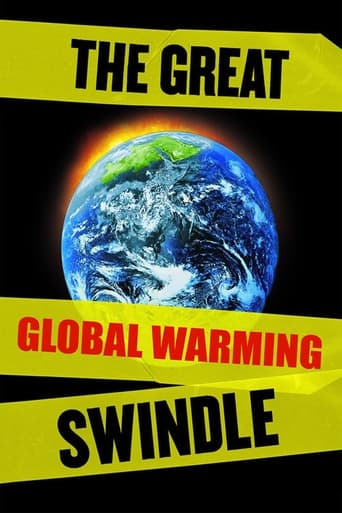
This film tries to blow the whistle on what it calls the biggest swindle in modern history: 'Man Made Global Warming'. Watch this film and make up your own mind.
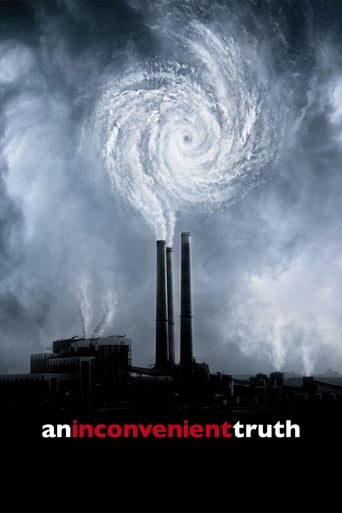
A documentary on Al Gore's campaign to make the issue of global warming a recognized problem worldwide.
Captain Kleinschmidt leads an expedition sponsored by the Carnegie Museum to the arctic regions of Alaska and Siberia to study the natives and the animal life.
Taking place between two major climate conferences – COP26 Glasgow and COP27 Sharm el-Sheikh, Temperature Rising uncovers the barriers to climate action and calls loudly for movement building from below, at a time where the very survival of large numbers of people depends on what activists can get political leaders to do.
Their destiny was well mapped out: brilliant studies, the promise of a good job and a big salary. However, nothing happened as planned. Aurélie, Maxime, Hélène, Emma, or Romain are graduates of Polytechnique, Sciences Po, Centrale or business schools. They have made a radical choice: to give up the future they were promised for a life they consider more compatible with the environmental and societal issues of our time. This film tells their story. For a year, the young director Arthur Gosset, himself a student at Centrale Nantes, followed the journey of six young people, their sometimes difficult decisions, their often painful breaks and their courageous choice to live in accordance with their convictions, whatever the cost. Discover the documentary that tells their story.
The Trick tells the story of world-renowned Professor Philip Jones; Director of Climate Research at the University of East Anglia, who back in 2009 found himself at the eye of an international media storm and the victim of cyberterrorism. With time running out against an unseen enemy, The Trick looks at the potentially devastating consequences to humanity from climate change denial; how a media storm undermined public confidence in the science and how the concept of ‘truth’ took a back seat causing us to lose a decade of action.
Five times, Earth has faced apocalyptic events that swept nearly all life from the face of the planet. What did these prehistoric creatures look like? What catastrophes caused their disappearance? And how did our distant ancestors survive and give rise to the world we know today?
‘When it comes to climate change, why do we do so little when we know so much?’ Through a relentless investigation to find the answer, Disruption takes an unflinching look at the devastating consequences of our inaction. The exploration lays bare the terrifying science, the shattered political process, the unrelenting industry special interests and the civic stasis that have brought us to this social, moral and ecological crossroads.The film also takes us behind-the-scenes of the efforts to organize the largest climate rally in the history of the planet during the UN world climate summit.
Fall 2018: The Hambach Forest becomes a chaotic scene of the climate conflict. In the midst of this chaos, film student Steffen Meyn has a fatal accident. Based on footage he collected over two years, we follow Steffen’s path up the trees and into an activism full of contradictions.
How incomprehensible would a higher intelligence find the plodding human species and the way it treats the Earth? And do Czechs differ in the way they care for nature?
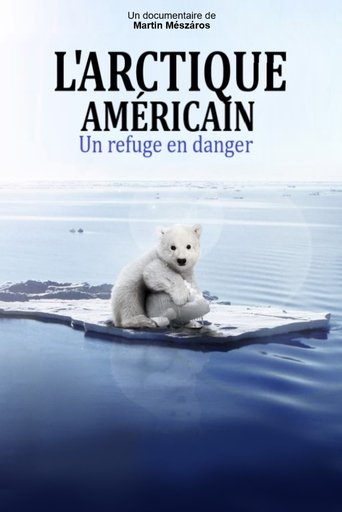
In Canada and Alaska, the consequences of global warming are being keenly felt by brown bears - but in different ways by different populations. Their survival depends mainly on the quantity of wild salmon available in the region, as it is the fruit of their catch that enables the bears to accumulate fat reserves for the winter. While salmon populations off Canada's Pacific coast continue to decline year after year, in the immense Bristol Bay in western Alaska, as well as on Kodiak Island, they are increasing considerably. The water temperature in the North Pacific is now ideal for salmon development. From Canada to Alaska, the documentary follows different bear populations over a two-year period.
Although a real awareness of the populations is underway - the multiplication of natural disasters and heat records helping - the human activities responsible for global warming remain unchanged, as if the threat was unreal. This collective immobility could have its origin in the brain. A number of cognitive biases impede judgment.
Commissioned by the U.S. Government Defense Civil Preparedness Agency, the film describes the elements of a modern tornado warning system as was developed at the Texas Tornado Warning Conferences in 1953 and included radar detection of tornadoes, a spotter network, and improved communications between the U.S. Weather Bureau, spotters, and public officials to better disseminate warnings to the public. In the 1960s TV changed the way tornado safety and preparedness information was disseminated and this film is likely a product of that development. This film opens with vignettes of people in a small town somewhere in America’s suburban midwest. It then goes on to display the moments before and after the onset of a tornado and informs the audience of appropriate safety response measures.
Horizon visits state-of-the-art laboratories and uses CGI to recreate the science-fiction-worthy weather experienced on other planets.
"Climate: The Movie" highlights a different perspective on the climate change debate and is supported by scientists who have signed the Clintel's World Climate Declaration. This group of researchers seeks to present an alternative narrative in the face of the dominant discourse.
The story of life on our planet by the man who has seen more of the natural world than any other. In more than 90 years, Attenborough has visited every continent on the globe, exploring the wild places of our planet and documenting the living world in all its variety and wonder. Addressing the biggest challenges facing life on our planet, the film offers a powerful message of hope for future generations.
Follow the shocking, yet humorous, journey of an aspiring environmentalist, as he daringly seeks to find the real solution to the most pressing environmental issues and true path to sustainability.
In Abby Martin's second feature documentary, Earth’s Greatest Enemy reveals a hidden truth behind the climate crisis: the role of the U.S. military as the world’s largest institutional polluter. Drawing on powerful testimonies from veterans, scientists, and frontline communities, it uncovers how military operations poison ecosystems, accelerate global warming, and sacrifice the future for endless expansion. From Alaska’s melting glaciers to contaminated bases across the U.S. and toxic battlefields abroad, Earth’s Greatest Enemy delivers a provocative and unflinching examination of the untouchable institution playing an outsized role in the climate crisis.