Social & External
An author of Vampire books that is going through a spell of writers block is confronted by a self proclaimed vampire that accuses the author of giving away his dark secrets.
A woman wanders in a big and empty parking lots following a man who she seems to want to ambush. From her gestures something furious and menacing emerges. Everything seems to draw back to a woods beyond her abandoned home, a place that hides the true nature of her actions.
Having Cuba as a background, decadent and in crisis, in a black-and-white lacerated by the Caraibic swinging rain, Alex and Edith, a couple in their 30s, live their love story made of small daily gestures, stories from the past, nostalgia, and a deep intimacy.
An exchange student in Eastern Europe enters a realm of unsettling phantasm.
Frankenstein, a young medical student, trying to create the perfect human being, instead creates a misshapen monster. Made ill by what he has done, Frankenstein is comforted by his fiancée; but on his wedding night he is visited by the monster.
Dr. Henry Jekyll experiments with scientific means of revealing the hidden, dark side of man and releases a murderer from within himself.
The coastline of East England is vanishing before our eyes. As cliffs crumble and roads disappear, the land carries stories of the past and the uncertainty of the future. The sea is always present
This documentary aims to register this unknown side of James Joyce: His Greek Notebooks. Trieste. Bloomsday, 2013. Dance in slow motion, accompanied by text. By deconstructing the body, we turn it into a memory: of the body, of life, of texts. The biographical references to Joyce and Mando Aravantinou, combined with the diagonal slicing of the image, cancel the realism of the landscape, including that of the Narrator’s space/study. As a culmination, Joyce’s letter “A request for a loan in Greek” functions as a timely denunciation. Various routes through cities, such as Trieste, London, New York, and Athens; languages such as Greek and English. In addition to the primal myth of Ulysses, there is another issue: Greek is “the language of the subject of Ulysses”
At once a journey and a reckoning, this film follows 19 year old Koen's ascent of Mount Rinjani—often regarded as Indonesia’s toughest summit. What begins as a test of endurance gradually transforms into something more intimate: a dialogue between self and nature. Shot as a reflective video diary, the film holds not just the view from the summit, but the moments of insight and introspection discovered along the way.
On Canada's Pacific coast this film finds a young Haida artist, Robert Davidson, shaping miniature totems from argillite, a jet-like stone. The film follows the artist to the island where he finds the stone, and then shows how he carves it in the manner of his grandfather, who taught him the craft.
Monolithic power plants; billowing columns of smoke; the backdrop of a red sun. Sirens is an experimental short documentary that captures Germany’s coal-fired power plants in their final years of generating energy. Shot entirely from helicopters, the film takes us on a journey through industrial wastelands, thus recalling the passage of Ulysses’ boat through the Sirens’ strait. An odyssey through the dystopian industrial world that has left a permanent mark on earth’s ecosphere.
A short film of the first weeks of strict national lockdown, filmed in Barcelona on a classic home video camera Hi8. Narrates the story of three women who share a flat and who create a microworld not only to survive the global pandemic but also to survive themselves.
The film sheds light on the topic of the high divorce rate among young people in the form of journalistic statements and scenes as well as analytically reflected statements and statements of experience by sociologist Dr. Ursula Hempel, divorced and single mother of two adolescent children, and her cousin, a puppeteer who is also divorced.
Gerald just wants to make friends, but his hunger for raw meat is a real problem. His housemates' attempts at empathy and intervention are met with incredulity and descent into bloody madness.
A punk sapphic couple attempt to wipe away their drug debt in Adelaide's seedy southern suburbs.
Despite his boyfriend’s insistence to the contrary, Ethan has come to believe their home is slowly being overtaken by bugs. As his life spirals out of control, Ethan learns that there’s more than one way to be infested.
A young boy fights to protect his family from the monster that lives inside his wardrobe.
How Montreal is transformed from winter to spring. Inspired by Berlin: Symphony of a great city, Printemps Now! is a cinematographic poem, an audiovisual symphony of the city of Montreal transitioning from winter to spring.
Nacho appears on a TV program to undergo hypnosis in order to prove that what he allegedly witnessed on the beach four years ago when his wife drowned was real.
As his personal life unravels, a burgeoning white supremacist descends into an abyss of online radicalization and extremist conspiracy theories.
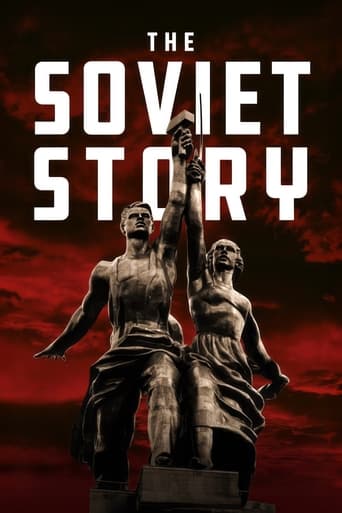
“The Soviet Story” is a story of an Allied power, which helped the Nazis to fight Jews and which slaughtered its own people on an industrial scale. Assisted by the West, this power triumphed on May 9th, 1945. Its crimes were made taboo, and the complete story of Europe’s most murderous regime has never been told. Until now...
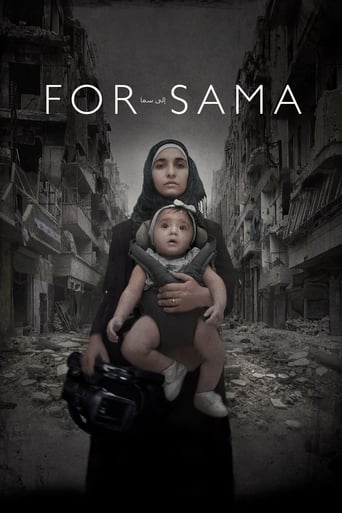
A love letter from a young mother to her daughter, the film tells the story of Waad al-Kateab’s life through five years of the uprising in Aleppo, Syria as she falls in love, gets married and gives birth to Sama, all while cataclysmic conflict rises around her. Her camera captures incredible stories of loss, laughter and survival as Waad wrestles with an impossible choice– whether or not to flee the city to protect her daughter’s life, when leaving means abandoning the struggle for freedom for which she has already sacrificed so much.
Prelude to War was the first film of Frank Capra's Why We Fight propaganda film series, commissioned by the Pentagon and George C. Marshall. It was made to convince American troops of the necessity of combating the Axis Powers during World War II. This film examines the differences between democratic and fascist states.
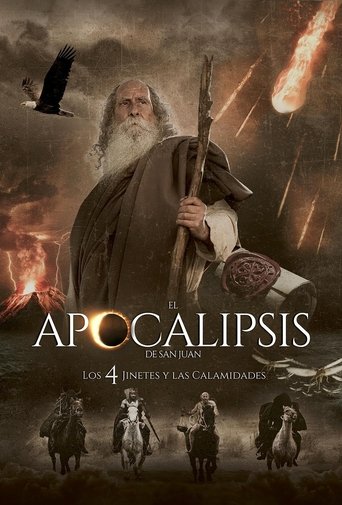
Embark on an epic journey through time and faith with 'The Apocalypse of Saint John.' Join the Apostle John in a stunning visual narrative that unravels the visions of the End Times. Experience each vision like never before, with striking visual effects and epic scenes that immerse you in the apocalyptic narrative.
During the chaotic final weeks of the Vietnam War, the North Vietnamese Army closes in on Saigon as the panicked South Vietnamese people desperately attempt to escape. On the ground, American soldiers and diplomats confront a moral quandary: whether to obey White House orders to evacuate only U.S. citizens.
Set both in Latin America and the United States, the film explores the historic and current relationship of Washington with countries such as Venezuela, Bolivia and Chile. Pilger says that the film "...tells a universal story... analysing and revealing, through vivid testimony, the story of great power behind its venerable myths. It allows us to understand the true nature of the so-called "war on terror". According to Pilger, the film’s message is that the greed and power of empire is not invincible and that people power is always the "seed beneath the snow".
A filmmaker who grew up alongside Chucky the killer doll seeks out the other families surrounding the Child's Play films as they recount their experiences working on the ongoing franchise and what it means to be a part of the, "Chucky" family.
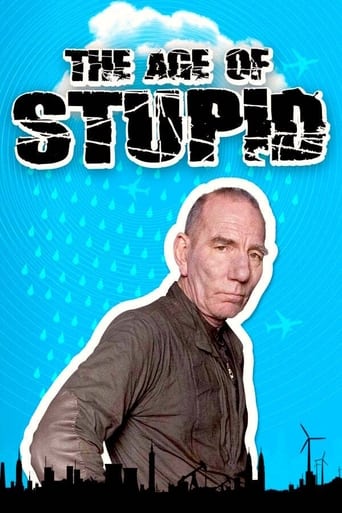
Pete Postlethwaite stars as a man living alone in the devastated future world of 2055, looking at old footage from 2008 and asking: why didn’t we stop climate change when we had the chance?
The chronicle of the political tension in Chile in 1973 and of the violent counter revolution against the democratically elected government of Salvador Allende.
The extraordinary story of how Hollywood changed World War II – and how World War II changed Hollywood, through the interwoven experiences of five legendary filmmakers who went to war to serve their country and bring the truth to the American people: John Ford, William Wyler, John Huston, Frank Capra, and George Stevens. Based on Mark Harris’ best-selling book, “Five Came Back: A Story of Hollywood and the Second World War.”
Produced and presented as evidence at the Nuremberg war crimes trial of Hermann Göring and twenty other Nazi leaders, this film consists primarily of dead and surviving prisoners and of facilities used to kill and torture during the World War II.
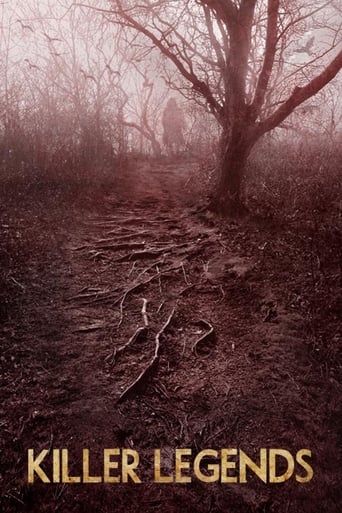
Delving into our collective nightmares, this horror-documentary investigates the origins of our most terrifying urban legends and the true stories that may have inspired them.
The history of cinematic sound, told by legendary sound designers and visionary filmmakers.
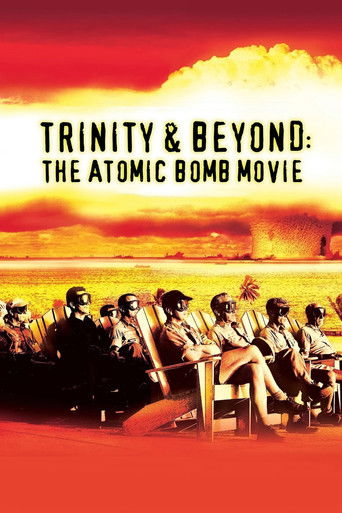
"Trinity and Beyond" is an unsettling yet visually fascinating documentary presenting the history of nuclear weapons development and testing between 1945-1963. Narrated by William Shatner and featuring an original score performed by the Moscow Symphony Orchestra, this award-winning documentary reveals previously unreleased and classified government footage from several countries.
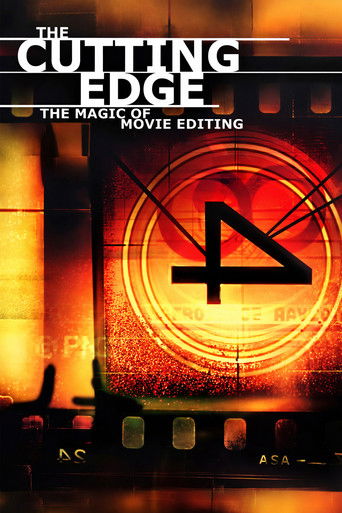
Documentary about the art of film editing. Clips are shown from many groundbreaking films with innovative editing styles.
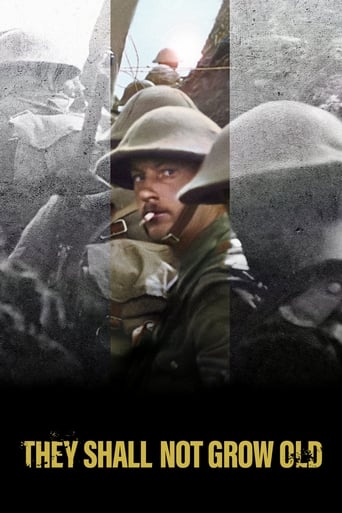
A documentary about World War I with never-before-seen footage to commemorate the centennial of Armistice Day, and the end of the war.
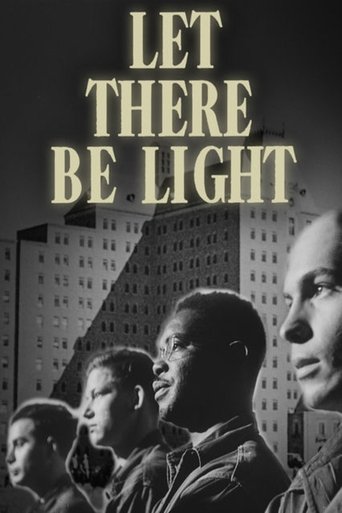
The final entry in a trilogy of films produced for the U.S. government by John Huston. Some returning combat veterans suffer scars that are more psychological than physical. This film follows patients and staff during their treatment. It deals with what would now be called PTSD, but at the time was categorised as psychoneurosis or shell-shock. Government officials deemed this 1946 film counterproductive to postwar efforts; it was not shown publicly until 1981.
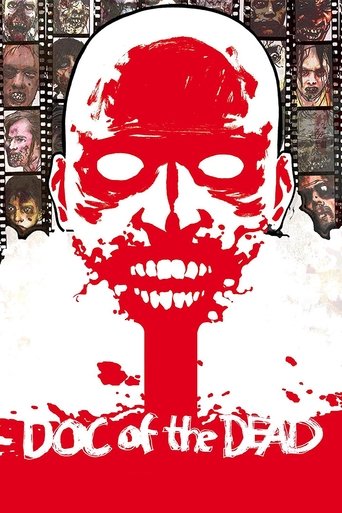
The definitive zombie culture documentary, brought to the screen by the makers of THE PEOPLE vs. GEORGE LUCAS.
With unprecedented access, this documentary follows the extraordinary journey of “Raqqa is Being Slaughtered Silently”—a group of anonymous citizen journalists who banded together after their homeland was overtaken by ISIS—as they risk their lives to stand up against one of the greatest evils in the world today.
The Japanese attack on Midway in June 1942, filmed as it happened. Preserved by the Academy Film Archive, in partnership with Twentieth Century Fox Film Corporation, in 2006.