Social & External

A movie about the struggle in Gállok, a struggle against british Beowulf Mining Plc. For clean water and a mine free Sápmi.
Filmed in a squatter community of Labangon in Cebu, Philippines, Holding Our Ground is the inspiring story of a group of women who have organized collectively to pressure their government for land reform, to establish their own money-lending system and to create shelters for street kids. A story of grassroots organizing that can be a model in both hemispheres.
Who are the people behind the international anti-Covid-vaccine movement and why are they doing it? This journey inside the astonishing world of the anti-vaxxers finds out.
In 1944 Crimean Tatars has suffered a long road in exile. It was accompanied by famine, illness and loss. In the first years of exile, almost half of deported Crimean Tatars died. But those, who survived, dreamed of only one thing - to return to Crimea. The documentary 1944 tells about the tragedy of all Crimean Tatars through several separate life stories. They are cherished by each Crimean Tatar family and must be remembered by all generations to come.
A BBC News investigation has revealed how violent criminal gangs are finding, abusing and extorting people from the LGBT community they meet online in Egypt. Using masking technology to hide the identities of the people he meets, Ahmed Shihab-Eldin navigates the complex online and real-life world of people who identify as queer and who have been repeatedly targeted by a gang with violent viral video humiliations and police arrests.
The true story of the seven weeks that changed China forever. On June 4, 1989, pro-democracy demonstrations were violently and bloodily repressed. Thousands of people died, but the basis for China's future was definitely planted.
Kukutza III was a gaztetxe (self-managed social centre) in the neighbourhood of Rekalde, Bilbao. It was occupied in 1998, and it was evicted by the police in 2011. The documentary shows some activities that were hosted by the gaztetxe.
Choi Yuen Village faced demolition by the express rail project. In 2009, villagers protested and petitioned, sparking the anti-express rail movement. Despite their efforts, the railway plan was approved in early 2010. Forced to choose between leaving or rebuilding, they opted for the government’s land rehabilitation scheme to create a new village together. With volunteers, they searched for land in Pat Heung and fought to prove their status as farmers. Many outsiders misunderstood, believing the villagers received generous compensation and government help. Yet, it was the villagers’ shared determination and love for their land and way of life that carried them through, even as the once-barren longan trees bloomed again in 2010.
COINTELPRO 101 exposes illegal surveillance, disruption, and outright murder committed by the US government in the 1950s, 60s, and 70s. “COINTELPRO” refers to the official FBI COunter INTELigence PROgram carried out to surveil, imprison, and eliminate leaders of social justice movements and to disrupt, divide, and destroy the movements as well. Many of the government's crimes are still unknown. Through interviews with activists who experienced these abuses first-hand, with rare historical footage, the film provides an educational introduction to a period of intense repression and draws relevant lessons for the present and future.
In the panorama of Kurdish music, Koma Berxwedan (Group Resistance) is one of the most interesting, innovative, experimental groups. To a deep love for music research the group has always associated a strong political commitment. Some of its members have joined the PKK guerrillas in the mountains of Kurdistan. Three of them died in combat. Some have been forced to live in exile and others continued to challenge the Turkish authorities by carrying out their work in Kurdistan.
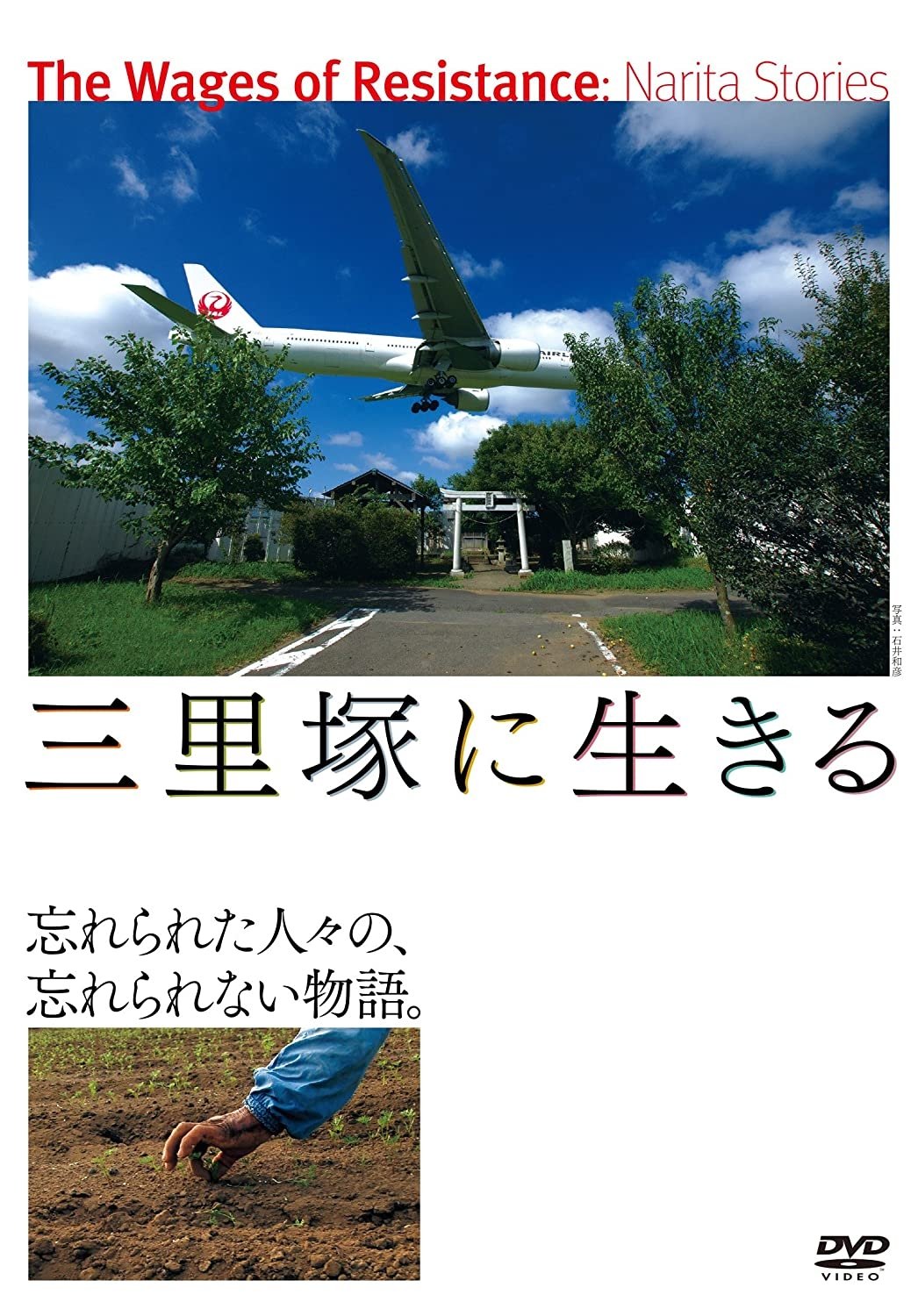
The Wages of Resistance is a feature-length documentary film that portrays an "extended span of time" of the protests against building Narita International Airport which have continued from the 1960's to today through documenting monologues of those whose lives were twisted by the movement.
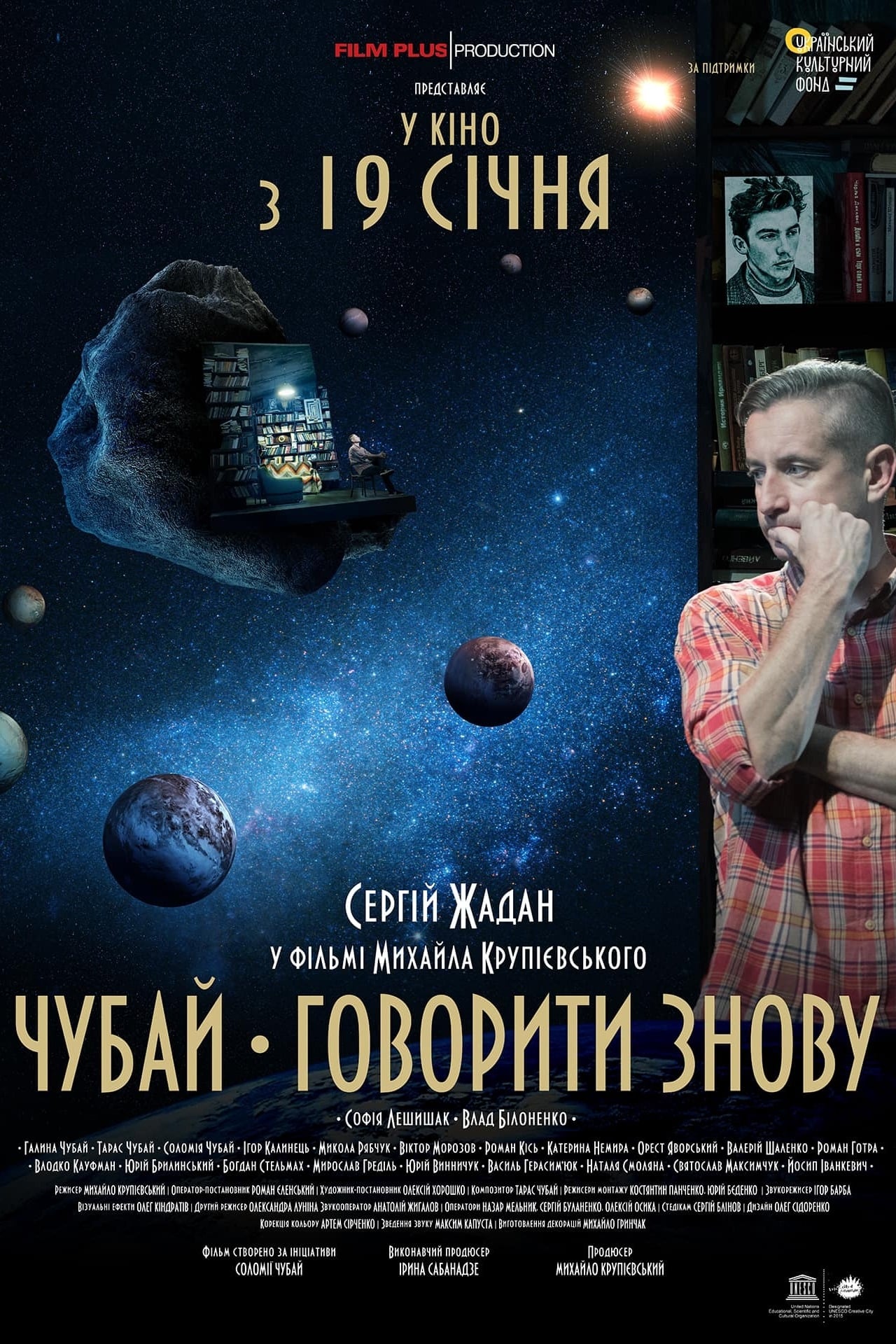
A theatrical documentary about Hrytsko Chubai, a genius of Ukrainian poetry, a connoisseur of literature, art and music and the brightest representative of Lviv underground culture of late 60s early 70s.
In Adios Amor, the discovery of lost photographs sparks the search for a hero that history forgot—Maria Moreno, a migrant mother driven to speak out by her twelve children’s hunger. Years before Cesar Chavez and Dolores Huerta launched the United Farm Workers, Maria picked up the only weapon she had—her voice—and became an outspoken leader in an era when women were relegated to the background. The first farm worker woman in America to be hired as a union organizer, Maria’s story was silenced and her legacy buried—until now.
Chapter 15 of the series 18 decades of life in Mexico in the twentieth century. Images of the cultural, social and political life in Mexico from 1970 to 1974. During the presidential term of Luis Echeverria Alvarez fantasies of prosperous and modern country it dissolves; Mexico live in political crisis. It is a time of omnipotence, barbarism, and violence intervention: the world seeks new ways. In Mexico, it held the World Cup, unionism is strengthened and inflation responds to the continuing economic imbalances.
Pauline, Norah, Kristina and others wait for hours, sitting under a hut deep in the Bois de Vincennes. In front of the administrative detention center (CRA) in Paris, they have all come to see their loved ones locked up. Lives on hold, awaiting deportation or release. On this stage, these women tell their stories, talk to each other, share their experience, their revolt and their dreams with new visitors. They are the mirror of migrant detention, its reverse view.
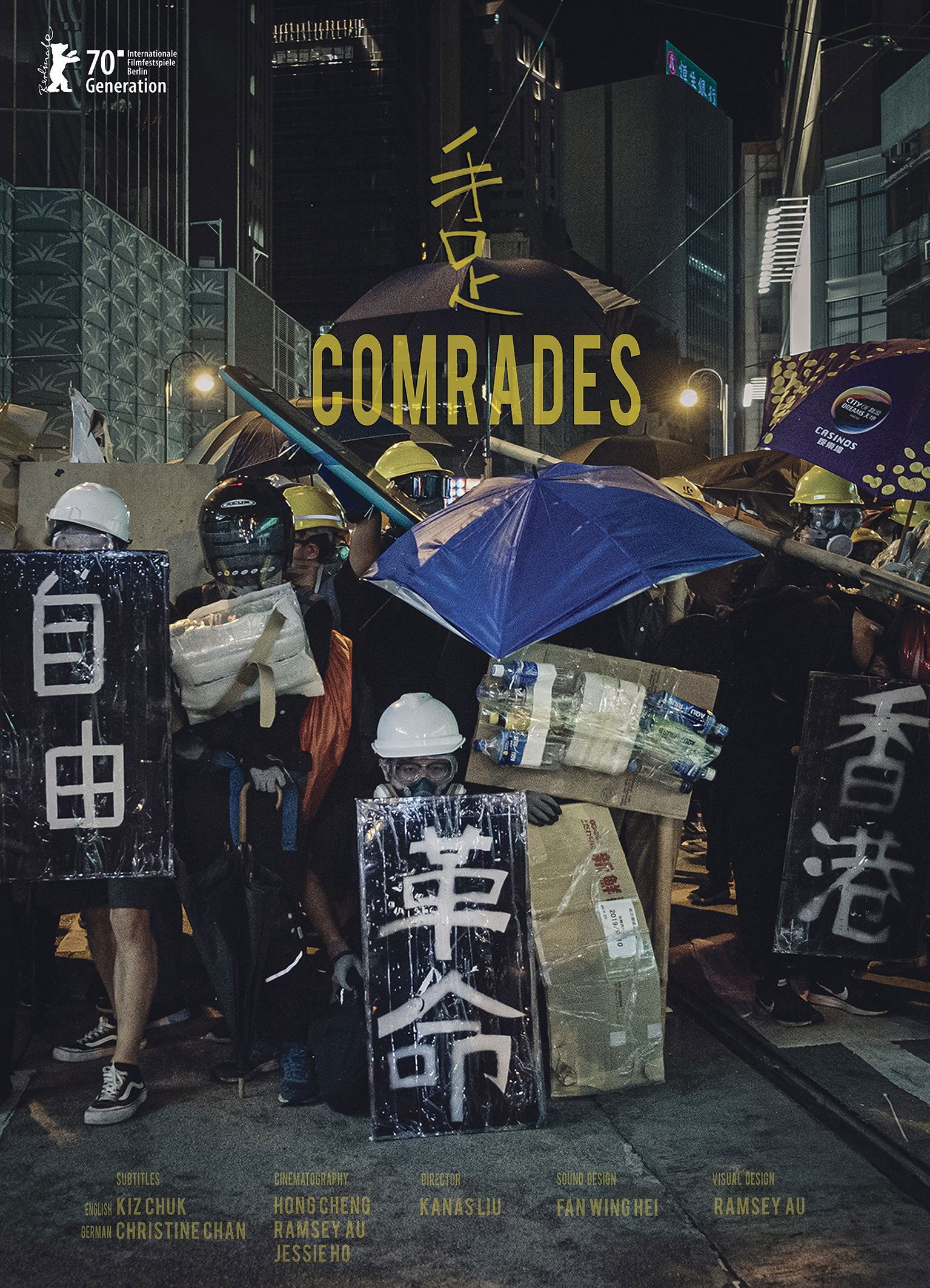
The documentary “Not One Less” records the clash in Hong Kong Island on 31st August, 2019, and the assembly on Mid-Autumn festival night supporting protestors in custody. The protests initiated by the "Extradition Bill" has continued for more than 100 days. In this period, over 1000 citizens were arrested, a number of people committed suicide, and there are rumors that some protestors are missing. In the clash scene, protestors strive to protect their comrades from being isolated. After the clash, they still care about their comrades in custody. On the mid-autumn festival night, they sang loudly outside the Lai Chi Kok Reception Centre, to let their comrades know that they were not abandoned.
Never before in Russian history has the Russian domestic intelligence services been more powerful than today. The FSB is a murky organisation that can ruin people’s lives who are deemed enemies of the Russian state and even commit murder on behalf of the Kremlin. Four people in exile open up about their experiences with the FSB.
A documentary about how a dominant cultural and demographic institution both sustains their traditional activities and adapts to the digital revolution.
A road trip across five countries to explore the social and political movements as well as the mainstream media's misperception of South America while interviewing seven of its elected presidents.
A cautionary tale for these times of democracy in crisis—the personal and political fuse to explore one of the most dramatic periods in Brazilian history. With unprecedented access to Presidents Dilma Rousseff and Lula da Silva, we witness their rise and fall and the tragically polarized nation that remains.
A presentation of a case for a needed transition out of the current socioeconomic monetary paradigm which governs the entire world society. This subject matter will transcend the issues of cultural relativism and traditional ideology and move to relate the core, empirical 'life ground' attributes of human and social survival, extrapolating those immutable natural laws into a new sustainable social paradigm called a 'Resource-Based Economy'.
A documentary on the expletive's origin, why it offends some people so deeply, and what can be gained from its use.
When Allied forces liberated the Nazi concentration camps in 1944-45, their terrible discoveries were recorded by army and newsreel cameramen, revealing for the first time the full horror of what had happened. Making use of British, Soviet and American footage, the Ministry of Information’s Sidney Bernstein (later founder of Granada Television) aimed to create a documentary that would provide lasting, undeniable evidence of the Nazis’ unspeakable crimes. He commissioned a wealth of British talent, including editor Stewart McAllister, writer and future cabinet minister Richard Crossman – and, as treatment advisor, his friend Alfred Hitchcock. Yet, despite initial support from the British and US Governments, the film was shelved, and only now, 70 years on, has it been restored and completed by Imperial War Museums under its original title "German Concentration Camps Factual Survey".
A documentary about the life and films of director John Ford.
Over seven decades, actor and activist George Takei journeyed from a World War II internment camp to the helm of the Starship Enterprise, and then to the daily news feeds of five million Facebook fans. Join George and his husband, Brad, on a wacky and profound trek for life, liberty, and love.
Bacurau, a small town in the Brazilian sertão, mourns the loss of its matriarch, Carmelita, who lived to be 94. Days later, its inhabitants notice that their community has vanished from most maps.
This documentary focuses on the actors and their journey over two summers to create the remake to the original IT, by Stephen King. The documentary originally released as bonus material, bundled with IT: Chapter Two.
In 1999, Internet entrepreneur Josh Harris recruits dozens of young men and women who agree to live in underground apartments for weeks at a time while their every movement is broadcast online. Soon, Harris and his girlfriend embark on their own subterranean adventure, with cameras streaming live footage of their meals, arguments, bedroom activities, and bathroom habits. This documentary explores the role of technology in our lives, as it charts the fragile nature of dot-com economy.
In this documentary, recovering addict and amputee John Wood finds himself in a stranger-than-fiction battle to reclaim his mummified leg from Southern entrepreneur Shannon Whisnant, who found it in a grill he bought at an auction and believes it therefore to be his rightful property.
A detailing of the rise to prominence and global sporting superstardom of six supremely talented young Manchester United football players (David Beckham, Nicky Butt, Ryan Giggs, Paul Scholes, Phil and Gary Neville). The film covers the period 1992-1999, culminating in Manchester United's European Cup triumph.
In 1977, a book of photographs captured an awakening - women shedding the cultural restrictions of their childhoods and embracing their full humanity. This documentary revisits those photos, those women and those times and takes aim at our culture today that alarmingly shows the need for continued change.
A compilation of over 30 years of private home movie footage shot by Lithuanian-American avant-garde director Jonas Mekas, assembled by Mekas "purely by chance", without concern for chronological order.
Deep beneath the surface in the Syrian province of Ghouta, a group of female doctors have established an underground field hospital. Under the supervision of paediatrician Dr. Amani and her staff of doctors and nurses, hope is restored for some of the thousands of children and civilian victims of the ruthless Syrian civil war.
A young woman is sent to Paradise Hills to be reformed, only to learn that the high-class facility's beautiful facade hides a sinister secret.
Stars of "The Walking Dead," Andrew Lincoln and Danai Gurira, walk down memory lane and visit iconic locations where pivotal moments between their characters, Rick and Michonne, were filmed.
JB Smoove and Martin Starr host a celebration of 20 years of "Spider-Man" movies, from the Sam Raimi trilogy to Marc Webb's movies and the trio from Jon Watts.
A documentary on the modeling industry's 'supply chain' between Siberia, Japan, and the U.S., told through the experiences of the scouts, agencies, and a 13-year-old model.