Social & External
Self
Buenos Aires is a complex, chaotic city. It has European style and a Latin American heart. It has oscillated between dictatorship and democracy for over a century, and its citizens have faced brutal oppression and economic disaster. Throughout all this, successive generations of activists and artists have taken to the streets of this city to express themselves through art. This has given the walls a powerful and symbolic role: they have become the city’s voice. This tradition of expression in public space, of art and activism interweaving, has made the streets of Buenos Aires into a riot of colour and communication, giving the world a lesson in how to make resistance beautiful.
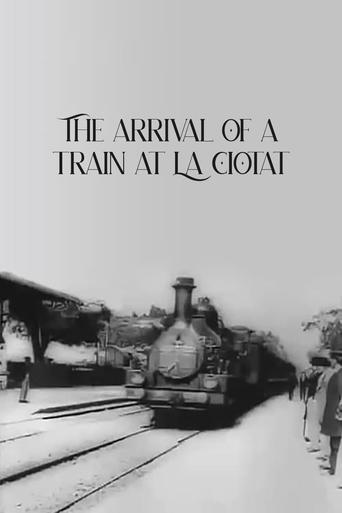
A group of people are standing along the platform of a railway station in La Ciotat, waiting for a train. One is seen coming, at some distance, and eventually stops at the platform. Doors of the railway-cars open and attendants help passengers off and on. Popular legend has it that, when this film was shown, the first-night audience fled the café in terror, fearing being run over by the "approaching" train. This legend has since been identified as promotional embellishment, though there is evidence to suggest that people were astounded at the capabilities of the Lumières' cinématographe.
Noah McManus is leaving his job with the Boston mayor's office for a dream gig in Washington, D.C. But in a single day, he finds out his new boss in Washington can no longer employ him and that his girlfriend has been cheating on him. Devastated, Noah travels to a quaint Cape Cod town and unexpectedly finds himself at home.
The journalist Andrés Oviedo must write about the murder of a young political activist Mariano Ferreyra for the magazine where he works. Oviedo performs a series of interviews and dialogues with familiars and friends of Ferreyra. The search for the truth and the motifs of the crime lead him to confront his publishers, who removed him from the case. In front of the arising complications, Andrés doubts to proceed with the investigation, but the support of his daughter, of the same generation as Mariano, helps him to continue. (FILMAFFINITY)
Journalist Dermi Azevedo has never stopped fighting for human rights and now, three decades after the end of the military dictatorship in Brazil, he's witnessing the return of those same practices.
Michael Moore's view on how the Bush administration allegedly used the tragic events on 9/11 to push forward its agenda for unjust wars in Afghanistan and Iraq.
A documentary on Al Gore's campaign to make the issue of global warming a recognized problem worldwide.
An urgent and powerful documentary, shot in a detention centre where asylum seekers trying to reach Australian shores are indefinitely detained. Secretly shot on a mobile phone by Iranian journalist Behrouz Boochani while detained on Manus, in Papua New Guinea, the film is a collaboration with Dutch-Iranian filmmaker Arash Kamali Sarvestani. Boochani recounts, via the testimonies of fellow inmates, the abuse and violence inflicted and the precarious state of limbo they find themselves in. Chauka, the name of the dreaded solitary confinement unit within the detention centre, was originally the name of a beautiful bird and symbol of the Manus Island. By interweaving dialogue with two Manusian men and shots of daily life on the island, the film gives a much-needed voice to Manus inhabitants, understandably distressed by the current situation. With marked restraint, the film exposes lives broken by shocking immigration policies.
An 8-year journey into divided America, The American Question examines the insidious roots of polarization and distrust through past the past and present, revealing how communities can restore trust in each other to unite our country.
Shut Up and Sing is a documentary about the country band from Texas called the Dixie Chicks and how one tiny comment against President Bush dropped their number one hit off the charts and caused fans to hate them, destroy their CD’s, and protest at their concerts. A film about freedom of speech gone out of control and the three girls lives that were forever changed by a small anti-Bush comment
A native of Sennwald, Anna Göldi arrived in Glarus in 1765. For seventeen years, she worked as a maidservant for Johann Jakob Tschudi, a physician. Tschudi reported her for having put needles in the bread and milk of one of his daughters, apparently through supernatural means. Göldi at first escaped arrest, but the authorities of the Canton of Glarus advertised a reward for her capture in the Zürcher Zeitung on February 9, 1782. Göldi was arrested and under torture, admitted to entering in a pact with the Devil, who had appeared to her as a black dog. She withdrew her confession after the torture ended, but was sentenced on June 18, 1782 to execution by decapitation. The charges were officially of "poisoning" rather than witchcraft, even though the law at the time did not impose the death penalty for non-lethal poisoning.
Pouvoir Oublier is a political documentary first constructed from the words of the speakers whose lives changed on the tragic day of May 10, 1972 in Sept-Îles. Their word will be juxtaposed with archival material from the events, some of which are unpublished, which will reflect the collective euphoria in which Sept-Îles and all of Quebec were then bathed.
After the World War I, Mussolini's perspective on life is severely altered; once a willful socialist reformer, now obsessed with the idea of power, he founds the National Fascist Party in 1921 and assumes political power in 1922, becoming the Duce, dictator of Italy. His success encourages Hitler to take power in Germany in 1933, opening the dark road to World War II. (Originally released as a two-part miniseries. Includes colorized archival footage.)
In South Korea, 2002, the Democratic Party put the presidential nomination to a plebiscite for the first time. Amongst numerous candidates, the one who brought about the most unexpected result was a fringe candidate named Roh Moo-hyun.
Hitler's biography told like never before. Besides brief historical localizations by a narrator, only contemporaries and Hitler himself speak: no interviews, no reenactment, no illustrative graphics and no technical gadgets. The testimonies from diaries, letters, speeches and autobiographies are assembled with new, often unpublished archive material. Hitler's life and work are thus reflected in a unique way in interaction with the image of the society in the years 1889 to 1945.
Håkan Juholt came from the reserve bench and became captain of the whole team. A high-stakes bet that hardly anyone had dared to bet on. But after only 303 days, Håkan Juholt's time as party leader for the Social Democrats was over.
Feature-film director Michel Audiard tackles what he believes to be the mistakenly heroic status given to Charles De Gaulle. In this documentary film, he uses humor, among other things, to demythologize him.
Painter Françoise Gilot shared Pablo Picasso's life from 1943 to 1953. This union nourished their respective artistic creations.
He is considered the greatest European poet of the Middle Ages and his work unfolds the whole panopticon of occidental education – theology, philosophy, sciences, politics and literature. But who has really read it, the “Divine Comedy”? Who knows more of its creator Dante Alighieri than that he had an eagle-like profile and was in love with a woman named Beatrice? 700 years after Dante’s death, the filmmaker Adolfo Conti travels through Italy with Dante’s words in mind and eyes to see the world as Dante did. As the film encounters the beauty of arts and the Tuscan landscape, the forces of nature, a dramatic life story is unfolded.
A boy walks through an abandoned building and films the interior. Suddenly his camera disappears.
Paris, France. Commissaire Wens is put in charge of the investigation into the murder of one of six friends who, in the past, made a very profitable promise.
A group of friends try to defeat an evil king, and meet some quirky characters along the way.
8mm film by Swiss artist Roman Signer.
The execution was scheduled and the last meal consumed. The coolness of the poisons entering the blood system slowed the heart rate and sent him on the way to Judgement. He had paid for his crime with years on Death Row waiting for this moment and now he would pay for them again as the judgment continued..
Four friends head off to Bombay and get involved in the mother and father of all gang wars.
Mia, an expert speaker in witchcraft, takes a trip to see a therapist. On the way she meets a group of young people who will begin to die one by one to bring an evil spirit back from death.
A story inspired by the original RAMAYANA, retold in a futuristic universe, involving brave warriors who possess ancient powers from another dimension.
A forest conservator works with a tribal clan during the British rule over India. He consciously does several marriages to expose the sly men who are playing with the sacred institution of marriage.
Tension mounts between a quadraplegic man and his wife as she prepares a bath for him.
the boys (and Georgina) take on the Emirates stadium in an epic afternoon of parkour! Corruption 4 eva!!!
The film is a continuous time-lapse with multiple exposures of the sunset from the same angle and position on 16mm film. The shoot was done in a span of 5 years. The title 13 is because the time-lapse has a 13-second interval per frame.
This Best Short Subject Academy Award winning film begins in the spring of 1940, just before the Nazi occupation of the Benelux countries, and ends immediately after the Japanese attack on Pearl Harbor. It chronicles how the people of "Main Street America", the country's military forces, and its industrial base were completely transformed when the decision was made to gear up for war. Original footage is interspersed with contemporary newsreels and stock footage.
When the Jade Empress steals the world's largest diamonds, super heroes Bikini Avenger and Thong Girl must stop her before she uses the gems to build a dangerous sci-fi weapon.