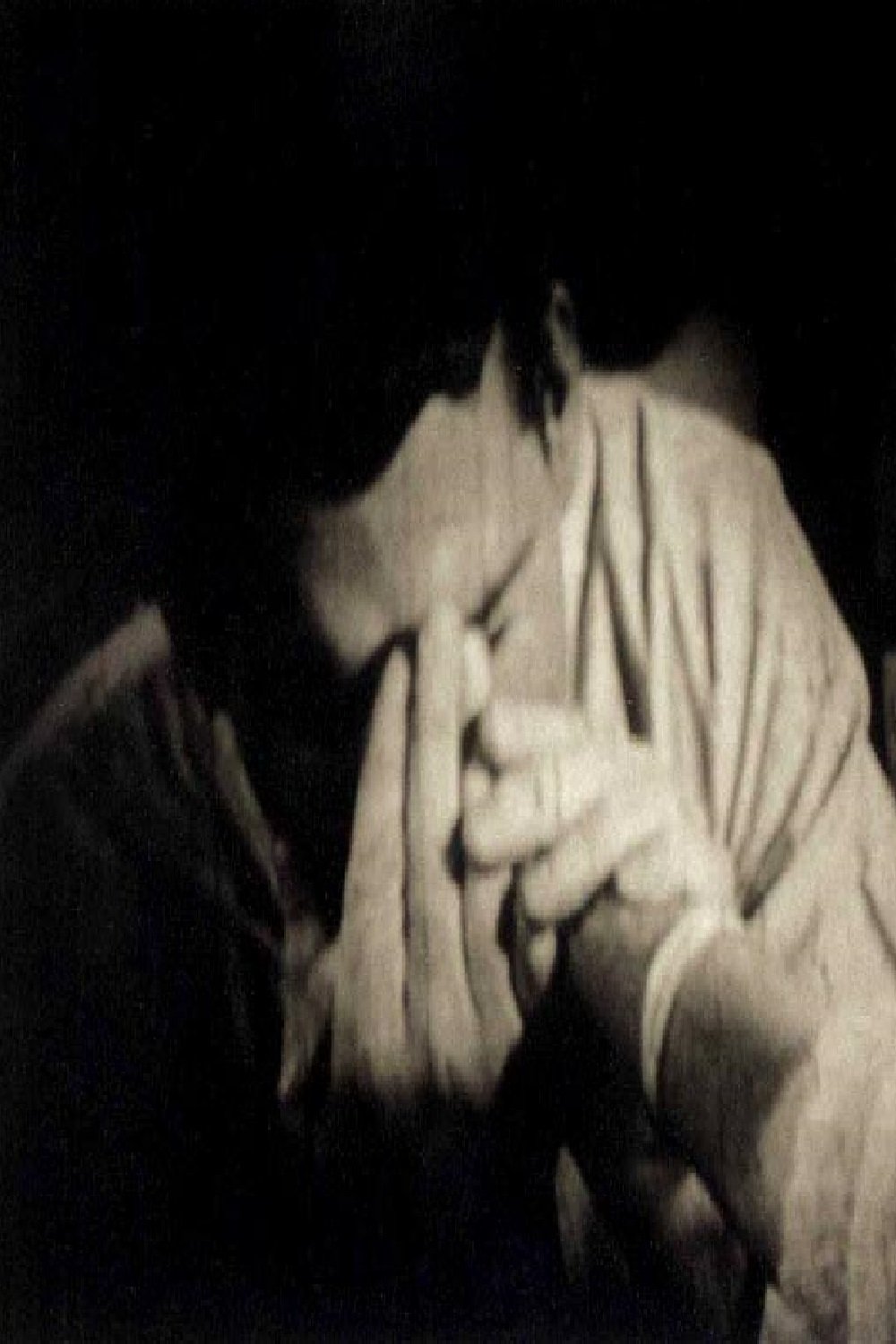
A small portrait of the volatility of intimacy and of breaking free from abusive cycles: made in response to a year of collapsing relationships and violent accidents that left me broken, dislocated and stuck in my apartment.
Social & External

Sepia toning lends a romantic (even wistful) quality to Larry Jordan's film Visions of a City, which he shot in San Francisco in 1957 and edited in 1978. The pace is un-irritating, in contrast to the San Francisco of today; but unlike the equal weight Helen Levill gives to all her subjects, there is an internal evolutionary development in the Jordan film that ultimately delivers a story. Until the introduction of the human protagonist, poet Michael McClure, we are treated to an extravagant display of visual delights.

Though best known for his collage films, Lawrence Jordan here makes exquisite study of the different aspects of light lilting through the early morning fog of California winter. Painterly gradations of color and juxtapositions in scale are beautifully arranged to music by Antonio Vivaldi.
TAPESTRY, part of Lawrence Jordan's "Odyssey" triptych and filmed much later in Jordan's life, is a charged record of his bachelor life after marriage and child-rearing.
POSTCARD FROM SAN MIGUEL is perhaps the most mystical of all the films from Lawrence Jordan's "Odyssey" triptych. On the surface, it is merely a postcard from the picturesque Mexican colonial town of San Miguel de Allende. Underneath is the mysterious quest for the filmmaker's dream-lover.
An audiovisual experiment that shows how oil is refined into gasoline and ultimately powers cars and other vehicles, accompanied by classical music and experimental synthesizer sounds. Filmed in the Libyan desert, the film traces the path and development of the gasoline, from the extraction of oil as it is drilled in the Libyan desert to the pump at the gas station, making road construction machines dance and convertibles roar through the Spessart forests. This film also drew Herbert von Karajan and Leo Kirch's attention to Hugo Niebeling, in which the director has road bulldozers "dance" to the music of Vivaldi.
Avant-garde short by Lawrence Jordan.
Sammy is a 14 year old girl who makes YouTube videos. Robby just moved to New York City after college. Jerry is a single 34 year old network administrator living in the suburbs. Through their fragmented experiences, Consumers explores the dialectical problematics of the contemporary experience.
A portrait of the life and work of the great Hungarian composer Béla Bartók, exploring both his music and his passionate interest in his country's folklore.
An audio-visual collaboration between Italian ambient/drone musician, Easychord and UK filmmaker, Scott Barley. Guided by Easychord's haunting, bodily piece, the Scott Barley's visuals explore and invoke the concepts of prisoner's cinema, stream of consciousness, repetition, the primordial body, fundamental entities, and astral planes.
With the help of more than 10,000 dedicated Zappa fans, this is the long-awaited definitive documentary project of Alex Winter documenting the life and career of enigmatic groundbreaking rock star Frank Zappa. Alex also utilizes in this picture thousands of hours of painstakingly digitized videos, photos, audio, writing, and everything in between from Zappa's private archives. These chronicles have never been brought to a public audience before, until now.
This episode focuses on Zappa's early 70s albums, Overnight Sensation (1973) and Apostrophy (') (1974). Together they encapsulate Zappa's extraordinary musical diversity and were also the 2 most commercially successful albums that he released in his prolific career. Included are interviews, musical demonstrations, rare archive & home movie footage, plus live performances to tell the story behind the conception and recording of these groundbreaking albums. Extras include additional interviews and demonstrations not included in the broadcast version, 2 full performances from the Roxy in 1973 and Saturday Night Live in 1976, and new full live performance done specially for these Classic Albums.
A hypnotic and slow-burning journey through the austere landscapes of the island of South Georgia and the Antarctic Peninsula. Shot on black and white super 8 film as a series of mostly static tableaux over a period of 20 days during the waning days of the Antarctic Summer, the film is a startling look at life at the edge of the world.
Supported by the works of poet/musician Claude Miller, the film portraits a snippet of brazilian reality.
From the first kiss to breakup, Almy and Hammer record their relationship on a reel-to-reel ¾” tape recorder and microphone.
Someone said to me, of this film, that it was really about light; but Jane (who takes it as a portrait – i. e., sees herself in it) said: You gave me the moon and seven stars... and I signed this film, simply, Stan.
A deconstruction of Dog Star Man that takes the four rolls and shows them first combined, then each combination of three rolls, then each combination of two rolls, then each individual roll. The plot is of a man who goes up a mountain with a dog to chop down a tree but has some unspecified transcendental experience while he is there.
On a winter's day, a woman stretches near a window then sits in a bathtub of water. She's happy. Her lover is nearby; there are close ups of her face, her pregnant belly, and his hands caressing her. She gives birth: we see the crowning of the baby's head, then the birth itself; we watch a pair of hands tie off and cut the umbilical cord. With the help of the attending hands, the mother expels the placenta. The infant, a baby girl, nurses. We return from time to time to the bath scene. By the end, dad's excited; mother and daughter rest. Preserved by the Academy Film Archive in 2013.
Chris Petit & Iain Sinclair's liminal, laminal tribute to underground filmmaker Peter Whitehead, featuring image manipulation by Dave Mckean & reminiscences from various countercultural characters. A fitting epitaph for an English margin walker.
A playful, free, and personal film in the form of a letter, a film interwoven with a thousand stories knit together with different textures, a book of images where a filmmaker shows the images and the stories he wants to share.
Often called a “film poem” or a “film symphonie” Huszárik’s masterpiece consists of montages of horses from the dawn of time to the modern times from cave paintings to horse races.