Social & External
The true story of one man's fight for freedom. For more than 60 years Tibetans have been fighting Chinese oppression. But their non-violent struggle appears to be in vain. Now, as a new form of peaceful protest, Tibetans are setting themselves on fire. Loten Namling - an exiled Tibetan and musician living in Switzerland - is deeply disturbed by such self-destructive action. So he sets off from Europe to India, on a one-man mission to meet top politicians, experts and young radicals. He himself becomes increasingly radical and is on the verge of violent protest. Finally he ends up at The Office of the Dalai Lama in India to seek the advice of the exiled Tibetan leader.
For around fifteen years, no Western camera has been able to get to the heart of Tibet. In this challenging and revelatory doc, Director Jean-Michel Carré gains authorisation over several months to film the human, economic and political realities of the region – one that exists outside time, but which is still in constant evolution towards a modernity imposed by China. With contributions from residents and regional experts, the film generates a new perspective on this region, which has become, despite existing under China’s control, a nexus of global geopolitical influence.
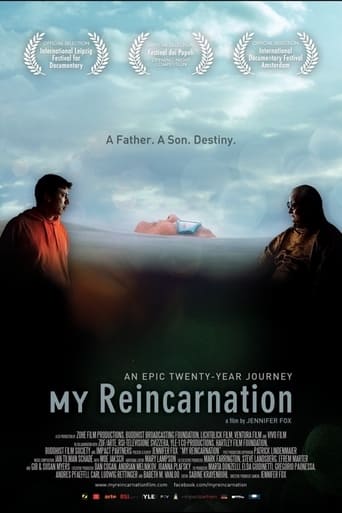
Choenzey is a 47-year-old monk living in a Tibetan refugee monastery in South India. His spiritual master, Khensur Rinpoche, a revered high lama, has been dead for four years. According to Tibetan belief, he will soon be reincarnated. It is Choenzey's responsibility, as his closest disciple, to find the reincarnation and to look after him. The film follows Choenzey's search and his eventual discovery of an impish but gentle 4-year-old boy who is recognized by His Holiness the Dalai Lama and the Tibetan State Oracle to be the reincarnation. Without sentimentality, the film captures the moving relationship that develops between the erstwhile disciple and his young master. (columbia.edu)
In Tibet, the word for woman translates as "lower rebirth." In a remote eastern region of the country, the Tsoknyi Nangchen nuns defy this definition. Devoted to the ancient practices of Tibetan Buddhism - once primarily a male domain - over 3,000 nuns have attained elevated status. Director Victress Hitchcock honors them in this moving documentary, which follows the journey of a small group of Western women to remote mountain hermitages to meet these nuns.
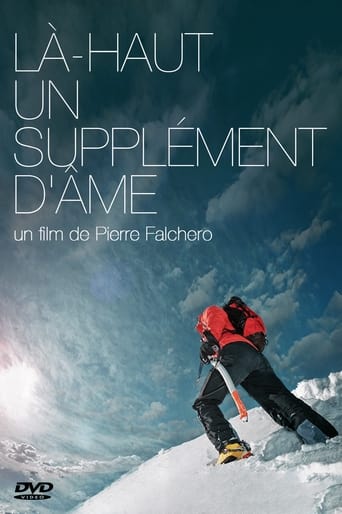
The French High Mountain Military Group (G.M.H.M.) expedition to Everest in 1981, led by General Pierre Astorg, took place on the north face of the mountain. Fifteen military climbers participated in this expedition, which lasted approximately ninety days. Their goal was to reach the summit by following a siege approach, but despite their efforts, the expedition failed to reach the summit. The French military, engaged since the beginning of March on the north face of Everest (8,848 meters), gave up less than 300 meters from the summit. The climbers, Jean-Claude Mosca, Hervé Sachetat, and Hubert Giot, gave up on setting up Camp 7, the last planned intermediate camp, at 8,600 meters. Poor weather conditions and the physical condition of the expedition members were the reasons for the failure of this meticulously prepared expedition...
The main characters of the film are two small boys who share the throne of Karmapa, the highest office of one of Tibetan Buddhism's main sects and the third in line after the Dalai Lama and Panchen Lama. As with the Dalai Lama, Karmapa is the same soul which reincarnates in each successor to the office, who is identified by omens, portents and other signs. The Karmapa line actually pre-dates the Dalai Lama's, and their respective importance has alternated in the course of history with either the Karmapa or Dalai Lama holding precedence. Only one of the current Karmapas lives in Tibet, who is recognized by the Dalai Lama but controlled by the Chinese government for political ends. The second Karmapa lives in New Delhi, India and was selected by a Tibetan group in exile. The film was shot in India, Nepal and Tibet and features the Dalai Lama as narrator, providing an incisive spiritual and political view of occupied Tibet.
A look at the life and struggles of the Tibetan people and their culture told through music.
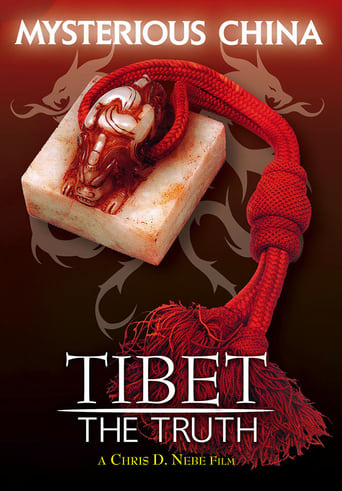
As the crucial question arises of the future succession of the Dalai Lama, we take a look back at the tormented history of the "Land of Snows" which lives under Chinese domination and which remains a geopolitical issue of the first order. A valuable documentary that gives voice to a people that China is trying to permanently silence.
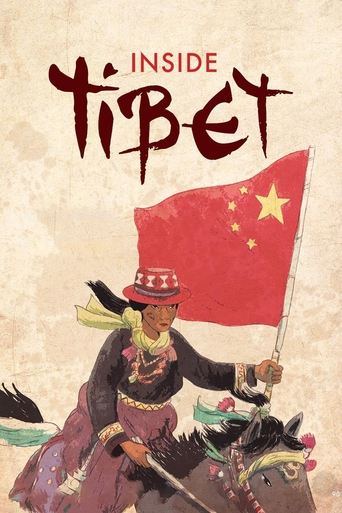
For the first time in nearly 20 years, documentary cameras go undercover inside Tibet to investigate China's growing control over its population. Under fear of arrest and facing Beijing's highly-advanced state surveillance, the filmmakers reveal what life is like inside one of the most heavily-guarded and underreported regions in the world. As he reaches 90 years-old this year, the succession of the Dalai Lama - Tibet's exiled spiritual leader - is approaching a critical point. The film investigates the mystery of a missing boy, the 11th Panchen Lama, abducted by Beijing 30 years ago whose role now holds the key to the Dalai Lama's successor and to Tibet's future.
An intimate glimpse into the life and world of one of Tibet's most revered teachers: Dilgo Khyentse Rinpoche (1910-1991). A writer, poet and meditation master, Khyentse Rinpoche was an inspiration to all who encountered him. His many students throughout the world included the Dalai Lama. This unique portrait tells Khyentse Rinpoche's story from birth to death... -- from his escape following China's invasion of Tibet to his determination to preserve and transmit Buddhist teachings. Along with rare photographs of Tibet, Bhutan and Nepal, this film features interviews with the Dalai Lama. Director Matthieu Ricard -- French photographer, Buddhist monk and bestselling author -- travelled with Khyentse Rinpoche for over 14 years.
In 1963, for the first time, the Dalai Lama allowed a Westerner, Desjardins, to film the heart of the Tibetan tradition. These two films were originally shown on French television in the 1960's and are a wonderful testimony, revealing some of Tibet's foremost masters as they were then. It includes footage of Dilgo Khyentse Rinpoche, the Sixteenth Karmapa, Dudjom Rinpoche, Ling Rinpoche, Chatral Rinpoche, Sakya Trizin, and the yogis Apo Rinpoche and Lopon Sonam Zangpo. "These portraits of the legendary Tibetan masters are not simply a unique historical record, not only a stunning and moving inspiration for now and for the future, but an extraordinary testimony, a treasure." Sogyal Rinpoche.
Heinrich Harrer, an Austrian moutain climber, escapes from a British POW camp in India and flees north across the Himalayan mountains into Tibet. There he meets and befriends the young Dalai Lama.
The documentary film "There is no turning back" by Stéphane Kleeb tells the story of the Tibetan siblings Losang and Dechen Barshee, who came to Switzerland as refugee children in 1964. After a difficult childhood in various foster families, they return to Tibet with their mother 40 years later. This journey confronts them with the alienation from their mother and their changed homeland. The film addresses homelessness, uprooting and lost dreams.
The documentary focuses on the annual Mani Rimdu festival of Tibet and Nepal, an event which encapsulates the Himalayan Buddhist experience.
Eleven Tibetans prostrate themselves every few steps during a 1,200-mile pilgrimage that lasts for seven months.
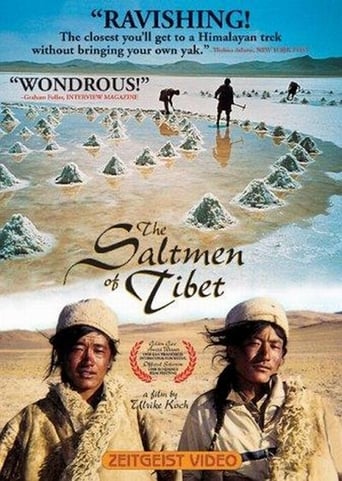
Made in 1972, this film is concerned with the traditional trans-Himalayan trade which links the relatively low-altitude, grain-growing regions of Nepal with high-altitude Tibet, the traditional source of most of the salt and wool imported by Nepal. It also provides information about and illustration of the ways of life and the history of the diverse peoples in the areas through which the trade passes.
The film Mandala by Christoph Hübner and Gabriele Voss shows in great calm and forcefulness the formation and destruction of the hitherto largest sand mandala in the "Bochumer Jahrhunderthalle zur Ruhrtriennale", created in 2011. Traditionally, sand mandalas scattered on certain ritual occasions in monasteries and the general public are hardly accessible
In an intimate and joyful story of love in the face of loss, celebrated poets Andrea Gibson and Megan Falley find strength—and unexpected hilarity—in what might be their final year together.
A string of threatening emails escalates into a revenge plot involving a newly married US marshal and his ex-girlfriend.
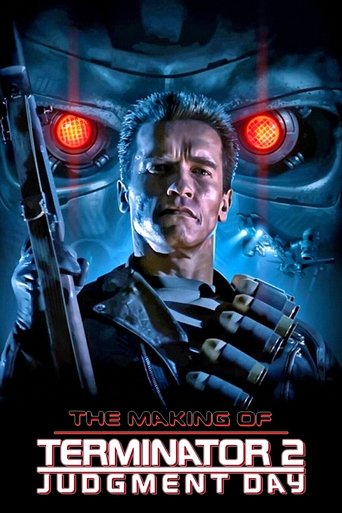
An inside look at one of the most anticipated movie sequels ever with James Cameron and cast.
A documentary about the life and films of director John Ford.
Through deeply personal interviews with her siblings and an examination of the photographs, letters, and belongings left behind, Mariska assembles a new portrait of her mother Jayne Mansfield, an extraordinary and complex woman.
RETURN tells the story of a retired Green Beret who embarks on a healing journey from Montana to Vietnam. There he retraces his steps, shares his wartime experiences with his son, treats his Post-Traumatic Stress Disorder, and seeks out the mountain tribespeople he once lived with and fought alongside as a Special Forces officer.
A purely observational non-fiction film that takes viewers into the ethically murky world of end-of-life decision making in a public hospital.
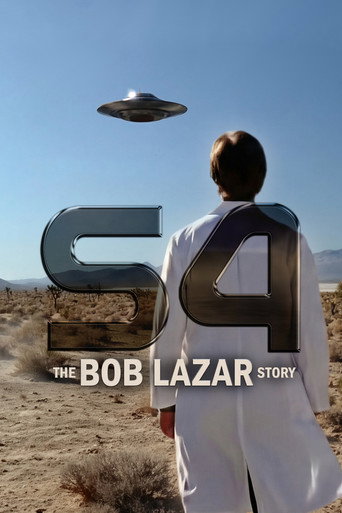
Over 35 years after Bob Lazar's revelations, this documentary exposes secrets of a facility the government still denies. Featuring Lazar's testimony, recreations, and new evidence, it reopens a case that continues to spark global curiosity
The life and career of an actor, artist, and icon. His own journey through his own camera.
Brilliant, long in-the-works story of the life and art of the world's greatest comedian and the cinema's first genius, Charlie Chaplin. Produced, written and directed by renowned film critic Richard Schickel.
Those who knew iconic funnyman John Candy best share his story, in their own words, through never-before-seen archival footage, imagery, and interviews.
Alexander McQueen's rags-to-riches story is a modern-day fairy tale, laced with the gothic. Mirroring the savage beauty, boldness and vivacity of his design, this documentary is an intimate revelation of McQueen's own world, both tortured and inspired, which celebrates a radical and mesmerizing genius of profound influence.
The life of Mr. Spock, as well as that of Leonard Nimoy, the actor who played him for almost fifty years, written and directed by his son: Adam.
This documentary focuses on the actors and their journey over two summers to create the remake to the original IT, by Stephen King. The documentary originally released as bonus material, bundled with IT: Chapter Two.
A documentary about how a dominant cultural and demographic institution both sustains their traditional activities and adapts to the digital revolution.
Daniel Craig candidly reflects on his 15 year adventure as James Bond. Including never-before-seen archival footage from Casino Royale to the upcoming 25th film No Time To Die, Craig shares his personal memories in conversation with 007 producers, Michael G Wilson and Barbara Broccoli.
A look at the origins, history and conspiracies behind the "Majestic 12", a clandestine group of military and corporate figureheads charged with reverse-engineering extraterrestrial technology.
Al Pacino's deeply-felt rumination on Shakespeare's significance and relevance to the modern world through interviews and an in-depth analysis of "Richard III."
Ranjit, a farmer in India, takes on the fight of his life when he demands justice for his 13-year-old daughter, the victim of a brutal gang rape. His decision to support his daughter is virtually unheard of, and his journey unprecedented.
The Making-of James Cameron's Avatar. It shows interesting parts of the work on the set.