"CRY OF A PALINDROMIC WOMB"
A dark and visceral journey. A language that tears apart the morbid nature of the dead-old primal human eyes. No warning was given. No mercy was shown.
Social & External
Television was invented as a result of scientific and technical research. Its power as a medium of news and entertainment altered all preceding media of news and entertainment
6-18-67 is a short quasi-documentary film by George Lucas regarding the making of the Columbia film “Mackenna's Gold”. This non-story, non-character visual tone poem is made up of nature imagery, time-lapse photography, and the subtle sounds of the Arizona desert.
An experimental journey through a year in the life of the director, using his always playing playlist to cross the boundaries of fiction and documentary. Through scenes of both comedy and tragedy, realistic documentary footage and experimental sequences of the director's environment and daily life we get a sometimes estranging image of a young man and also an intriguing insight in his mindset and how this translates to the imagery on screen.
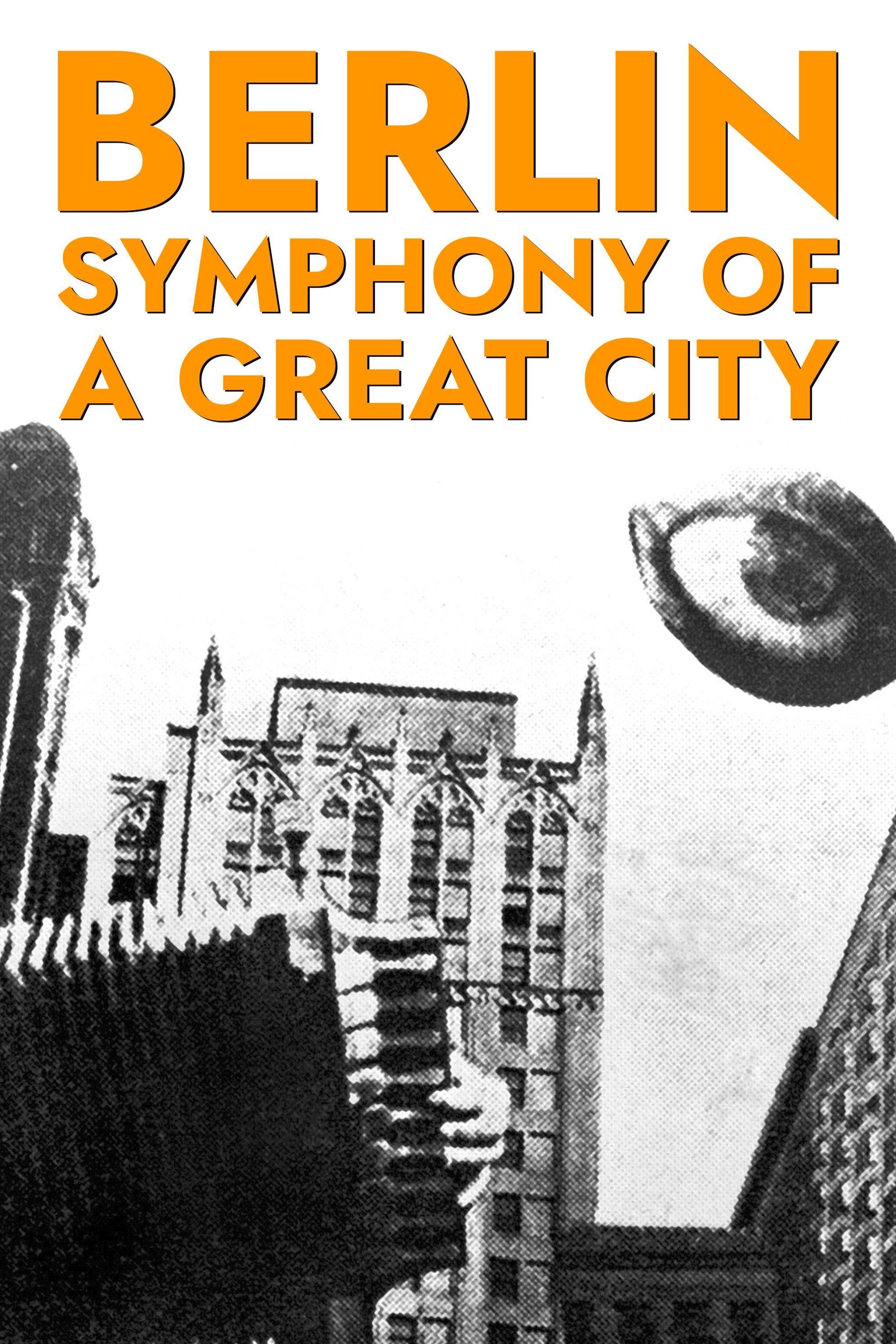
A day in the city of Berlin, which experienced an industrial boom in the 1920s, and still provides an insight into the living and working conditions at that time. Germany had just recovered a little from the worst consequences of the First World War, the great economic crisis was still a few years away and Hitler was not yet an issue at the time.
"Adrift" is shot on the arctic island of Spitzbergen and in Norway. It combines time-lapse photography with stop-motion animation of the landscape. Through camera-angles and framing the film gradually dislocates the viewer from a stable base where one loses the sense of scale and grounding.
For us, a thought always presupposes a society, a culture and above all the consciousness of time. We are haunted by immortality, human notion par excellence. As if the world was here to fascinate us. And to disappoint us. The film travels around the bulb like the Earth around the Sun. Light makes the film visible. A fragile film, like our existence. In the orbit of the film tragedy and our reality, the image resists the cruelty of the experiment.
'The angle of the world allows us to see the real as an outer and inner presence at the same time, an opaque otherness, yet capable of becoming an intimate space. These incommensurable lengths and distances of an interior that opens up: The mysterious movement of the clouds, the cadence of the waves against the light, or the silent slippage of a barely identifiable human silhouette, everything seems transfigured, derealized and reinvented by light in a poetic world that evokes the paintings of Turner or Friedrich, the writings of Poe or Baudelaire.’ — Violeta Salvatierra
2012: Time For Change is a documentary feature that presents ways to transform our unsustainable society into a regenerative planetary culture. This can be achieved through a personal and global change of consciousness and the systemic implementation of ecological design.
What starts off as a conventional travelogue turns into a satirical portrait of the town of Nice on the French Côte d'Azur, especially its wealthy inhabitants.
A portrait of Madrid's summer
A young man in a tram is asking a bit too much from a stranger.
The absurd logic of the ‘real character’ and the extreme rules of Disneyland become apparent when a real fan of Snow White is banned from entering the theme park dressed as Snow White.
Broad Sense is based on an three day long intervention in the European Parliament in Brussels. The video reveals the diversity of security responses to the artist’s visits.
Something takes us underground, where gods and monsters are active, amid the ruins of a world they move around with their innumerable hands. Inspired by Fritz Lang and Richard Wagner, Remains is a daydream.
Filmed in Rome in the 1980s, the work draws on Borromini’s Baroque architecture and Il Sassetta’s St. Martin and the Beggar. Beavers contrasts winter’s subdued light with the verdant growth of spring, constructing a precise montage in which image and sound form a poetic dialogue.
Interweaving stonework and filmmaking, Beavers evokes memory through hammer strokes and chisel sounds that shape both image and rhythm. In this dialogue of repetition and variation, the film carves out a space where emptiness itself gains form, allowing vision beyond sight.
This experimental nature documentary by Minna Rainio and Mark Roberts depicts climate change and the wave of extinction from the point of view of our near future. Actually, it depicts the age we live in now, or rather its fateful consequences.
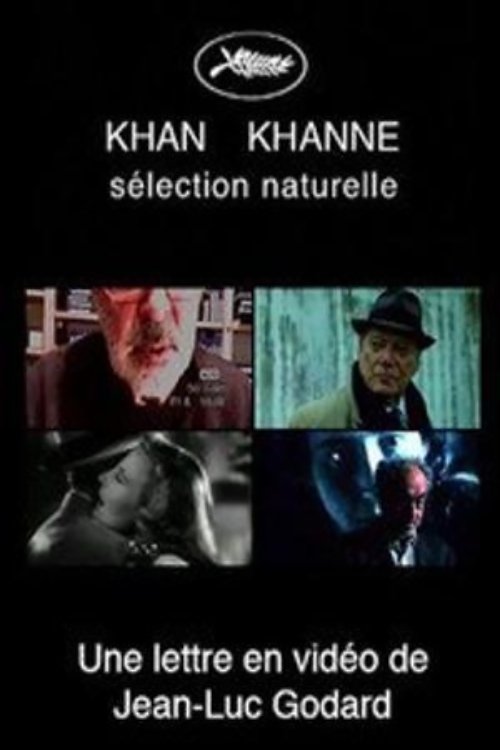
Rather than writing a simple letter to explain his absence from the press conference for his latest Cannes entry, "Goodbye to Language," at the Cannes Film Festival, instead, legendary filmmaker Jean-Luc Godard created a video "Letter in motion to (Cannes president) Gilles Jacob and (artistic director) Thierry Fremaux." The video intercuts from Godard speaking cryptically about his "path" to key scenes from Godard classics such as "Alphaville" and "King Lear" with Burgess Meredith and Molly Ringwald, and quotes poet Jacques Prevert and philosopher Hannah Arendt.
This film describes a psychological state "kin to moonstruck, its images emblems (not quite symbols) of suspension-of-self within consciousness and then that feeling of falling away from conscious thought. The film can only be said to describe or be emblematic of this state because I cannot imagine symbolizing or otherwise representing an equivalent of thoughtlessness itself. Thus the actors in the film, Jane Brakhage, Tom and Gloria Bartek, Williams Burroughs, Allen Ginsberg, Peter Olovsky and Phillip Whalen are figments of this 'Thought-Fallen Process', as are their images in the film to find themselves being photographed."
Man With a Movie Camera: The Global Remake is a participatory video shot by people around the world who are invited to record images interpreting the original script of Vertov’s Man With A Movie Camera and upload them to this site. Software developed specifically for this project archives, sequences and streams the submissions as a film. Anyone can upload footage. When the work streams your contribution becomes part of a worldwide montage, in Vertov’s terms the “decoding of life as it is”.