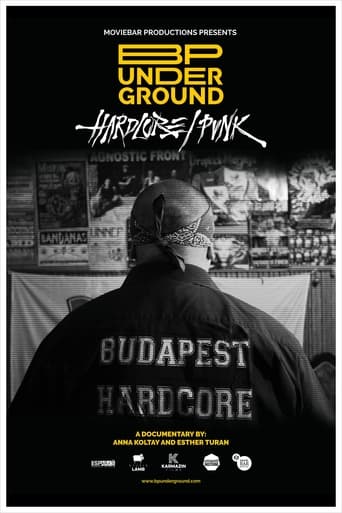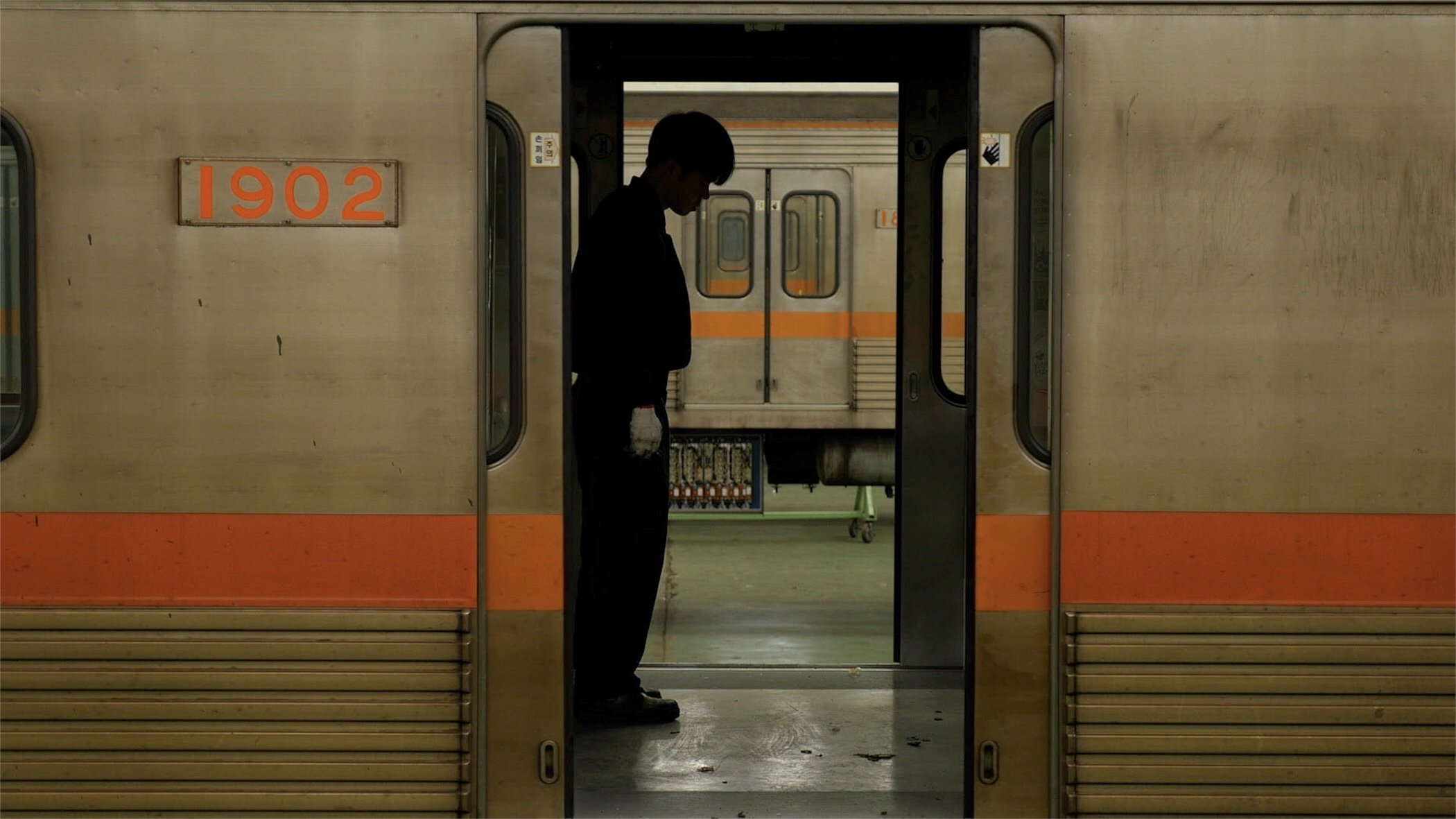
Numerous people are on subway trains running up and down the city center endlessly. There are people who run this decent space “underground”. Under the noisy world today, we approach them to see what life is like underground.
Social & External
During the Japanese occupation period, Koreans were forced to deport or drafted to work in other countries. Now 150 years passed, it appears around 7million of those people and their families are spread in 170 countries. There, a world-famous Korean-Japanese musician Yang Bang Ean follows the pathways of Korean diasporas as an inspiration, and performs his cross over music concert called ‘ARIRANG ROAD’.
This movie chronicles the life and times of R. Crumb. Robert Crumb is the cartoonist/artist who drew Keep On Truckin', Fritz the Cat, and played a major pioneering role in the genesis of underground comix. Through interviews with his mother, two brothers, wife, ex-wife and ex-girlfriends, as well as selections from his vast quantity of graphic art, we are treated to a darkly comic ride through one man's subconscious mind.
Railroad of Hope consists of interviews and footage collected over three days by Ning Ying of migrant agricultural workers traveling from Sichuan in China's interior, to the Xinjiang Autonomous Region, China's northwest frontier.[1] Through informal interviews aboard the cramped rail cars, Ning Ying explores the hopes and dreams of the workers, many of whom have never left their homes before.
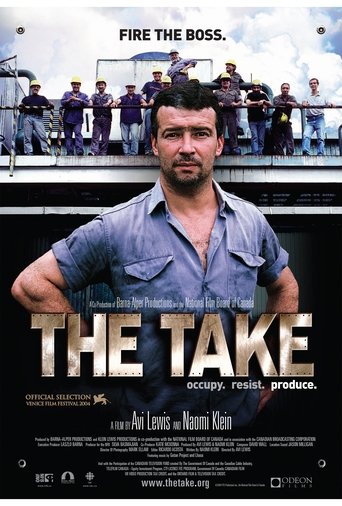
In suburban Buenos Aires, thirty unemployed ceramics workers walk into their idle factory, roll out sleeping mats and refuse to leave. All they want is to re-start the silent machines. But this simple act - the take - has the power to turn the globalization debate on its head. Armed only with slingshots and an abiding faith in shop-floor democracy, the workers face off against the bosses, bankers and a whole system that sees their beloved factories as nothing more than scrap metal for sale.
A group of women climbs a summer mountain situated in South Korea. They are refugees who have settled into South Korean society after fleeing from North Korea. For them, climbing the mountains has been an unavoidable journey for survival - a matter of life and death.
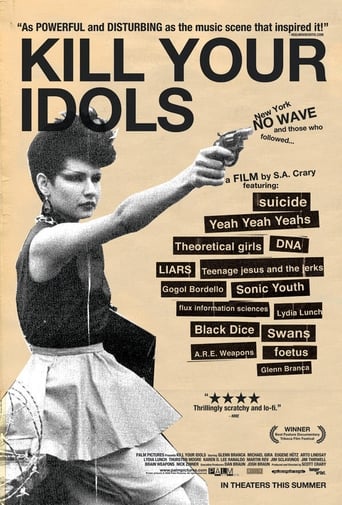
A 2004 documentary on thirty years of alternative rock 'n roll in NYC.Documenting the history from the genuine authenticity of No Wave to the current generation of would be icons and true innovators seeing to represent New York City in the 21st century
"The End of the Line - Rochester's Subway" tells the little-known story of the rail line that operated in a former section of the Erie Canal from 1927 until its abandonment in 1956. Produced in 1994 by filmmakers Fredrick Armstrong and James P. Harte, the forty-five minute documentary recounts the tale of an American city's bumpy ride through the Twentieth Century, from the perspective of a little engine that could, but didn't. The film has since been rereleased (2005) and now contains the main feature with special portions that were added as part of the rereleased version. These include a look at the only surviving subway car from the lines and a Phantom tun through the tunnels in their abandoned state, among others, for a total of 90 minutes of unique and well preserved historical information.
Ignaz Wuzel and Gerhard Jeschko are regulars at the espresso in the Südtiroler Platz underground station. Warden Leopold Prinz knows the problems of the children from Karlsplatz. In 1993, Elizabeth T. Spira filmed people on the Vienna subway network. Above all, it is the desperate, the lost and the forgotten who find refuge and a home in and around the subway.
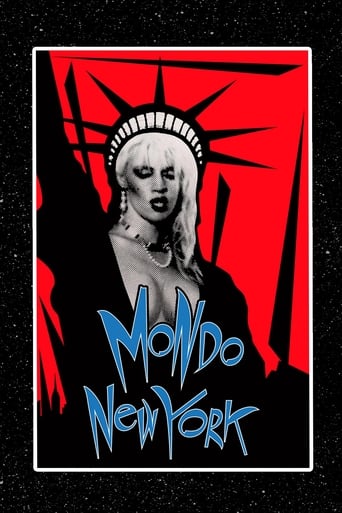
A young woman wanders around New York City and stumbles across a number of strange characters and settings that represent the "underground" areas of the city. She sees stand up comedy in Central Park, a prostitution auction, a voodoo ceremony, an S&M club, and a number of very interesting performance artists. These are just a few of the sights and sounds of New York that she encounters.
Long considered a cult classic, "Mondo Hollywood" captures the underside of Hollywood by documenting a moment in time (1965-67), when an inquisitive trust in the unknown was paramount, hope for the future was tangible and life was worth living on the fringe. An interior monologue narrative approach is used throughout the film, where each principal person shown not only decided on what they wanted to be filmed doing, but also narrated their own scenes. The film opens with Gypsy Boots (the original hippie vegan - desert hopping blender salesman), and stripper Jennie Lee, working out 'Watusi-style' beneath the 'Hollywood' sign -- leading into the 'sustainable community' insight of Lewis Beach Marvin III, the S&H Green Stamp heir, who lived in a $10 a month garage while owning a mountain retreat in Malibu.
Jack Rebney is the most famous man you've never heard of - after cursing his way through a Winnebago sales video, Rebney's outrageously funny outtakes became an underground sensation and made him an internet superstar. Filmmaker Ben Steinbauer journeys to the top of a mountain to find the recluse who unwittingly became the "Winnebago Man".
Warsaw's Central Railway Station. 'Someone has fallen asleep, someone's waiting for somebody else. Maybe they'll come, maybe they won't. The film is about people looking for something.
Cacaso, a Brazilian poet, lived in Rio de Janeiro. Born Antonio Carlos de Brito (1944-1987) he was one of the leaders of the marginal poetry movement. Cacaso filled notebooks not only with poems but reflections, drawings and collages. He also became a lyricist and partner of celebrated songwriters such as Tom Jobim, Edu Lobo, Toninho Horta, João Donato and Sivuca.
What happens when subcontracted precarious workers turn into podcast DJ. Subcontracted precarious workers at the SK Broadband, Inc. began a podcast titled ‘Workers Have Changed!’ to broadcast the story about their strike for job security. The podcast studio becomes a theater of their life as they share their stories - daily hardshipsof subcontracted labor, coping with rude customers, and their futures and dreams.
This documentary follows the lives and careers of a collective group of do-it-yourself artists and designers who inadvertently affected the art world.
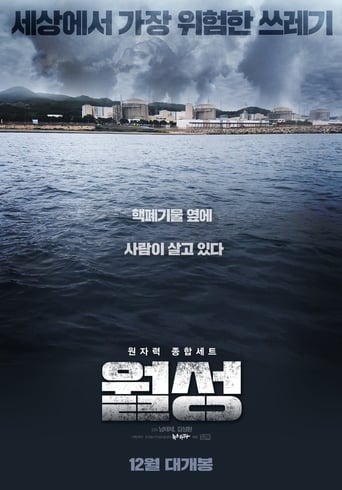
After consolidating itself as a tourist destination in the mid-1960s, this small coastal village has become the dormitory town for the workers of a Nuclear Power Plant. With the liberal promise of prosperity and socioeconomic wellfare, many workers left their homes to move to the small city and started working at the new Nuclear Power Plant. The collective unrest and the silence, cut off by the great gusts of wind, articulate the landscape of the village that is now under the aid of the Nuclear Power Plant.
A video about Neo-Nazis originating in Sweden provides the starting point of an investigation of extremists' networks in Europe, Russia, and North America. Their propaganda is a message of hatred, war, and segregation.
This documentary short tells the story of cartoonist David Boswell and his greatest creation: Reid Fleming, World's Toughest Milkman. In the late '70s, David Boswell birthed Reid Fleming, a counterculture icon in the form of a comic book anti-hero. Fast forward to the '80s, Warner Brothers aimed for a Hollywood film. Today, three decades later, Reid Fleming remains stuck in a contractual quagmire. Jonathan Demme, Academy Award-Winner (The Silence of the Lambs, Stop Making Sense), narrates "I Thought I Told You To Shut Up!!" This documentary blends stop-motion animation with interviews from Boswell, Hollywood cohorts, and fans, exploring the enduring allure of the indomitable Reid Fleming, the World's Toughest Milkman.
Interpreting an event of ROKS Cheonan corvette, torpedoed and sunken by North Korea, this documentary rebuilds the event with a different insight. No one can tell if the investigation of Cheonan has reached compelling conclusion. But the film tells and reveals how unreasonable Korean society is.
Documentary about seminal garage-rock band, The Seeds, that uses vintage footage, rare photos, memorabilia and audio, plus fresh interviews with band members and associates as well as notable fans and observers, Pushin’ Too Hard relates the bizarre rage-to-riches-to-rags tale of the rock quartet who took Los Angeles by storm in the mid-60s.