One of Paik’s most overtly political and poignant statements, Guadalcanal Requiem is a performance/documentary collage that confronts history, time, cultural memory and mythology on the site of one of World War II’s most devastating battles.
Social & External
The people behind it
Charlotte Moorman
A ritual of grids, reflections and chasms; a complete state of entropy; a space that devours itself; a vertigo that destroys the gravity of the Earth; a trap that captures us inside the voids of the screen of light: «That blank arena wherein converge at once the hundred spaces» (Hollis Frampton).
In Untitled (Pink Dot), Murata transforms footage from the Sylvester Stallone film First Blood (1982) into a morass of seething electronic abstraction. Subjected to Murata's meticulous digital reprocessing, the action scenes decompose and are subsumed into an almost palpable, cascading digital sludge, presided over by a hypnotically pulsating pink dot.
Hutton's most impressive work ... the filmmaker's style takes on an assertive edge that marks his maturity. The landscape has a majesty that serves to reflect the meditative interiority of the artist independent of any human presence. ... New York is framed in the dark nights of a lonely winter. The pulse of street life finds no role in NEW YORK PORTRAIT; the dense metropolitan population and imposing urban locale disappear before Hutton's concern for the primal force of a universal presence. With an eye for the ordinary, Hutton can point his camera toward the clouds finding flocks of birds, or turn back to the simple objects around his apartment struggling to elicit a personal intuition from their presence. ... Hutton finds a harmonious, if at times melancholy, rapport with the natural elements that retain their grace in spite of the city's artificial environment. The city becomes a ghost town that the filmmaker transforms into a vehicle reflecting his personal mood.
Avant-garde composer John Cage is famous for his experimental pieces and "chance music" but temporarily branched into video in 1992 with this art film about meaningless activity. The work is composed of two segments that are supposed to be played simultaneously: "One 11" contains the artistic statement, and "103" is a 17-part orchestral piece. Also included is a revealing documentary about Cage and director Henning Lohner.
This documentary aims to register this unknown side of James Joyce: His Greek Notebooks. Trieste. Bloomsday, 2013. Dance in slow motion, accompanied by text. By deconstructing the body, we turn it into a memory: of the body, of life, of texts. The biographical references to Joyce and Mando Aravantinou, combined with the diagonal slicing of the image, cancel the realism of the landscape, including that of the Narrator’s space/study. As a culmination, Joyce’s letter “A request for a loan in Greek” functions as a timely denunciation. Various routes through cities, such as Trieste, London, New York, and Athens; languages such as Greek and English. In addition to the primal myth of Ulysses, there is another issue: Greek is “the language of the subject of Ulysses”
A day in the city of Berlin, which experienced an industrial boom in the 1920s, and still provides an insight into the living and working conditions at that time. Germany had just recovered a little from the worst consequences of the First World War, the great economic crisis was still a few years away and Hitler was not yet an issue at the time.
Sunny. Semantic sequences guide the gaze, a gaze that is sometimes raised, propelled downwards, then too high or motionless in front of an unrecognizable and yet so familiar vision. The images, linked by echoes of chromatic palettes and linear layers, scroll to the rhythm of a voice, reminiscent of an incantation. Sacred.
A dying man in his forties recalls his childhood, his mother, the war and personal moments that tell of and juxtapose pivotal moments in Soviet history with daily life.
Filmed in Berlin, July 1990. Images of workers taking down the wall and street peddlers selling pieces of it to make a living.
The first film made by Markopoulos after moving to Europe, Bliss was shot over the course of two days using only available light to create a lyrical study of the interior of the Church of St. John on the island of Hydra.
Flooded McDonald's is a new film work in which a convincing life-size replica of the interior of a McDonald's burger bar, without any customers or staff present, gradually floods with water.
16mm film (color, sound); 16 min.
As a major storm strikes Texas in 1900, a mysterious televisual device is built and tested. Blake Williams’ experimental 3D sci-fi film immerses us in the aftermath of the Galveston disaster to fashion a haunting treatise on technology, cinema, and the medium’s future.
The inner world of the great painter Max Ernst is the subject of this film. One of the principal founders of Surrealism, Max Ernst explores the nature of materials and the emotional significance of shapes to combine with his collages and netherworld canvases. The director and Ernst together use the film creatively as a medium to explain the artist's own development.
The constant movement of the wheels, threads, sprockets, feet and hands suggests restlessness, and this is paralleled by the soundtrack. The unknown woman could be Gretchen from Faust, hopelessly in love or Ariadne who gave Theseus the thread to find his way out of labyrinth or perhaps she is one of the fates, weaving destiny… Enlarged from Super-8 to 35mm, the film is very grainy, in itself an homage to the medium of film which is also emphasized by the depiction of all kinds of turning machines, both in image and sound.
Rummaging for Pasts is an experimental juxtaposition of two cinematic documents: the video diary of an international archaeological excavation and a collection of assorted eight millimeter found footage of Indian weddings.
The life of Ukrainian-Soviet avant-garde composer Alexander Mosolov inspires three stories about creation and individualism in the face of state power, set against the Great Purge of the 1930s and the ongoing Russian invasion of Ukraine.
Thanks to his myriad film roles, Lon Chaney is known as “the man of a thousand faces,” and you could say that the early horror era never beheld a figure more intriguing. Yet because of his numerous transformations, his face never became as iconic as that of, say, Boris Karloff. Accompanied by a soundtrack from Bernhard Lang, this “re-imagination of shots” taken from Chaney´s forty-six surviving films offers a beguiling excursion into the history of film. The director reveals surprising associations, while highlighting the enduring magic of works which are now more or less forgotten.
A film of and through the trees. Leaves catch, consume and resist the light through the seasons.
"This film explores how freedom of speech — including dissent — is afforded to all Americans, and shows freedom of expression in art, music, dance, architecture, and science. The film also emphasizes the importance of the individual’s contribution to the whole of society and demonstrates how a productive and creative society is formed by the open and respectful exchange of ideas. The film was written, produced, and directed by William Greaves" (National Archives).
A visual montage portrait of our contemporary world dominated by globalized technology and violence.
The history of cinematic sound, told by legendary sound designers and visionary filmmakers.
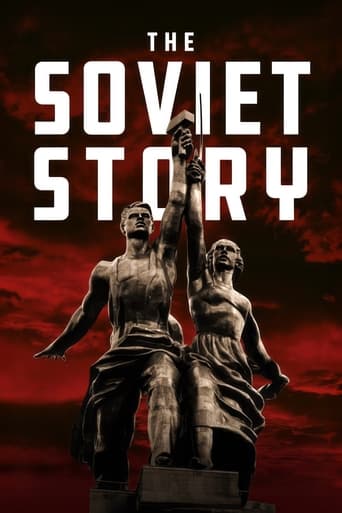
“The Soviet Story” is a story of an Allied power, which helped the Nazis to fight Jews and which slaughtered its own people on an industrial scale. Assisted by the West, this power triumphed on May 9th, 1945. Its crimes were made taboo, and the complete story of Europe’s most murderous regime has never been told. Until now...
In an intimate and joyful story of love in the face of loss, celebrated poets Andrea Gibson and Megan Falley find strength—and unexpected hilarity—in what might be their final year together.
The Making-of James Cameron's Avatar. It shows interesting parts of the work on the set.
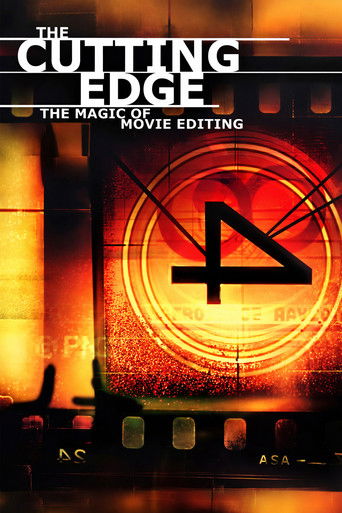
Documentary about the art of film editing. Clips are shown from many groundbreaking films with innovative editing styles.
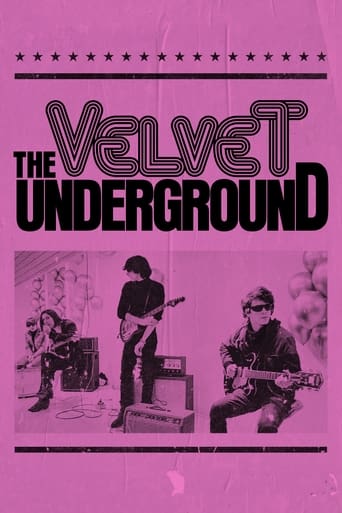
Experience the iconic rock band's legacy in the first major documentary to tell their story. Directed with the era’s avant-garde spirit by Todd Haynes, this kaleidoscopic oral history combines exclusive interviews with dazzling archival footage.
A tribute to Italian filmmaker Sergio Corbucci (1926-90), presented by American filmmaker Quentin Tarantino.
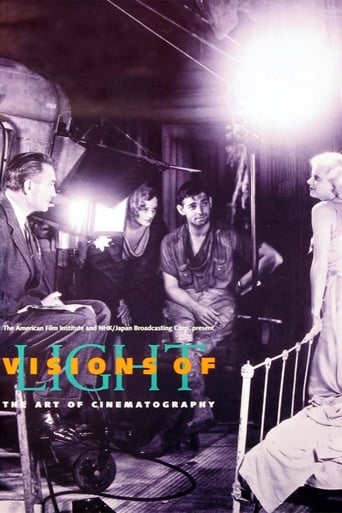
Cameramen and women discuss the craft and art of cinematography and of the "DP" (the director of photography), illustrating their points with clips from 100 films, from Birth of a Nation to Do the Right Thing. Themes: the DP tells people where to look; changes in movies (the arrival of sound, color, and wide screens) required creative responses from DPs; and, these artisans constantly invent new equipment and try new things, with wonderful results. The narration takes us through the identifiable studio styles of the 30s, the emergence of noir, the New York look, and the impact of Europeans. Citizen Kane, The Conformist, and Gordon Willis get special attention.
A documentary on the expletive's origin, why it offends some people so deeply, and what can be gained from its use.
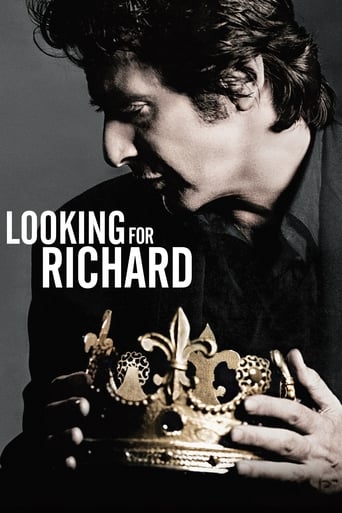
Al Pacino's deeply-felt rumination on Shakespeare's significance and relevance to the modern world through interviews and an in-depth analysis of "Richard III."
SEDUCED AND ABANDONED combines acting legend Alec Baldwin with director James Toback as they lead us on a troublesome and often hilarious journey of raising financing for their next feature film. Moving from director to financier to star actor, the two players provide us with a unique look behind the curtain at the world's biggest and most glamourous film festival, shining a light on the bitter-sweet relationship filmmakers have with Cannes and the film business. Featuring insights from directors Martin Scorsese, 'Bernando Bertolucci' and Roman Polanski; actors Ryan Gosling and Jessica Chastain and a host of film distribution luminaries.
Andrew Dominik's One More Time With Feeling is a remarkable black and white documentary which chronicles the creation of Nick Cave & The Bad Seeds' album Skeleton Tree. Originally a performance based concept, the film evolved into something much more significant as Dominik delved into the tragic backdrop of the writing and recording of the album. The result is stark, fragile and raw, and a true testament to an artist trying to find his way through the darkness. It documents the writing, recording and performing of Nick Cave & the Bad Seeds’ sixteenth studio album, Skeleton Tree.
An inside look at one of the most anticipated movie sequels ever with James Cameron and cast.
Martin Scorsese's documentary intertwines footage from The Band's incredible farewell tour with probing backstage interviews and featured performances by Eric Clapton, Bob Dylan, Joni Mitchell, Van Morrison, and other rock legends.
Over 35 years after Bob Lazar's revelations, this documentary exposes secrets of a facility the government still denies. Featuring Lazar's testimony, recreations, and new evidence, it reopens a case that continues to spark global curiosity
Global superstar Jennifer Lopez reflects on her multifaceted career and the pressure of life in the spotlight in this intimate documentary.
Takes us to locations all around the US and shows us the heavy toll that modern technology is having on humans and the earth. The visual tone poem contains neither dialogue nor a vocalized narration: its tone is set by the juxtaposition of images and the exceptional music by Philip Glass.
Michael Moore comes home to the issue he's been examining throughout his career: the disastrous impact of corporate dominance on the everyday lives of Americans (and by default, the rest of the world).
He's devoted his career to uncovering stories the powerful want buried. From My Lai to Abu Ghraib, dig into the life's work of journalist Seymour Hersh.