Social & External
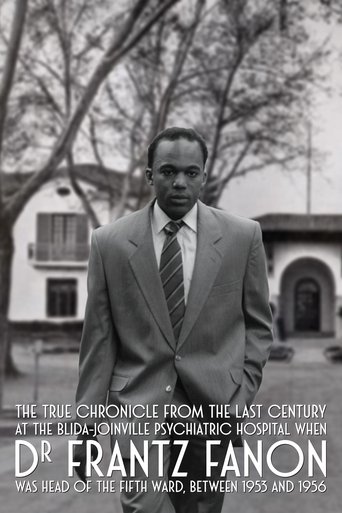
It is the evocation of a life as brief as it is dense. An encounter with a dazzling thought, that of Frantz Fanon, a psychiatrist of West Indian origin, who will reflect on the alienation of black people. It is the evocation of a man of reflection who refuses to close his eyes, of the man of action who devoted himself body and soul to the liberation struggle of the Algerian people and who will become, through his political commitment, his fight, and his writings, one of the figures of the anti-colonialist struggle. Before being killed at the age of 36 by leukemia, on December 6, 1961. His body was buried by Chadli Bendjedid, who later became Algerian president, in Algeria, at the Chouhadas cemetery (cemetery of war martyrs ). With him, three of his works are buried: “Black Skin, White Masks”, “L’An V De La Révolution Algérien” and “The Wretched of the Earth”.
Twenty-five films from twenty-five European countries by twenty-five European directors.
Cuban drummer Elvis García reflects on his journey from Havana to Miami, struggling to make his way in the American city as a professional musician.
Algiers. From the port to the souks, passing through the Jardin d'Essai, Dominique Cabrera transports us to the land where she was born, on the other side of the Mediterranean "where the sea is saltier". If most of the pieds-noirs left Algeria in the summer of 1962, some -a minority- remained. By going to meet them, the director makes her own inner journey.
An experimental essay film about terrorism, media, violence and globalisation. Three infotainment news broadcasts - a rollercoaster, a hijacking, and an influencer - are soundtracked by pulsating experimental electronics that push the psychic residue of a post war-on-terror world out of the unconscious and onto the screen. Capitalism, imperialism, desire; all three are implicated in a nihilism that has seeped from the news into the social psyche.
A group of people are standing along the platform of a railway station in La Ciotat, waiting for a train. One is seen coming, at some distance, and eventually stops at the platform. Doors of the railway-cars open and attendants help passengers off and on. Popular legend has it that, when this film was shown, the first-night audience fled the café in terror, fearing being run over by the "approaching" train. This legend has since been identified as promotional embellishment, though there is evidence to suggest that people were astounded at the capabilities of the Lumières' cinématographe.
Don Letts examines the history of this notorious subculture in a fascinating documentary, which features interviews with members of different skinhead scenes through the decades. Beginning in the late 1960s, Don fondly recalls a time of multiracial harmony as youngsters bonded over a love of ska, reggae and smart clothes as white working-class kids were attracted to Jamaican culture and adopted its music and fashions. But when far-right politics targeted skinheads in the 1970s and 1980s, an ugly intolerance emerged, and Don reveals how the once-harmonious subgroup has since struggled to shake this stigma.
This documentary follows the French soccer team on their way to victory in the 1998 World Cup in France. Stéphane Meunier spent the whole time filming the players, the coach and some other important characters of this victory, giving us a very intimate and nice view of them, as if we were with them.
This short explores the possibility that Louis XVII, son of King Louis XVI and Marie Antoinette, escaped death during the French Revolution and was raised by Indians in America.
At America's elite MIT, a Ghanaian alum follows four African students as they strive to graduate and become agents of change for their home countries Nigeria, Rwanda, Tanzania, and Zimbabwe. Over an intimate, nearly decade-long journey, all must decide how much of America to absorb, how much of Africa to hold on to, and how to reconcile teenage ideals with the truths they discover about the world and themselves.
As her adolescence gives way to the obligations of motherhood, troubled Gemma matures in Motherwell, her Scottish hometown, heavily dependent on the steel industry. Unfortunately for her, her hedonistic way of understanding the world does not fit in with the philosophy of the rest of the villagers, so trouble soon follows.
Documentary on the beginnings of Algerian independence filmed during the summer of 1962 in Algiers. The film was banned in France and Algeria but won the Grand Prize at the Leipzig International Film Festival in 1965. Out of friendship, the production company Images de France sent an operator, Bruno Muel, who later declared: "For those who were called to Algeria (for me, 1956-58), participating in a film on independence was a victory over horror, lies and absurdity. It was also the beginning of my commitment to the cinema."
Rosa is a Mexican woman who, at the age of 17, migrated illegally to Austin, Texas. Some years later, she was jailed under suspicion of murder and then taken to trial. This film demonstrates how the judicial process, the verdict, the separation from her family, and the helplessness of being imprisoned in a foreign country make Rosa’s story an example of the hard life of Mexican migrants in the United States.
This documentary film explores the world of the bow and the extraordinary masters who make them. The bow is the Cinderella of the orchestra—the overworked and overshadowed ally to its more glamorous partners. Few people, even among lovers of classical music, think of the bow as an instrument in its own right, but players of stringed instruments see them differently. To musicians, the bow is as essential to expressing the soul of the music as the violin or cello. The film follows the journey of the “silent servant” of the music world—from the workshops of the virtuosos of the trade, to the birthplace of the bow in France, and to Brazil, home to the imperiled tree from which the world’s finest bows are made.
A legendary city everyone dreams of visiting, Paris has retained all its authenticity, resembling more a collection of villages rather than one major metropolis. From the Eiffel Tower to Notre Dame de Paris, we discover the French capital's most emblematic monuments, and the vibrant life of its boulevards
This FitzPatrick Traveltalk short visits the cities of Casablanca, Rabat, and Marrakesh in Morocco, as well as the city of Algiers in Algeria.
Filmmaker Christopher Quinn observes the ordeal of three Sudanese refugees -- Jon Bul Dau, Daniel Abul Pach and Panther Bior -- as they try to come to terms with the horrors they experienced in their homeland, while adjusting to their new lives in the United States.
A portrait of the day-to-day operations of the National Gallery of London, that reveals the role of the employees and the experiences of the Gallery's visitors. The film portrays the role of the curators and conservators; the education, scientific, and conservation departments; and the audience of all kinds of people who come to experience it.
Photographer Estevan Oriol and artist Mister Cartoon turned their Chicano roots into gritty art, impacting street culture, hip hop and beyond.
From a prolific career in film and television, Anton Yelchin left an indelible legacy as an actor. Through his journals and other writings, his photography, the original music he wrote, and interviews with his family, friends, and colleagues, this film looks not just at Anton's impressive career, but at a broader portrait of the man.
JB Smoove and Martin Starr host a celebration of 20 years of "Spider-Man" movies, from the Sam Raimi trilogy to Marc Webb's movies and the trio from Jon Watts.
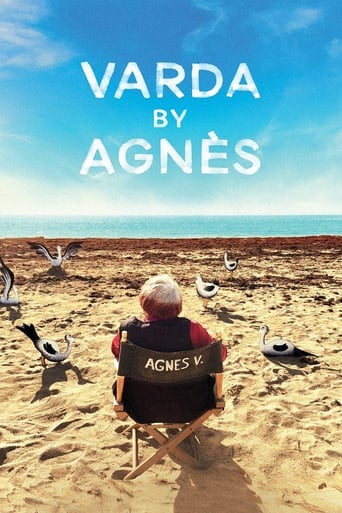
Filmmaking icon Agnès Varda, the award-winning director regarded by many as the grandmother of the French new wave, turns the camera on herself with this unique autobiographical documentary. Composed of film excerpts and elaborate dramatic re-creations, Varda's self-portrait recounts the highs and lows of her professional career, the many friendships that affected her life and her longtime marriage to cinematic giant Jacques Demy.
With mesmerizing footage and time lapses of animators at work, this behind-the-scenes special captures the artistry of a unique tale years in the making.
In this documentary, recovering addict and amputee John Wood finds himself in a stranger-than-fiction battle to reclaim his mummified leg from Southern entrepreneur Shannon Whisnant, who found it in a grill he bought at an auction and believes it therefore to be his rightful property.
A purely observational non-fiction film that takes viewers into the ethically murky world of end-of-life decision making in a public hospital.
40 international directors were asked to make a short film using the original Cinematographe invented by the Lumière Brothers, working under conditions similar to those of 1895. There were three rules: (1) The film could be no longer than 52 seconds, (2) no synchronized sound was permitted, and (3) no more than three takes.
Alexander McQueen's rags-to-riches story is a modern-day fairy tale, laced with the gothic. Mirroring the savage beauty, boldness and vivacity of his design, this documentary is an intimate revelation of McQueen's own world, both tortured and inspired, which celebrates a radical and mesmerizing genius of profound influence.
As a visually radical memoir, CAMERAPERSON draws on the remarkable footage that filmmaker Kirsten Johnson has shot and reframes it in ways that illuminate moments and situations that have personally affected her. What emerges is an elegant meditation on the relationship between truth and the camera frame, as Johnson transforms scenes that have been presented on Festival screens as one kind of truth into another kind of story—one about personal journey, craft, and direct human connection.
A tribute to Chadwick Boseman, celebrating his life and legacy.
A documentary about ten very different lives connected by having appeared onscreen wearing masks or helmets in Star Wars.
A collection of stories about and images of our world, offering an immersion to the core of what it means to be human. Through these stories full of love and happiness, as well as hatred and violence, it brings us face to face with the Other, making us reflect on our lives. From stories of everyday experiences to accounts of the most unbelievable lives, these poignant encounters share a rare sincerity and underline who we are – our darker side, but also what is most noble in us, and what is universal. Our Earth is shown at its most sublime through never-before-seen aerial images accompanied by soaring music, resulting in an ode to the beauty of the world, providing a moment to draw breath and for introspection. This film is a politically engaged work which allows us to embrace the human condition and to reflect on the meaning of our existence.
The Making-of James Cameron's Avatar. It shows interesting parts of the work on the set.
A behind the scenes look into George Romero's groundbreaking horror classic Night of the Living Dead.
An inside look at one of the most anticipated movie sequels ever with James Cameron and cast.
A true-crime comedy exploring a failed music festival turned internet meme at the nexus of social media influence, late-stage capitalism, and morality in the post-truth era.
Alex Gibney explores the charged issue of pedophilia in the Catholic Church, following a trail from the first known protest against clerical sexual abuse in the United States and all way to the Vatican.